
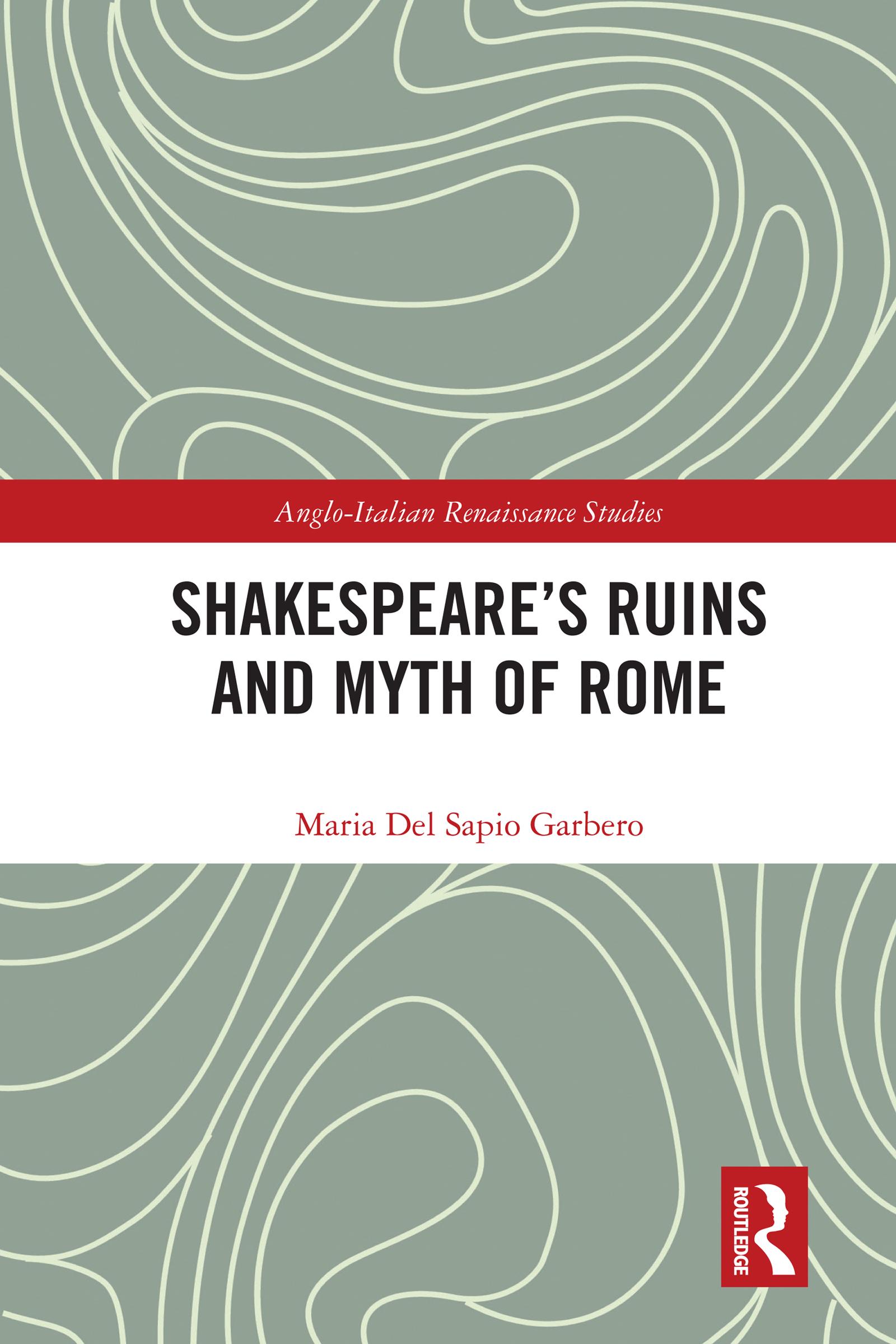
Rome was tantamount to its ruins, a dismembered body, to the eyes of those – Italians and foreigners – who visited the city in the years prior to or encompassing the lengthy span of the Renaissance. Drawing on the double movement of archaeological exploration and creative reconstruction entailed in the humanist endeavour to ‘resurrect’ the past, ‘ruins’ are seen as taking precedence over ‘myth’, in Shakespeare’s Rome. They are assigned the role of a heuristic model, and discovered in all their epistemic relevance in Shakespeare’s dramatic vision of history and his negotiation of modernity. This is the first book of its kind to address Shakespeare’s relationship with Rome’s authoritative myth, archaeologically, by taking as a point of departure a chronological reversal, namely the vision of the ‘eternal’ city as a ruinous scenario and hence the ways in which such a layered, ‘silent’, and aporetic scenario allows for an archaeo-anatomical approach to Shakespeare’s Roman works.
Pay easily by card, Klarna, Apple Pay or Google Pay. Not happy? You always have a 14-day money-back guarantee. Read more in our terms. If you have any questions, email us at hello@memmo.org.
Memmo makes studying easier – wherever you are in the world. We bring your course books and smart study tools together in one place: summaries, quizzes, podcasts and flashcards. Plus Ted, your study buddy who answers anything you wonder. Over 50,000 students already study here – built to help you learn faster and stress less.