
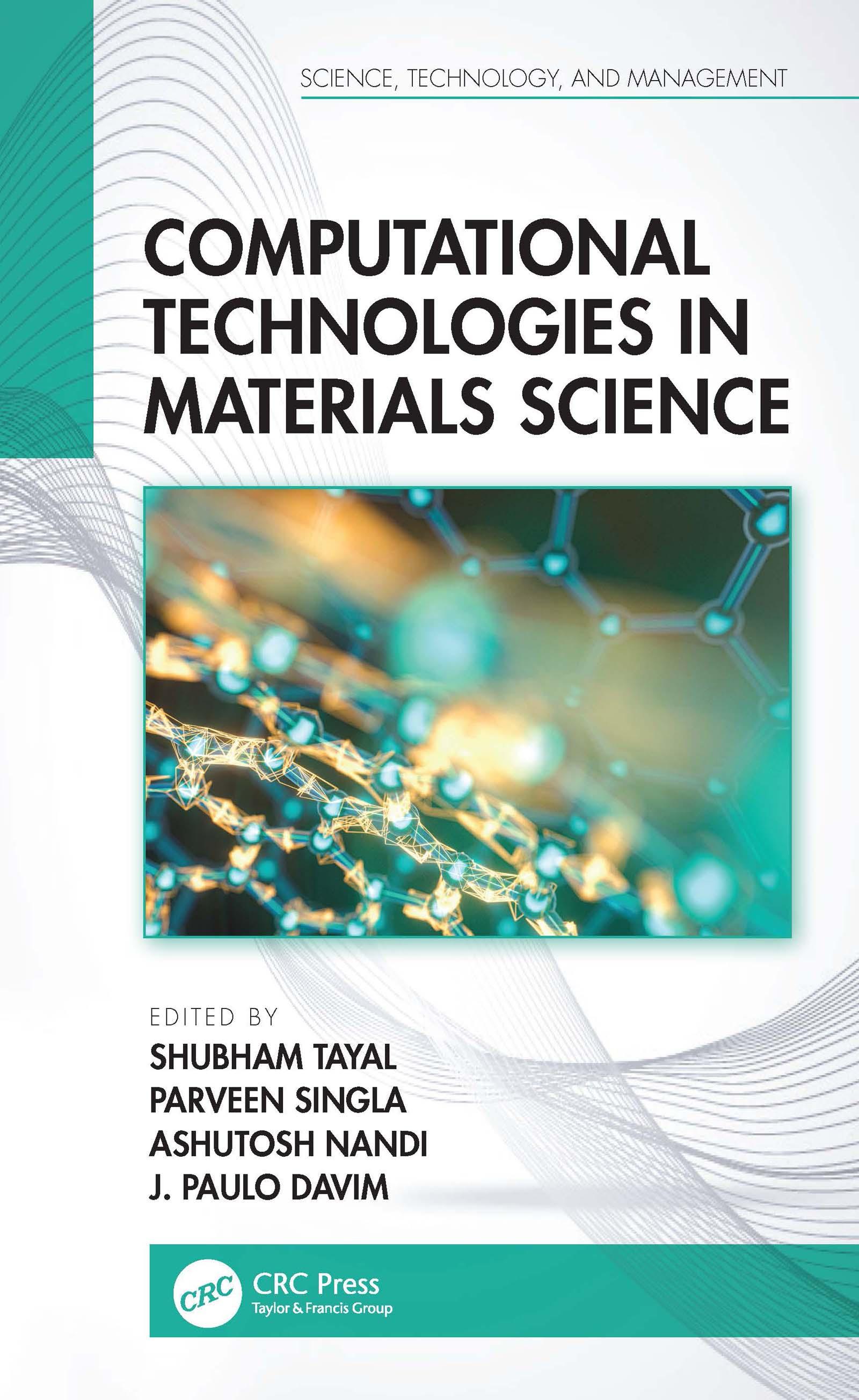
Advanced materials are essential for economic security and human well-being, with applications in industries aimed at addressing challenges in clean energy, national security, and human welfare. Yet, it can take years to move a material to the market after its initial discovery. Computational techniques have accelerated the exploration and development of materials, offering the chance to move new materials to the market quickly. Computational Technologies in Materials Science addresses topics related to AI, machine learning, deep learning, and cloud computing in materials science. It explores characterization and fabrication of materials, machine-learning-based models, and computational intelligence for the synthesis and identification of materials. This book
• Covers material testing and development using computational intelligence
• Highlights the technologies to integrate computational intelligence and materials science
• Details case studies and detailed applications
• Investigates challenges in developing and using computational intelligence in materials science
• Analyzes historic changes that are taking place in designing materials.
This book encourages material researchers and academics to develop novel theories and sustainable computational techniques and explores the potential for computational intelligence to replace traditional materials research.
Pay easily by card, Klarna, Apple Pay or Google Pay. Not happy? You always have a 14-day money-back guarantee. Read more in our terms. If you have any questions, email us at hello@memmo.org.
Memmo makes studying easier – wherever you are in the world. We bring your course books and smart study tools together in one place: summaries, quizzes, podcasts and flashcards. Plus Ted, your study buddy who answers anything you wonder. Over 50,000 students already study here – built to help you learn faster and stress less.