
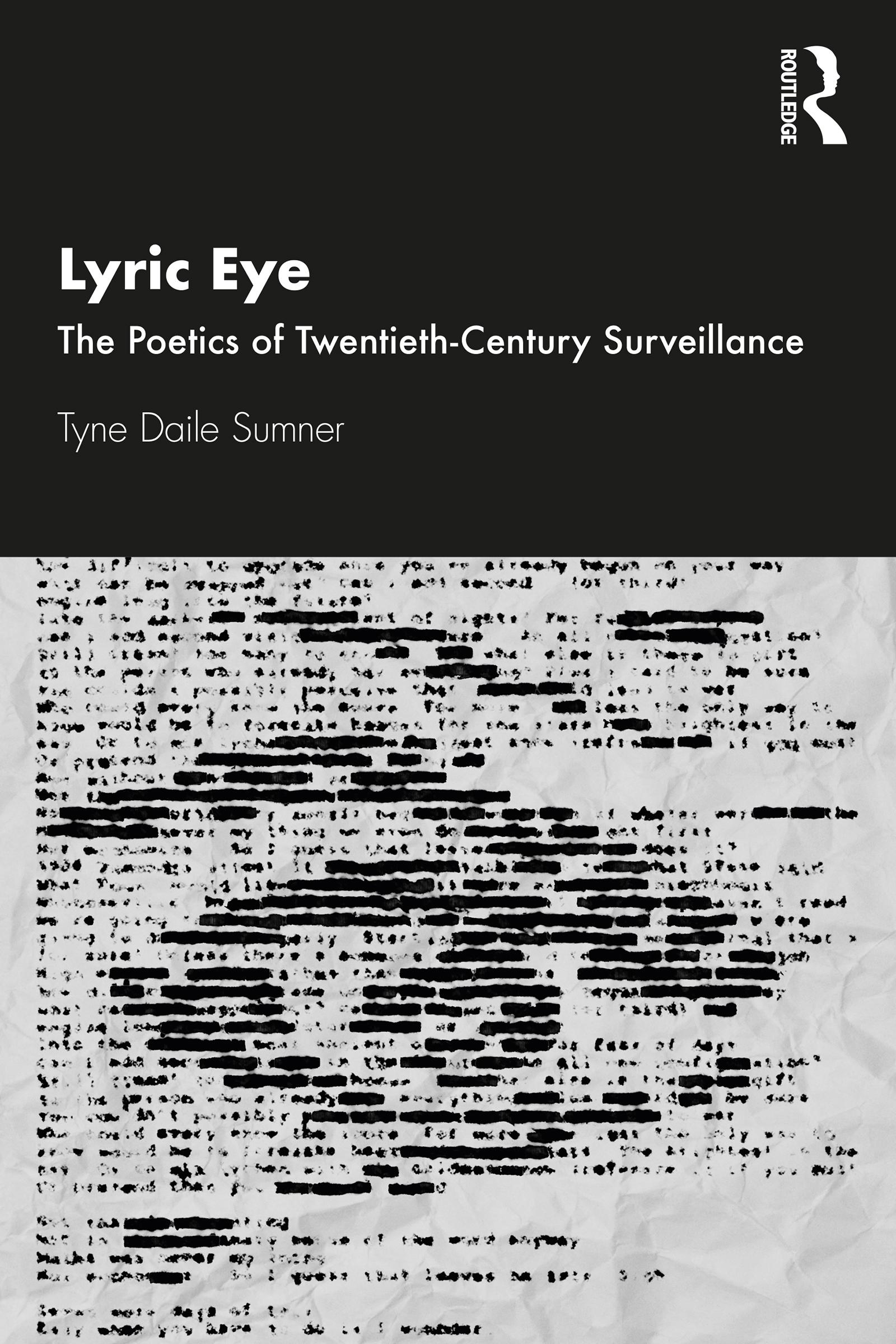
Lyric Eye: The Poetics of Twentieth-Century Surveillance presents the first detailed study of the relationship between poetry and surveillance. It critically examines the close connection between American lyric poetry and a burgeoning US state surveillance apparatus from 1920 to the 1960s. The book explores the myriad ways that poets—Ezra Pound, William Carlos Williams, W.H. Auden, Langston Hughes, James Baldwin, Sylvia Plath, Gertrude Stein, Robert Lowell, Allen Ginsberg and others—explored a developing and fraught environment in which the growing power of American investigative agencies, such as the FBI under J. Edgar Hoover, imposed new pressures on cultural discourse and personal identity. In analysing twentieth-century American poetry and its various ideas about "the self," Lyric Eye demonstrates the extent to which poetry and surveillance employ similar styles of information-gathering such as observation, overhearing, imitation, abstraction, repurposing of language, subversion, fragmentation and symbolism.
Ground-breaking and prescient, this book will be of great interest to scholars and researchers of literature, politics, surveillance and intelligence studies, and digital humanities.
Pay easily by card, Klarna, Apple Pay or Google Pay. Not happy? You always have a 14-day money-back guarantee. Read more in our terms. If you have any questions, email us at hello@memmo.org.
Memmo makes studying easier – wherever you are in the world. We bring your course books and smart study tools together in one place: summaries, quizzes, podcasts and flashcards. Plus Ted, your study buddy who answers anything you wonder. Over 50,000 students already study here – built to help you learn faster and stress less.