
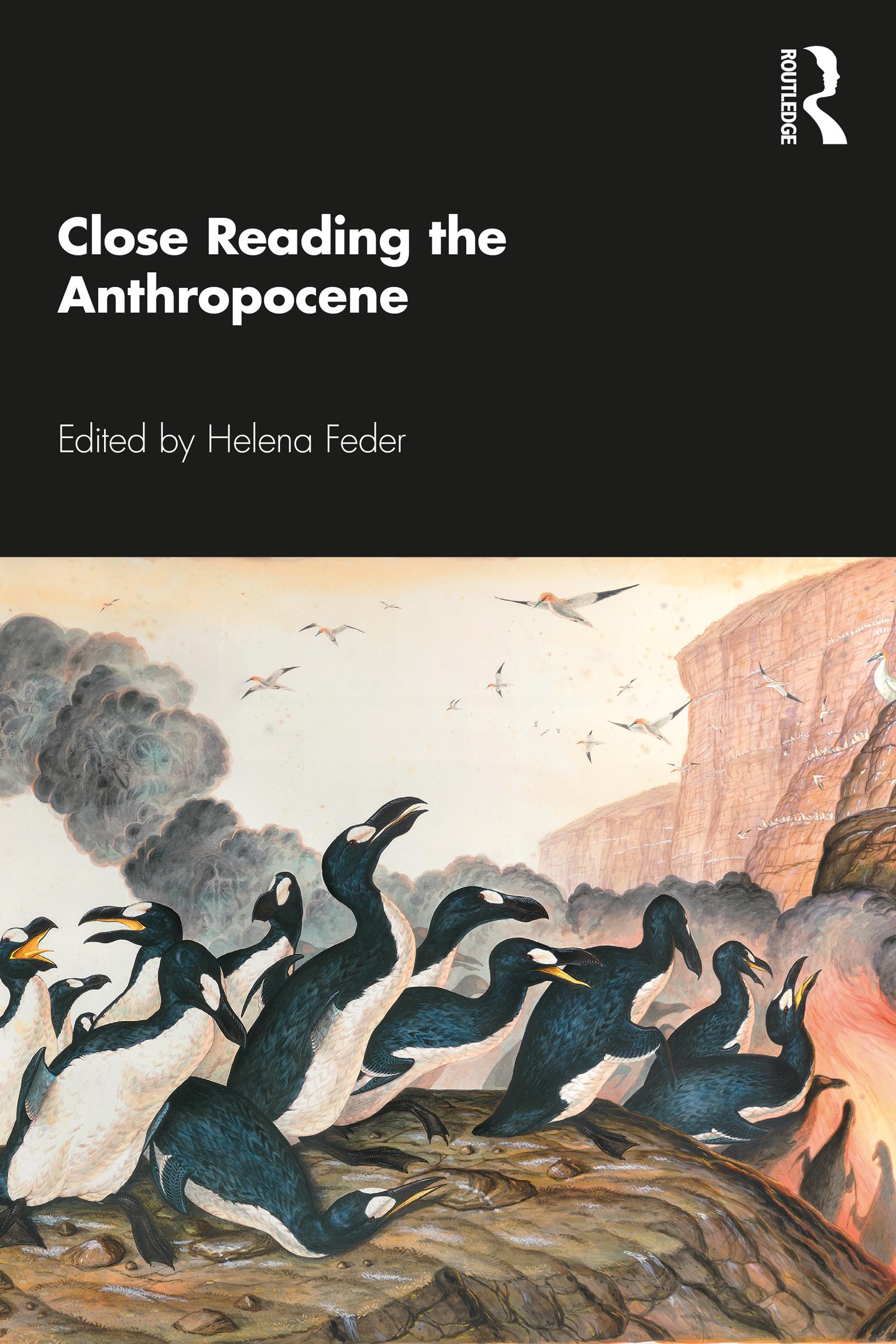
Reading poetry and prose, images and art, literary and critical theory, science and cultural studies, Close Reading the Anthropocene explores the question of meaning, its importance and immanent potential for loss, in the new geological epoch of the Anthropocene. Both close reading and scientific ecology prioritize slowing down and looking around to apprehend similarities and differences, to recognize and value interconnections. Here "close" suggests careful attention to both the reading subject and read "object." Moving between places, rocks, plants, animals, atmosphere, and eclipses, this interdisciplinary edited collection grounds the complex relations between text and world in the environmental humanities.
The volume’s wide-ranging chapters are critical, often polemical, engagements with the question of the Anthropocene and the changing conversation around reading, interpretation, and textuality. They exemplify a range of work from across the globe and will be of great interest to scholars and students of the environmental humanities, ecocriticism, and literary studies.
Pay easily by card, Klarna, Apple Pay or Google Pay. Not happy? You always have a 14-day money-back guarantee. Read more in our terms. If you have any questions, email us at hello@memmo.org.
Memmo makes studying easier – wherever you are in the world. We bring your course books and smart study tools together in one place: summaries, quizzes, podcasts and flashcards. Plus Ted, your study buddy who answers anything you wonder. Over 50,000 students already study here – built to help you learn faster and stress less.