
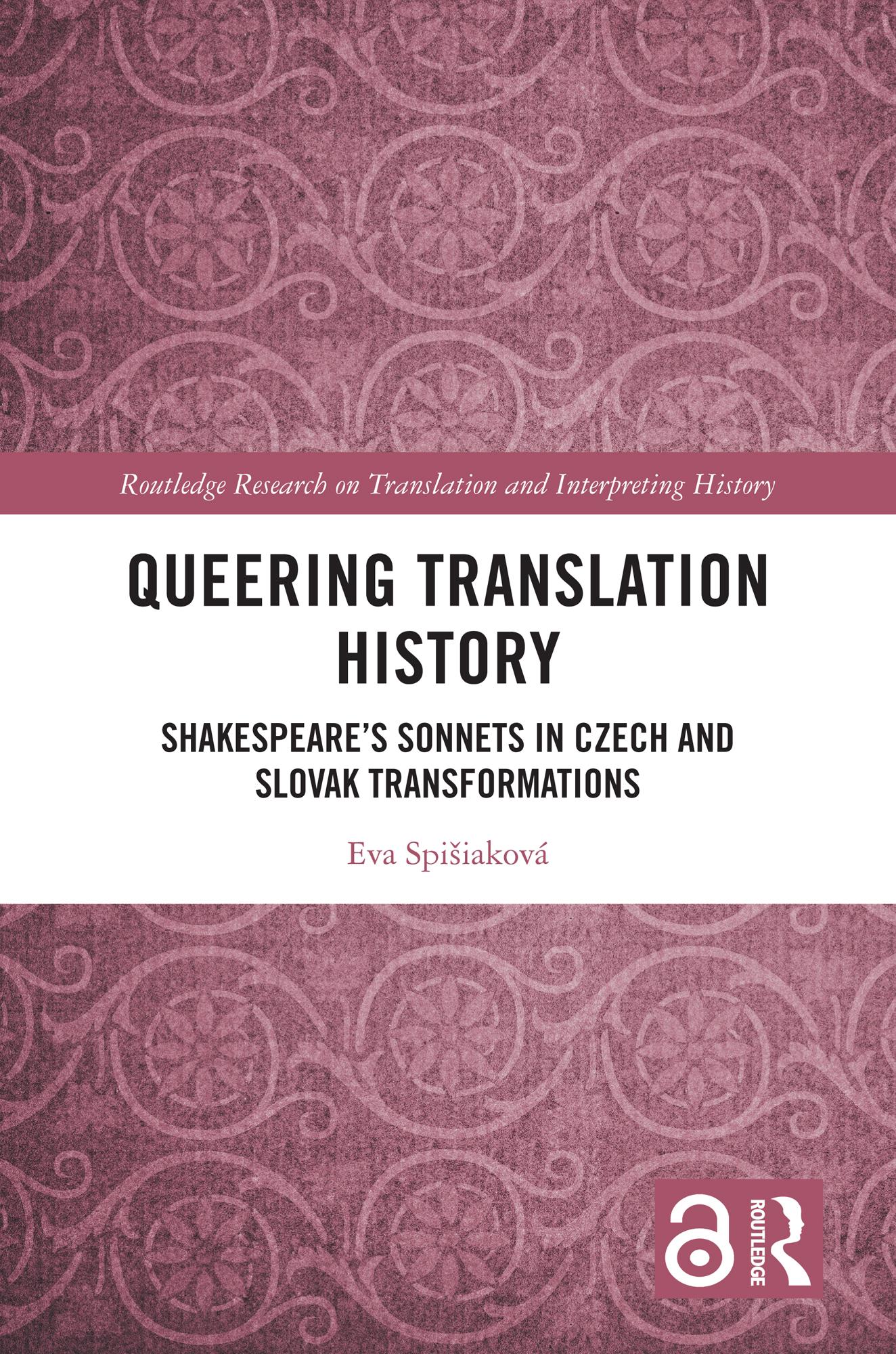
This innovative work challenges normative binaries in contemporary translation studies and applies frameworks from queer historiography to the discipline in order to explore shifting perceptions of same-sex love and desire in translations and retranslations of William Shakespeare’s Sonnets.
The book brings together perspectives from poststructuralism, queer theory, and translation history to set the stage for an in-depth exploration of a series of retranslations of the Sonnets from the Czech Republic and Slovakia. The complex and poetic language of the Sonnets, frequently built around era-specific idioms and allusions, has produced a number of different interpretations of the work over the centuries, but questions remain as to how the translation process may omit, retain, or enhance elements of same-sex love in retranslated works across time and geographical borders. In focusing on target cultures which experienced dramatic sociopolitical changes over the course of the twentieth century and comparing retranslations originating from these contexts, Spišiaková finds the ideal backdrop in which to draw parallels between changing developments in power and social structures and shifting translation strategies related to the representation of gender identities and sexual orientations beyond what is perceived to be normative.
In so doing, the book advocates for a queer perspective on the study of translation history and encourages questioning traditional boundaries prevalent in the discipline, making this key reading for students and researchers in translation studies, queer theory, and gender studies, as well as those interested in historical developments in Central and Eastern Europe.
The Open Access version of this book, available at http://www.taylorfrancis.com, has been made available under a Creative Commons [Attribution-Non Commercial-No Derivatives (CC-BY-NC-ND)] 4.0 license.
Pay easily by card, Klarna, Apple Pay or Google Pay. Not happy? You always have a 14-day money-back guarantee. Read more in our terms. If you have any questions, email us at hello@memmo.org.
Memmo makes studying easier – wherever you are in the world. We bring your course books and smart study tools together in one place: summaries, quizzes, podcasts and flashcards. Plus Ted, your study buddy who answers anything you wonder. Over 50,000 students already study here – built to help you learn faster and stress less.