
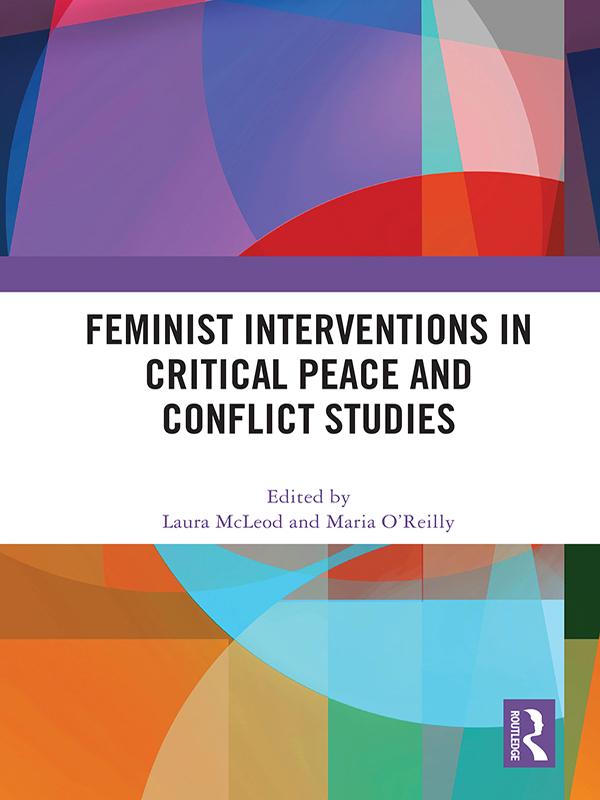
This book provides a feminist intervention in Peace & Conflict Studies. It demonstrates why feminist approaches matter to theories and practices of resolving conflict and building peace.
Understanding power inequalities in contexts of armed conflict and peace processes is crucial for identifying the root causes of conflict and opportunities for peaceful transformation. Feminist scholarship offers vital theoretical insights and innovative methods, which can deepen our understanding of power relations in peacebuilding. Yet, all too often feminist research receives token acknowledgement rather than sustained engagement and analysis.
This collection highlights the value of feminist analysis to contemporary Peace and Conflict Studies. Drawing on case studies from around the world - including Croatia, Myanmar, Iceland, Nepal, India, Afghanistan, and Timor-Leste – it demonstrates why paying serious attention to feminist scholarship prompts useful insights for peacebuilding policy, practice, and scholarship.
Feminist theory, epistemology, and methodology provide a rich resource for critically analysing peacebuilding practices. In particular, the chapters highlight the value of feminist reflexivity, the contributions of a feminist corporeal analysis, and the significance of a feminist reading of core concepts in Peace and Conflict Studies – including hybridity, the local, and the everyday.
The chapters in this book were originally published as a special issue of Peacebuilding.
Pay easily by card, Klarna, Apple Pay or Google Pay. Not happy? You always have a 14-day money-back guarantee. Read more in our terms. If you have any questions, email us at hello@memmo.org.
Memmo makes studying easier – wherever you are in the world. We bring your course books and smart study tools together in one place: summaries, quizzes, podcasts and flashcards. Plus Ted, your study buddy who answers anything you wonder. Over 50,000 students already study here – built to help you learn faster and stress less.