
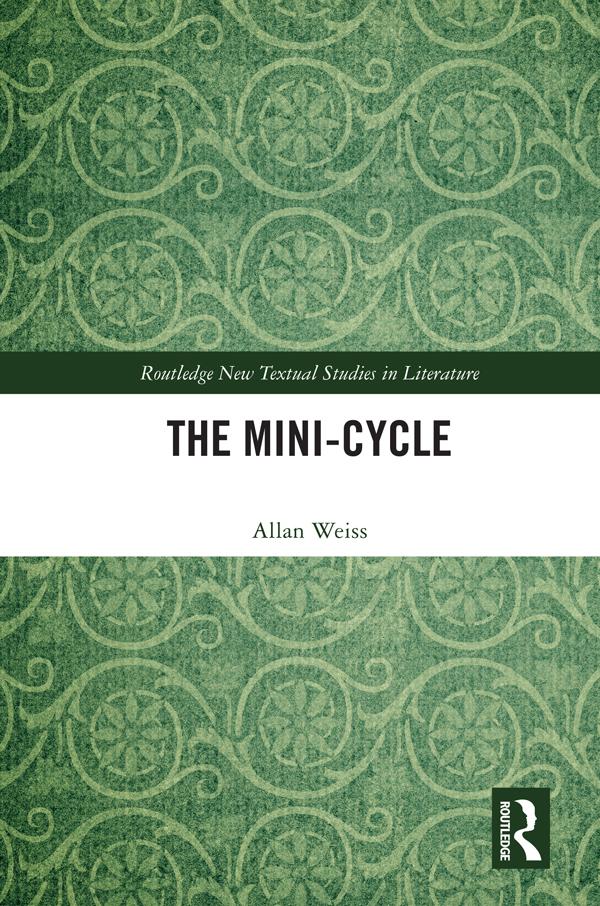
While scholars have been studying the short story cycle for some time now, this book discusses a form that has never before been identified and named, let alone analyzed: the mini-cycle. A mini-cycle is a short story cycle made up, in most cases, of only two or three stories. This study looks at mini-cycles spanning the period from Anton Chekhov’s "little trilogy" (1898) to the "Alphinland" stories in Margaret Atwood’s Stone Mattress (2014), including texts by such authors as Stephen Leacock, Alice Munro, Robert Olen Butler, and Clark Blaise. Consideration is also given to marginal examples, like Sherwood Anderson’s "Godliness—A Tale in Four Parts" (1919), which can be seen as one story or four distinct texts unified under one title, and to what is called the "exploded" mini-cycle: one whose component stories are published with intervening stories between them rather than consecutively. For each mini-cycle, the analysis is based on close reading of both the linking elements—character, imagery, symbolism, and so forth—and the rhetorical and aesthetic effects of the mini-cycle’s being made up of distinct stories rather than constructed as one long narrative.
Pay easily by card, Klarna, Apple Pay or Google Pay. Not happy? You always have a 14-day money-back guarantee. Read more in our terms. If you have any questions, email us at hello@memmo.org.
Memmo makes studying easier – wherever you are in the world. We bring your course books and smart study tools together in one place: summaries, quizzes, podcasts and flashcards. Plus Ted, your study buddy who answers anything you wonder. Over 50,000 students already study here – built to help you learn faster and stress less.