
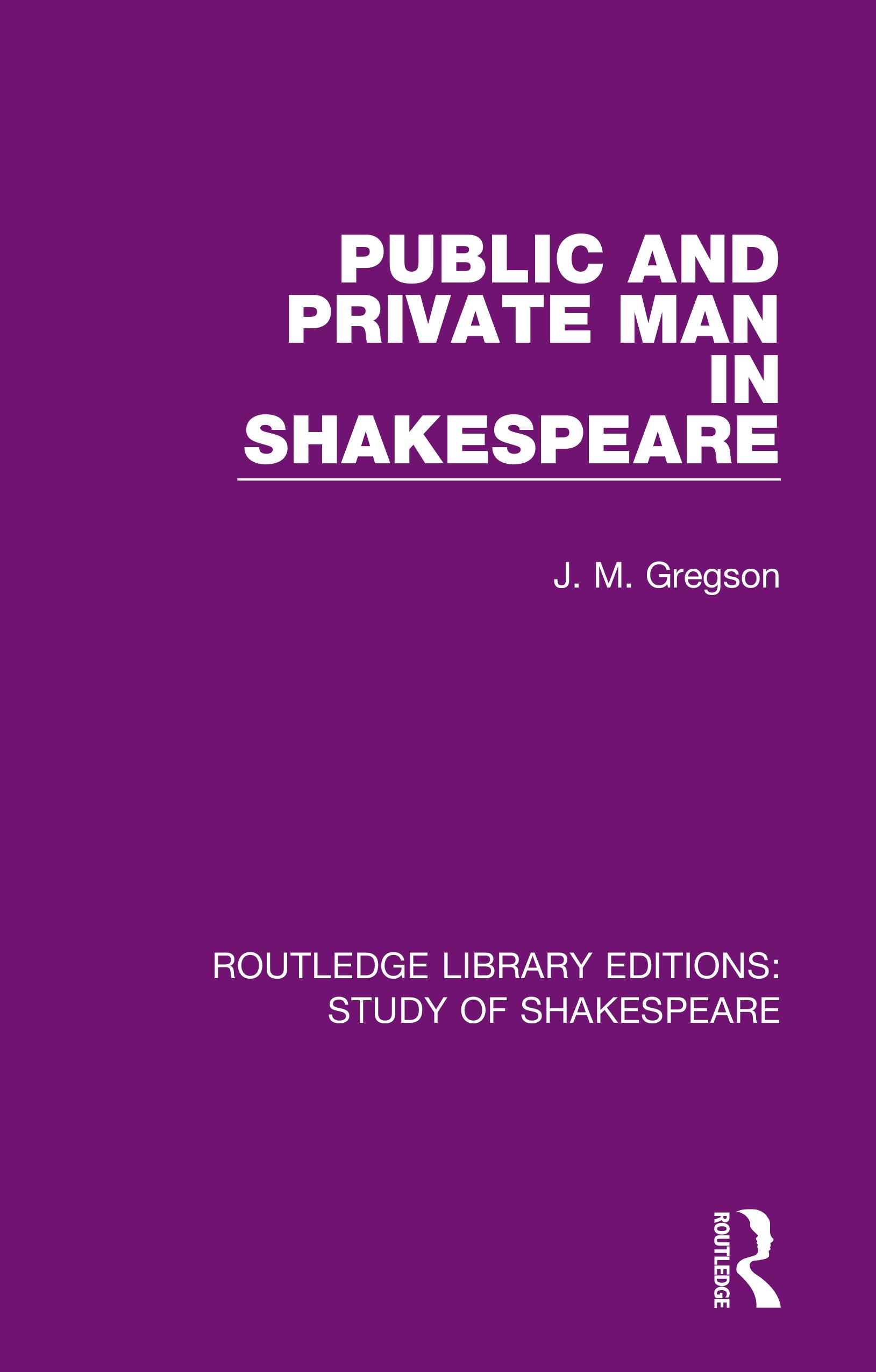
The potential duality of human character and its capacity for dissembling was a source of fascination to the Elizabethan dramatists. Where many of them used the Machiavellian picture to draw one fair-faced scheming villain after another, Shakespeare absorbed more deeply the problem of the tensions between the public and private face of man.
Originally published in 1983, this book examines the ways in which this psychological insight is developed and modified as a source of dramatic power throughout Shakespeare’s career. In the great sequence of history plays he examines the conflicting tensions of kingship and humanity, and the destructive potential of this dilemma is exploited to the full in the ‘problem plays’. In the last plays power and virtue seem altogether divorced: Prospero can retire to an old age at peace only at the abdication of all his power. This theme is central to the art of many dramatists, but in the context of Renaissance political philosophy it takes on an added resonance for Shakespeare.
Pay easily by card, Klarna, Apple Pay or Google Pay. Not happy? You always have a 14-day money-back guarantee. Read more in our terms. If you have any questions, email us at hello@memmo.org.
Memmo makes studying easier – wherever you are in the world. We bring your course books and smart study tools together in one place: summaries, quizzes, podcasts and flashcards. Plus Ted, your study buddy who answers anything you wonder. Over 50,000 students already study here – built to help you learn faster and stress less.