
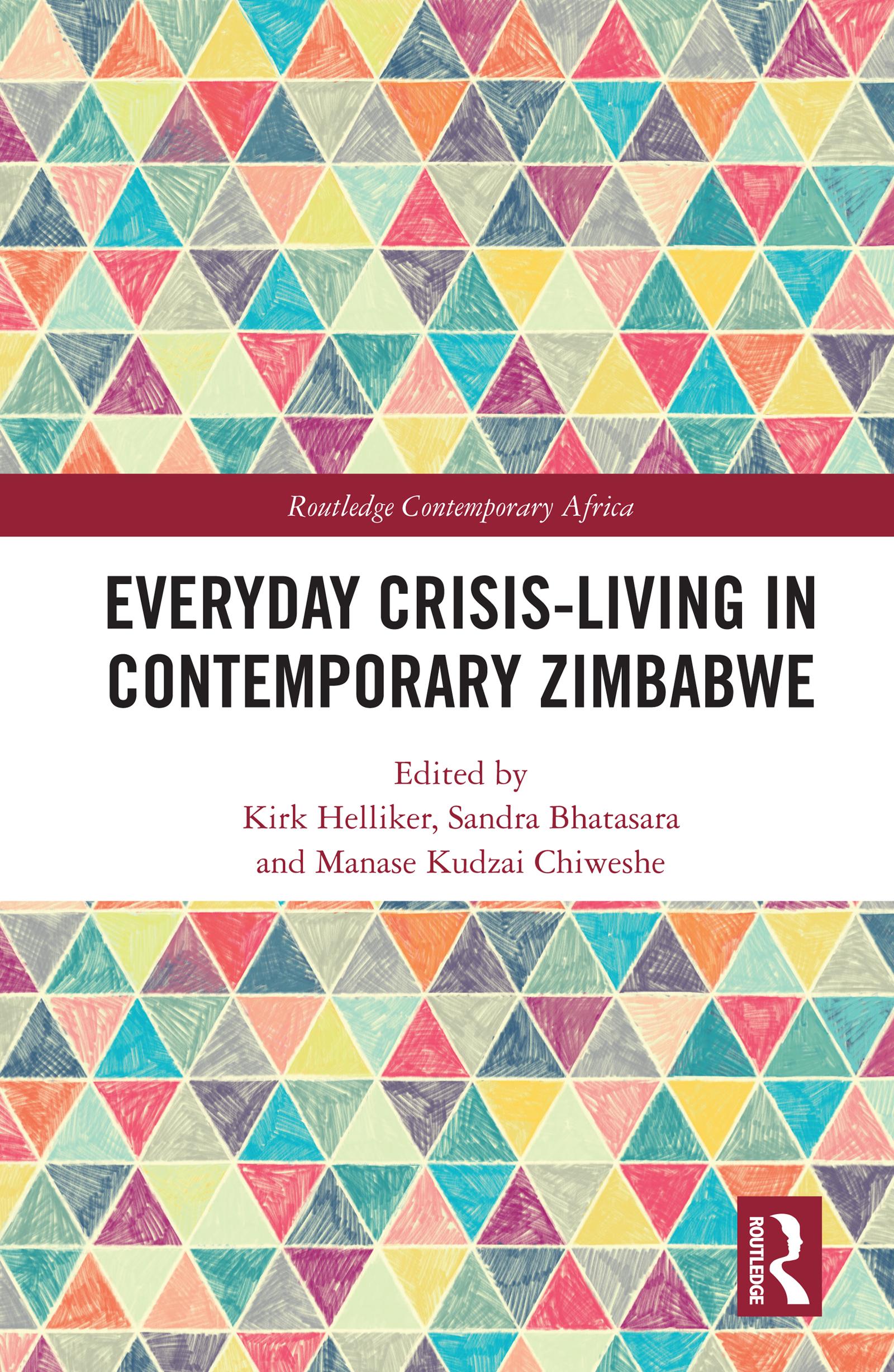
This book examines the everyday lives of ordinary Zimbabweans in the context of national crises in post-2000 Zimbabwe.
Throughout the literature of Zimbabwean studies, a consideration of everyday lives has been limited to informal trading and rarely applied as an analytical framework, despite the importance of understanding crisis-living with reference to the specific character of national crises across the African continent. This edited volume is one of the first in its field to theorise everyday Zimbabwean lives within the context of crisis, with three central themes addressed: urban and rural lives; men, women and HIV; and along and beyond the border. Chapters incorporate topics from child marriage and sexual practices, to climate change and social accountability, encompassing a shift in focus from macro-structures to how farm labourers, students, child-brides and other ordinary people negotiate gender, class and social dynamics within a dominant order. The introductory chapter offers an innovative analytical framing for the empirical chapters which follow, each providing micro-studies based on original qualitative fieldwork by early-career Zimbabwean scholars.
Everyday Crisis-Living in Contemporary Zimbabwe will appeal to students and scholars of sociology, anthropology and African Studies more broadly.
Pay easily by card, Klarna, Apple Pay or Google Pay. Not happy? You always have a 14-day money-back guarantee. Read more in our terms. If you have any questions, email us at hello@memmo.org.
Memmo makes studying easier – wherever you are in the world. We bring your course books and smart study tools together in one place: summaries, quizzes, podcasts and flashcards. Plus Ted, your study buddy who answers anything you wonder. Over 50,000 students already study here – built to help you learn faster and stress less.