
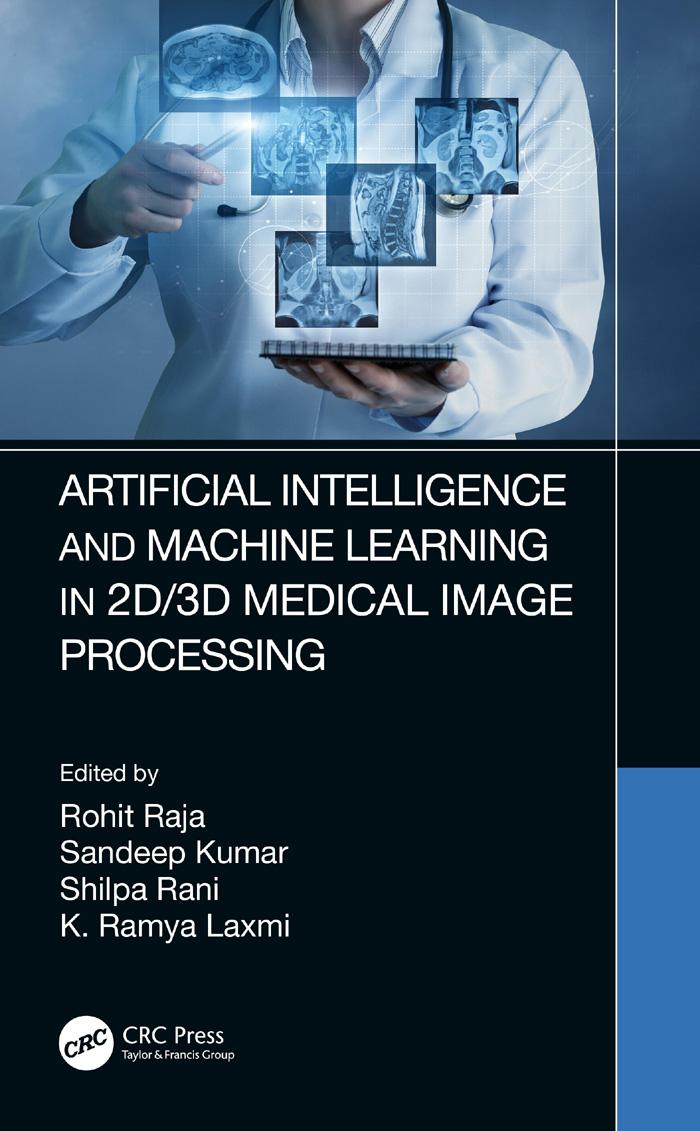
Digital images have several benefits, such as faster and inexpensive processing cost, easy storage and communication, immediate quality assessment, multiple copying while preserving quality, swift and economical reproduction, and adaptable manipulation. Digital medical images play a vital role in everyday life. Medical imaging is the process of producing visible images of inner structures of the body for scientific and medical study and treatment as well as a view of the function of interior tissues. This process pursues disorder identification and management.
Medical imaging in 2D and 3D includes many techniques and operations such as image gaining, storage, presentation, and communication. The 2D and 3D images can be processed in multiple dimensions. Depending on the requirement of a specific problem, one must identify various features of 2D or 3D images while applying suitable algorithms. These image processing techniques began in the 1960s and were used in such fields as space, clinical purposes, the arts, and television image improvement. In the 1970s, with the development of computer systems, the cost of image processing was reduced and processes became faster. In the 2000s, image processing became quicker, inexpensive, and simpler. In the 2020s, image processing has become a more accurate, more efficient, and self-learning technology.
This book highlights the framework of the robust and novel methods for medical image processing techniques in 2D and 3D. The chapters explore existing and emerging image challenges and opportunities in the medical field using various medical image processing techniques. The book discusses real-time applications for artificial intelligence and machine learning in medical image processing. The authors also discuss implementation strategies and future research directions for the design and application requirements of these systems.
This book will benefit researchers in the medical image processing field as well as those looking to promote the mutual understanding of researchers within different disciplines that incorporate AI and machine learning.
FEATURES
- Highlights the framework of robust and novel methods for medical image processing techniques
- Discusses implementation strategies and future research directions for the design and application requirements of medical imaging
- Examines real-time application needs
- Explores existing and emerging image challenges and opportunities in the medical field
Pay easily by card, Klarna, Apple Pay or Google Pay. Not happy? You always have a 14-day money-back guarantee. Read more in our terms. If you have any questions, email us at hello@memmo.org.
Memmo makes studying easier – wherever you are in the world. We bring your course books and smart study tools together in one place: summaries, quizzes, podcasts and flashcards. Plus Ted, your study buddy who answers anything you wonder. Over 50,000 students already study here – built to help you learn faster and stress less.