
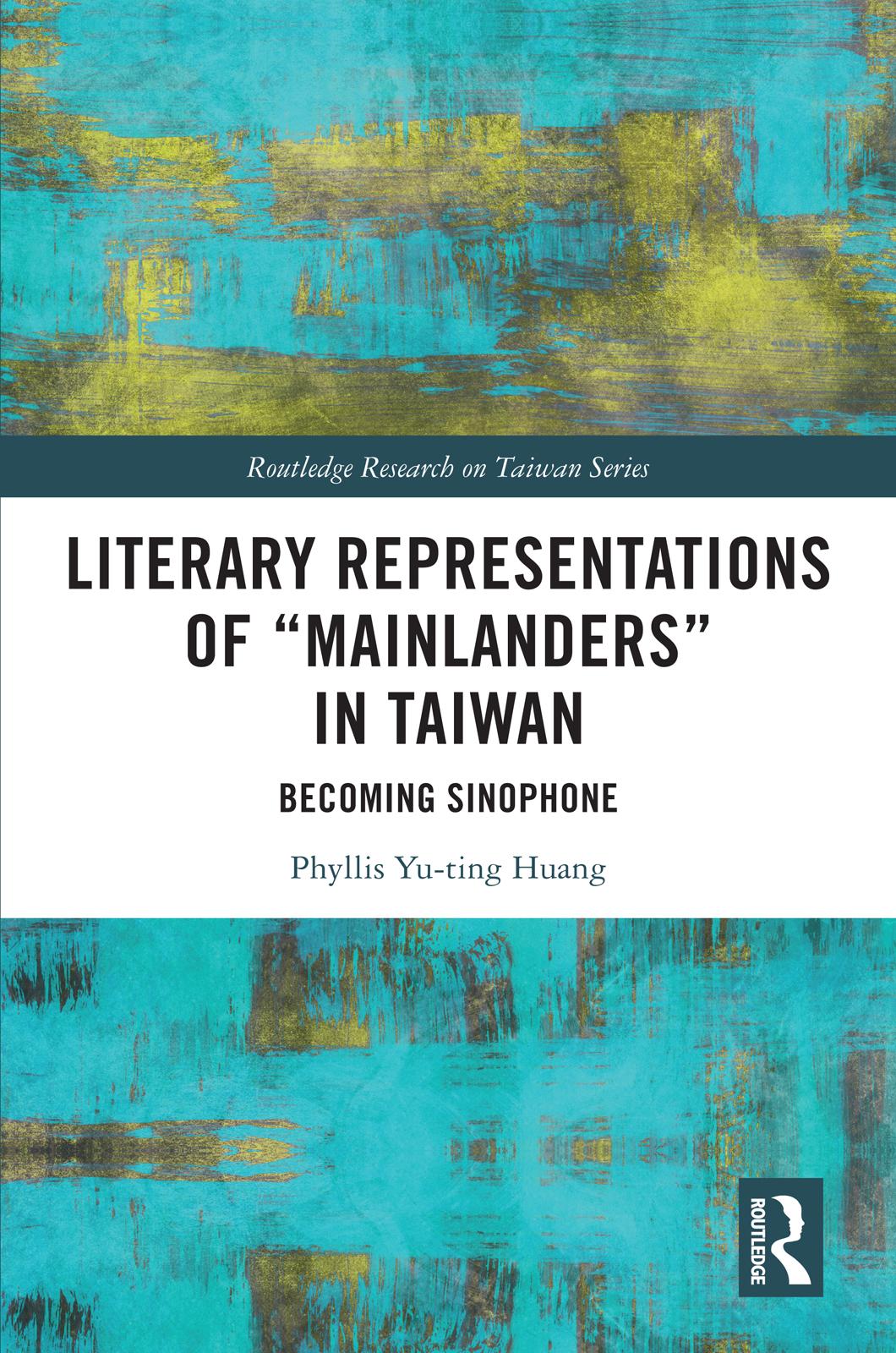
This book examines literary representations of mainlander identity articulated by Taiwan’s second-generation mainlander writers, who share the common feature of emotional ambivalence between Taiwan and China.
Closely analyzing literary narratives of Chinese civil war migrants and their descendants in Taiwan, a group referred to as "mainlanders" (waishengren), this book demonstrates that these Chinese migrants’ ideas of "China" and "Chineseness" have adapted through time with their gradual settlement in the host land. Drawing upon theories of Sinophone Studies and memory studies, this book argues that during the three decades in which Taiwan moved away from the Kuomintang’s authoritarian rule to a democratic society, mainlander identity was narrated as a transformation from a diasporic Chinese identity to a more fluid and elusive Sinophone identity. Characterized by the features of cultural hybridity and emotional in-betweenness, mainlander identity in the eight works explored contests the existing Sinocentric discourse of Chineseness.
An important contribution to the current research on Taiwan’s identity politics, this book will be of interest to academics in the field of Taiwan studies, Sinophone studies, Chinese migration, and Taiwanese literature as well as Chinese literature in general.
Pay easily by card, Klarna, Apple Pay or Google Pay. Not happy? You always have a 14-day money-back guarantee. Read more in our terms. If you have any questions, email us at hello@memmo.org.
Memmo makes studying easier – wherever you are in the world. We bring your course books and smart study tools together in one place: summaries, quizzes, podcasts and flashcards. Plus Ted, your study buddy who answers anything you wonder. Over 50,000 students already study here – built to help you learn faster and stress less.