
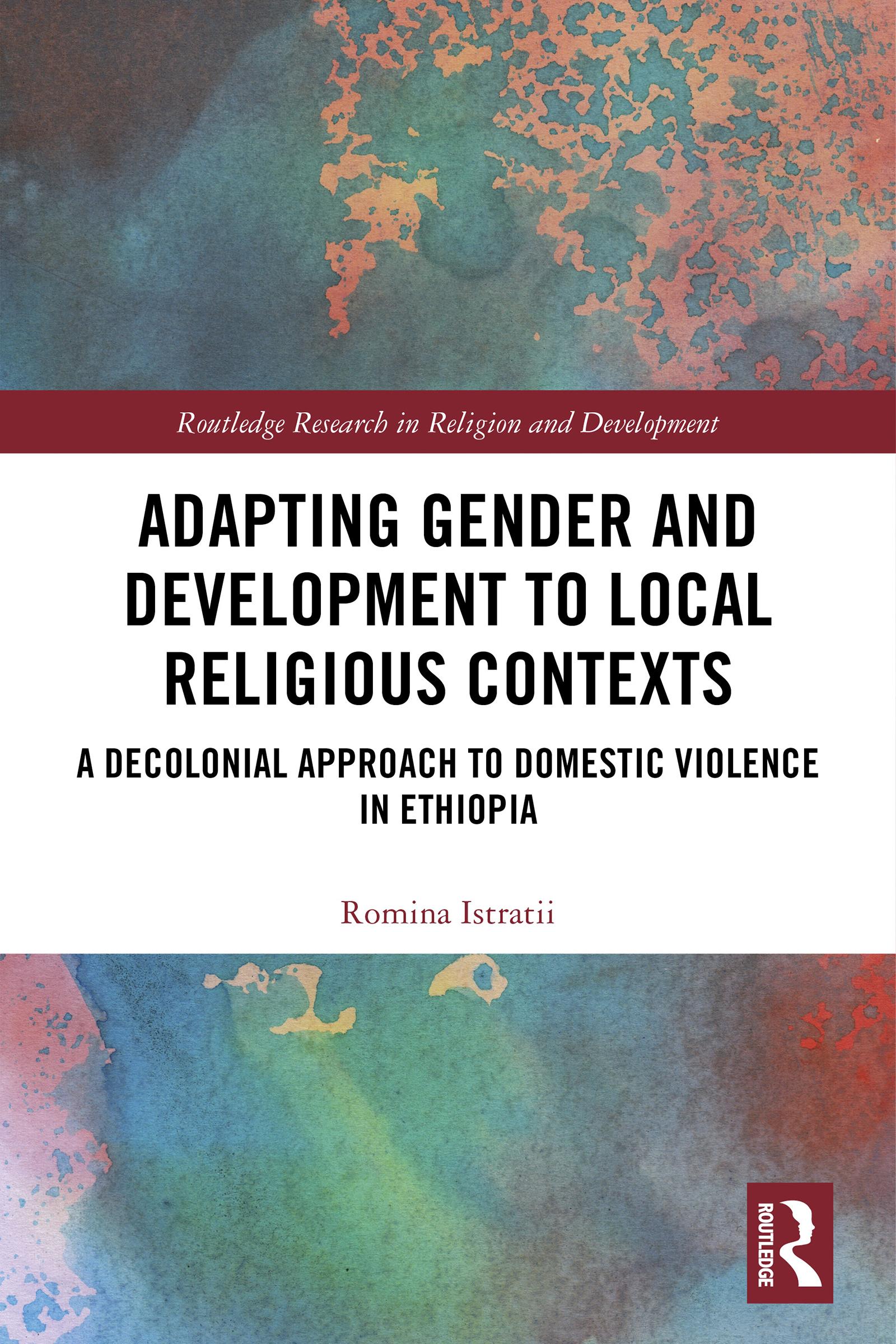
This book provides a critical and decolonial analysis of gender and development theory and practice in religious societies through the presentation of a detailed ethnographic study of conjugal violence in Ethiopia.
Responding to recent consensus that gender mainstreaming approaches have failed to produce their intended structural changes, Romina Istratii explains that gender and development analytical and theoretical frameworks are often constructed through western Euro-centric lenses ill-equipped to understand gender-related realities and human behaviour in non-western religious contexts and knowledge systems. Instead, Istratii argues for an approach to gender-sensitive research and practice which is embedded in insiders’ conceptual understandings as a basis to theorise about gender, assess the possible gendered underpinnings of local issues and design appropriate alleviation strategies. Drawing on a detailed study of conjugal abuse realities and attitudes in two villages and the city of Aksum in Northern Ethiopia, she demonstrates how religious knowledge can be engaged in the design and implementation of remedial interventions.
This book carefully evidences the importance of integrating religious traditions and spirituality in current discussions of sustainable development in Africa, and speaks to researchers and practitioners of gender, religion and development in Africa, scholars of non-western Christianities and Ethiopian studies, and domestic violence researchers and practitioners.
Pay easily by card, Klarna, Apple Pay or Google Pay. Not happy? You always have a 14-day money-back guarantee. Read more in our terms. If you have any questions, email us at hello@memmo.org.
Memmo makes studying easier – wherever you are in the world. We bring your course books and smart study tools together in one place: summaries, quizzes, podcasts and flashcards. Plus Ted, your study buddy who answers anything you wonder. Over 50,000 students already study here – built to help you learn faster and stress less.