
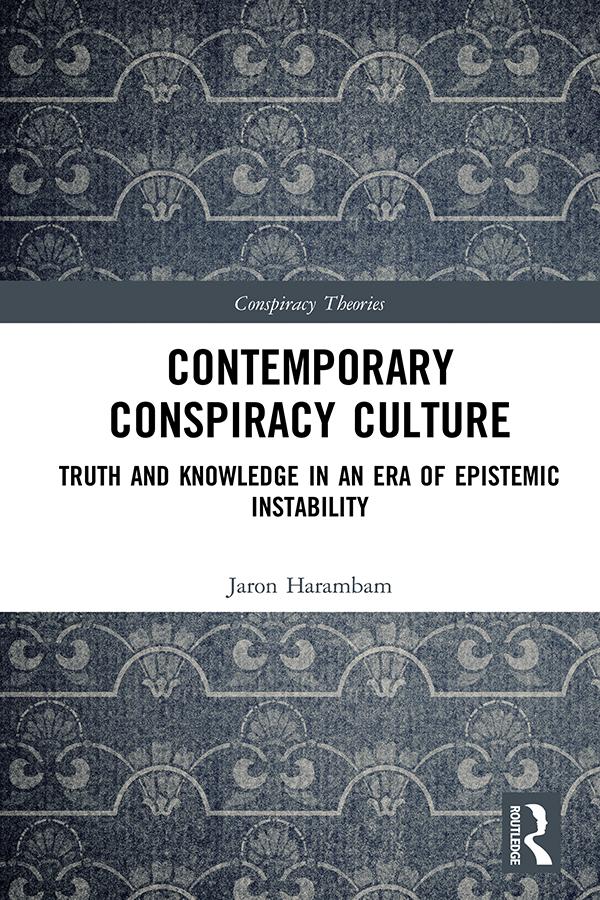
In this ethnographic study, the author takes an agnostic stance towards the truth value of conspiracy theories and delves into the everyday lives of people active in the conspiracy milieu to understand better what the contemporary appeal of conspiracy theories is.
Conspiracy theories have become popular cultural products, endorsed and shared by significant segments of Western societies. Yet our understanding of who these people are and why they are attracted by these alternative explanations of reality is hampered by their implicit and explicit pathologization. Drawing on a wide variety of empirical sources, this book shows in rich detail what conspiracy theories are about, which people are involved, how they see themselves, and what they practically do with these ideas in their everyday lives. The author inductively develops from these concrete descriptions more general theorizations of how to understand this burgeoning subculture. He concludes by situating conspiracy culture in an age of epistemic instability where societal conflicts over knowledge abound, and the Truth is no longer assured, but "out there" for us to grapple with.
This book will be an important source for students and scholars from a range of disciplines interested in the depth and complexity of conspiracy culture, including Anthropology, Cultural Studies, Communication Studies, Ethnology, Folklore Studies, History, Media Studies, Political Science, Psychology and Sociology. More broadly, this study speaks to contemporary (public) debates about truth and knowledge in a supposedly post-truth era, including widespread popular distrusts towards elites, mainstream institutions and their knowledge.
Pay easily by card, Klarna, Apple Pay or Google Pay. Not happy? You always have a 14-day money-back guarantee. Read more in our terms. If you have any questions, email us at hello@memmo.org.
Memmo makes studying easier – wherever you are in the world. We bring your course books and smart study tools together in one place: summaries, quizzes, podcasts and flashcards. Plus Ted, your study buddy who answers anything you wonder. Over 50,000 students already study here – built to help you learn faster and stress less.