
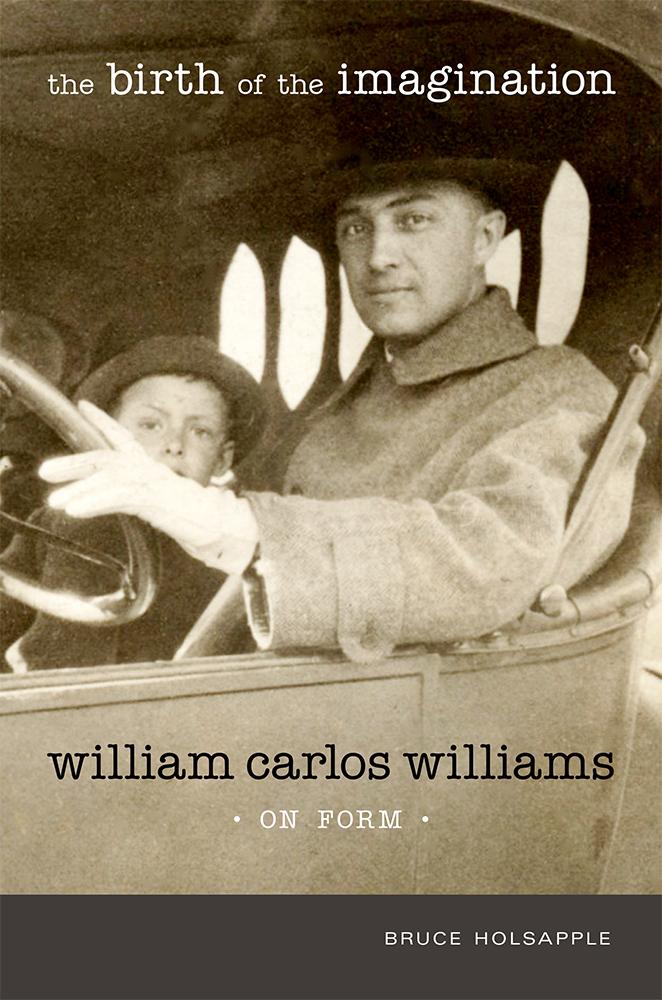
William Carlos Williams first spoke to the issue of form shortly after the publication of “The Wanderer” in 1914—his move to vers libre—and didn’t stop talking about form until his death in 1963. His poetry shows, decade after decade, persistent formal innovation. Bruce Holsapple’s The Birth of the Imagination relates the form, structure, and content of Williams’s poetry to demonstrate how his formal concerns bear upon the content, namely, how form testifies to a vision that the style verifies. Tracing the development of Williams’s work from Poems in 1909 through The Wedge in 1944, Holsapple aligns emerging aesthetic concepts and procedures with shifts in Williams’s writing to disclose how meaning becomes refigured, affecting what the poems “say.” While focusing primarily on Williams’s experimental works, including the novellas, this innovative study charts how significant features in Williams’s poetry result from specific imaginative practices.
Pay easily by card, Klarna, Apple Pay or Google Pay. Not happy? You always have a 14-day money-back guarantee. Read more in our terms. If you have any questions, email us at hello@memmo.org.
Memmo makes studying easier – wherever you are in the world. We bring your course books and smart study tools together in one place: summaries, quizzes, podcasts and flashcards. Plus Ted, your study buddy who answers anything you wonder. Over 50,000 students already study here – built to help you learn faster and stress less.