
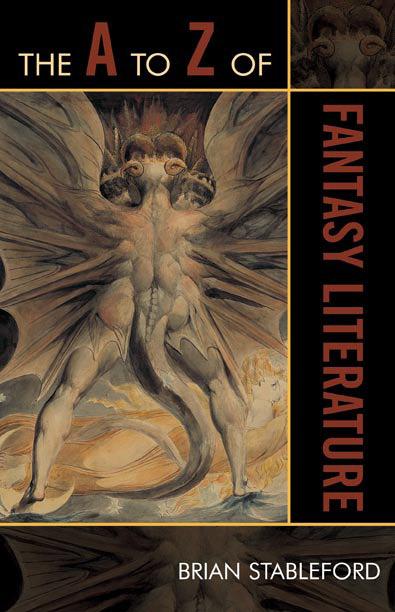
Once upon a time all literature was fantasy, set in a mythical past when magic existed, animals talked, and the gods took an active hand in earthly affairs. As the mythical past was displaced in Western estimation by the historical past and novelists became increasingly preoccupied with the present, fantasy was temporarily marginalized until the late 20th century, when it enjoyed a spectacular resurgence in every stratum of the literary marketplace.
Stableford provides an invaluable guide to this sequence of events and to the current state of the field. The chronology tracks the evolution of fantasy from the origins of literature to the 21st century. The introduction explains the nature of the impulses creating and shaping fantasy literature, the problems of its definition and the reasons for its changing historical fortunes. The dictionary includes cross-referenced entries on more than 700 authors, ranging across the entire historical spectrum, while more than 200 other entries describe the fantasy subgenres, key images in fantasy literature, technical terms used in fantasy criticism, and the intimately convoluted relationship between literary fantasies, scholarly fantasies, and lifestyle fantasies. The book concludes with an extensive bibliography that ranges from general textbooks and specialized accounts of the history and scholarship of fantasy literature, through bibliographies and accounts of the fantasy literature of different nations, to individual author studies and useful websites.
Stableford provides an invaluable guide to this sequence of events and to the current state of the field. The chronology tracks the evolution of fantasy from the origins of literature to the 21st century. The introduction explains the nature of the impulses creating and shaping fantasy literature, the problems of its definition and the reasons for its changing historical fortunes. The dictionary includes cross-referenced entries on more than 700 authors, ranging across the entire historical spectrum, while more than 200 other entries describe the fantasy subgenres, key images in fantasy literature, technical terms used in fantasy criticism, and the intimately convoluted relationship between literary fantasies, scholarly fantasies, and lifestyle fantasies. The book concludes with an extensive bibliography that ranges from general textbooks and specialized accounts of the history and scholarship of fantasy literature, through bibliographies and accounts of the fantasy literature of different nations, to individual author studies and useful websites.
Pay easily by card, Klarna, Apple Pay or Google Pay. Not happy? You always have a 14-day money-back guarantee. Read more in our terms. If you have any questions, email us at hello@memmo.org.
Memmo makes studying easier – wherever you are in the world. We bring your course books and smart study tools together in one place: summaries, quizzes, podcasts and flashcards. Plus Ted, your study buddy who answers anything you wonder. Over 50,000 students already study here – built to help you learn faster and stress less.