
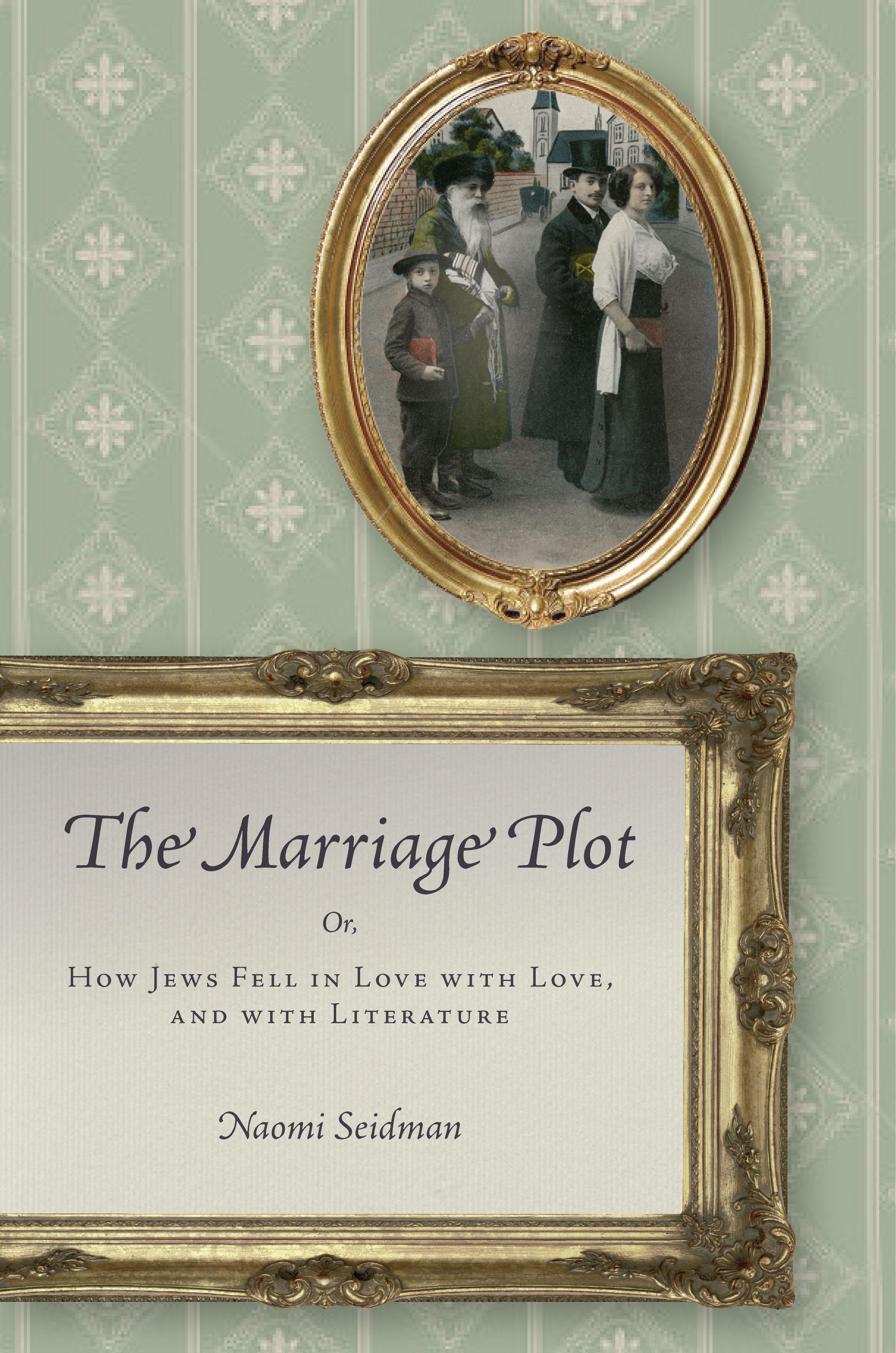
For nineteenth-century Eastern European Jews, modernization entailed the abandonment of arranged marriage in favor of the "love match." Romantic novels taught Jewish readers the rules of romance and the choreography of courtship. But because these new conceptions of romance were rooted in the Christian and chivalric traditions, the Jewish embrace of "the love religion" was always partial.
In The Marriage Plot, Naomi Seidman considers the evolution of Jewish love and marriage though the literature that provided Jews with a sentimental education, highlighting a persistent ambivalence in the Jewish adoption of European romantic ideologies. Nineteenth-century Hebrew and Yiddish literature tempered romantic love with the claims of family and community, and treated the rules of gender complementarity as comedic fodder. Twentieth-century Jewish writers turned back to tradition, finding pleasures in matchmaking, intergenerational ties, and sexual segregation. In the modern Jewish voices of Sigmund Freud, Erica Jong, Philip Roth, and Tony Kushner, the Jewish heretical challenge to the European romantic sublime has become the central sexual ideology of our time.
Pay easily by card, Klarna, Apple Pay or Google Pay. Not happy? You always have a 14-day money-back guarantee. Read more in our terms. If you have any questions, email us at hello@memmo.org.
Memmo makes studying easier – wherever you are in the world. We bring your course books and smart study tools together in one place: summaries, quizzes, podcasts and flashcards. Plus Ted, your study buddy who answers anything you wonder. Over 50,000 students already study here – built to help you learn faster and stress less.