
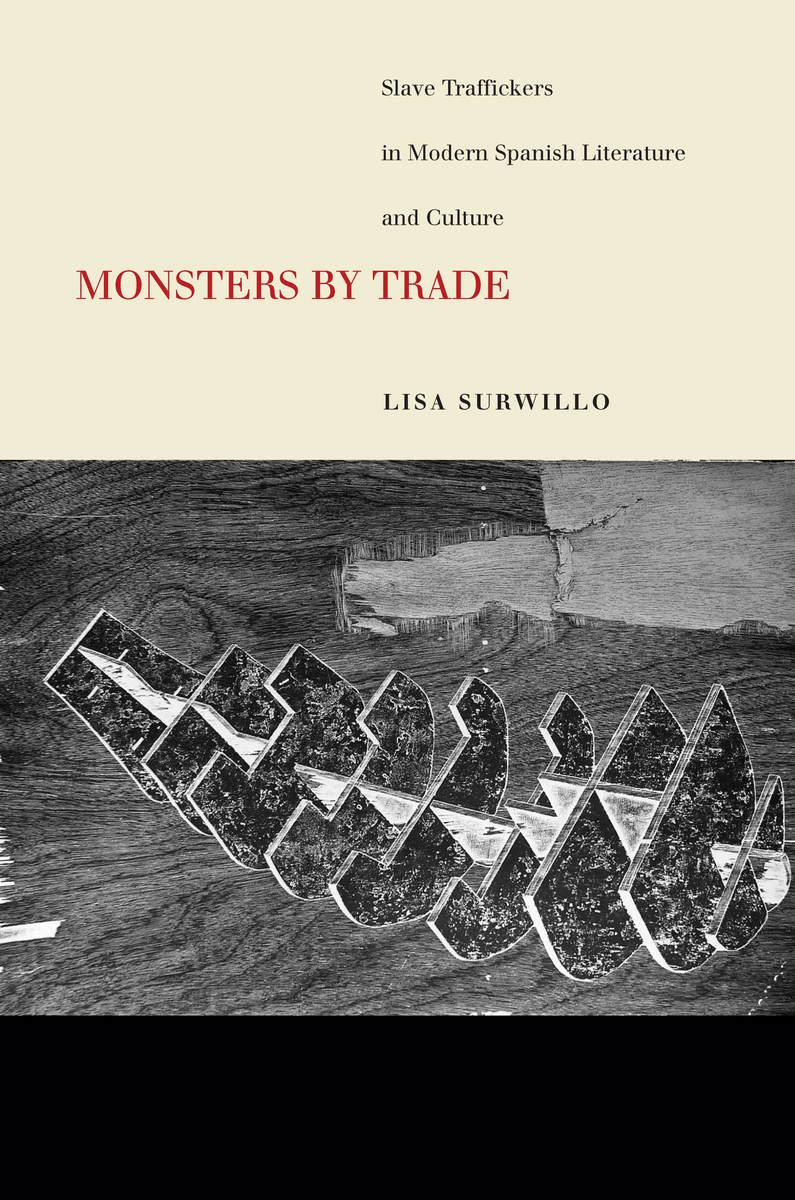
Transatlantic studies have begun to explore the lasting influence of Spain on its former colonies and the surviving ties between the American nations and Spain. In Monsters by Trade, Lisa Surwillo takes a different approach, explaining how modern Spain was literally made by its Cuban colony. Long after the transatlantic slave trade had been abolished, Spain continued to smuggle thousands of Africans annually to Cuba to work the sugar plantations. Nearly a third of the royal income came from Cuban sugar, and these profits underwrote Spain's modernization even as they damaged its international standing.
Surwillo analyzes a sampling of nineteenth-century Spanish literary works that reflected metropolitan fears of the hold that slave traders (and the slave economy more generally) had over the political, cultural, and financial networks of power. She also examines how the nineteenth-century empire and the role of the slave trader are commemorated in contemporary tourism and literature in various regions in Northern Spain. This is the first book to demonstrate the centrality of not just Cuba, but the illicit transatlantic slave trade to the cultural life of modern Spain.
Pay easily by card, Klarna, Apple Pay or Google Pay. Not happy? You always have a 14-day money-back guarantee. Read more in our terms. If you have any questions, email us at hello@memmo.org.
Memmo makes studying easier – wherever you are in the world. We bring your course books and smart study tools together in one place: summaries, quizzes, podcasts and flashcards. Plus Ted, your study buddy who answers anything you wonder. Over 50,000 students already study here – built to help you learn faster and stress less.