
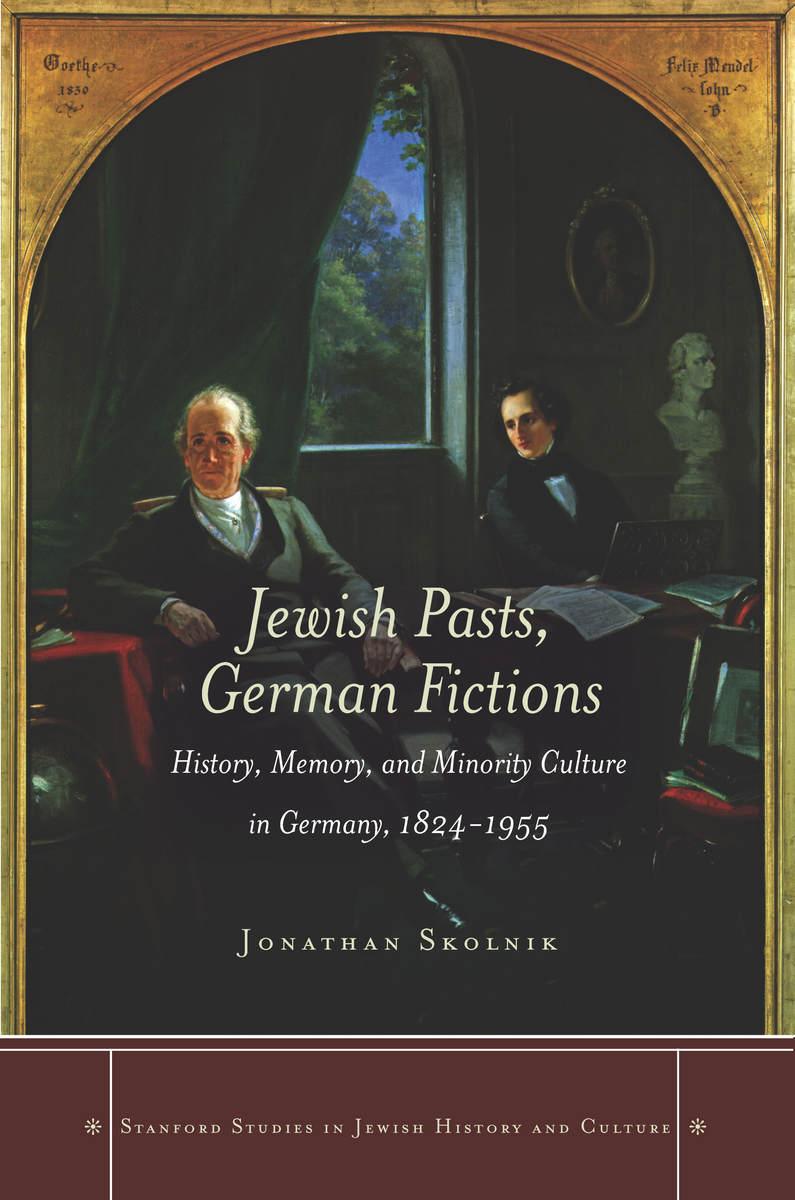
Jewish Pasts, German Fictions is the first comprehensive study of how German-Jewish writers used images from the Spanish-Jewish past to define their place in German culture and society. Jonathan Skolnik argues that Jewish historical fiction was a form of cultural memory that functioned as a parallel to the modern, demythologizing project of secular Jewish history writing.
What did it imply for a minority to imagine its history in the majority language? Skolnik makes the case that the answer lies in the creation of a German-Jewish minority culture in which historical fiction played a central role. After Hitler's rise to power in 1933, Jewish writers and artists, both in Nazi Germany and in exile, employed images from the Sephardic past to grapple with the nature of fascism, the predicament of exile, and the destruction of European Jewry in the Holocaust. The book goes on to show that this past not only helped Jews to make sense of the nonsense, but served also as a window into the hopes for integration and fears about assimilation that preoccupied German-Jewish writers throughout most of the nineteenth century. Ultimately, Skolnik positions the Jewish embrace of German culture not as an act of assimilation but rather a reinvention of Jewish identity and historical memory.
Pay easily by card, Klarna, Apple Pay or Google Pay. Not happy? You always have a 14-day money-back guarantee. Read more in our terms. If you have any questions, email us at hello@memmo.org.
Memmo makes studying easier – wherever you are in the world. We bring your course books and smart study tools together in one place: summaries, quizzes, podcasts and flashcards. Plus Ted, your study buddy who answers anything you wonder. Over 50,000 students already study here – built to help you learn faster and stress less.