
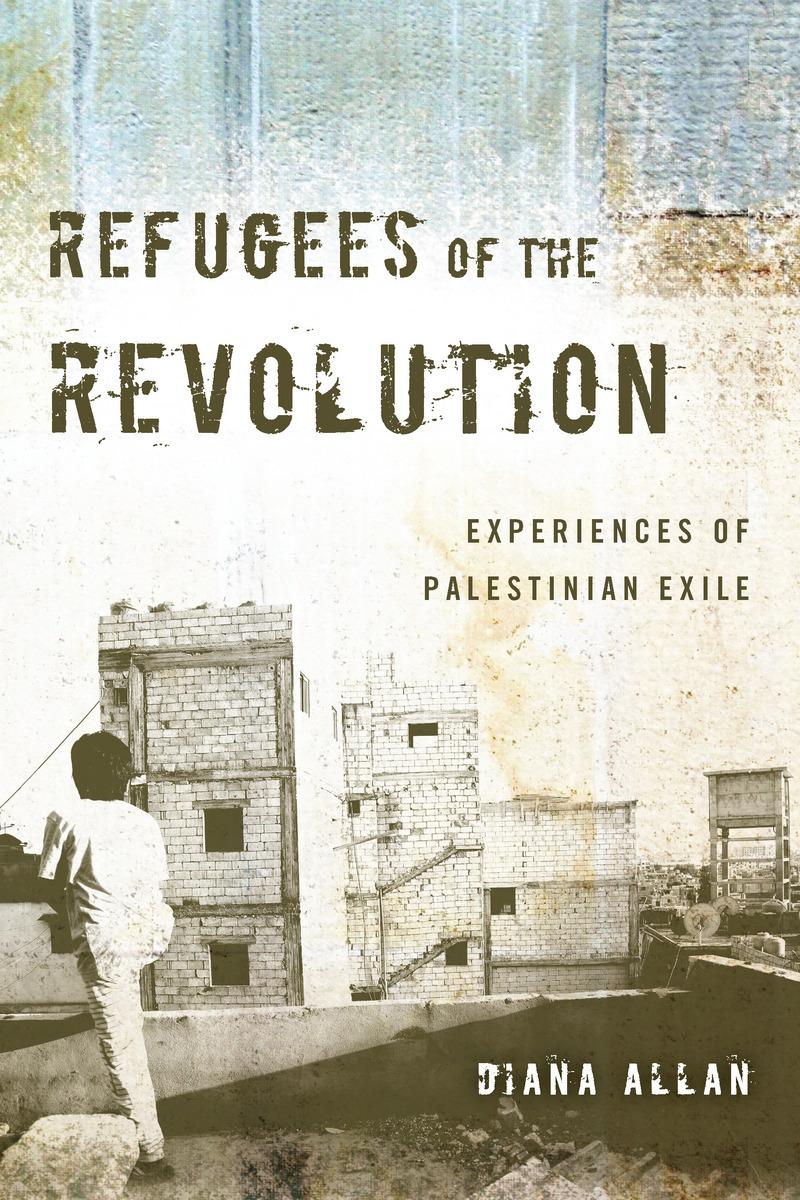
Some sixty-five years after 750,000 Palestinians fled or were expelled from their homeland, the popular conception of Palestinian refugees still emphasizes their fierce commitment to exercising their "right of return." Exile has come to seem a kind of historical amber, preserving refugees in a way of life that ended abruptly with "the catastrophe" of 1948 and their camps—inhabited now for four generations—as mere zones of waiting. While reducing refugees to symbols of steadfast single-mindedness has been politically expedient to both sides of the Arab-Israeli conflict it comes at a tremendous cost for refugees themselves, overlooking their individual memories and aspirations and obscuring their collective culture in exile.
Refugees of the Revolution is an evocative and provocative examination of everyday life in Shatila, a refugee camp in Beirut. Challenging common assumptions about Palestinian identity and nationalist politics, Diana Allan provides an immersive account of camp experience, of communal and economic life as well as inner lives, tracking how residents relate across generations, cope with poverty and marginalization, and plan––pragmatically and speculatively—for the future. She gives unprecedented attention to credit associations, debt relations, electricity bartering, emigration networks, and NGO provisions, arguing that a distinct Palestinian identity is being forged in the crucible of local pressures.
What would it mean for the generations born in exile to return to a place they never left? Allan addresses this question by rethinking the relationship between home and homeland. In so doing, she reveals how refugees are themselves pushing back against identities rooted in a purely nationalist discourse. This groundbreaking book offers a richly nuanced account of Palestinian exile, and presents new possibilities for the future of the community.
Pay easily by card, Klarna, Apple Pay or Google Pay. Not happy? You always have a 14-day money-back guarantee. Read more in our terms. If you have any questions, email us at hello@memmo.org.
Memmo makes studying easier – wherever you are in the world. We bring your course books and smart study tools together in one place: summaries, quizzes, podcasts and flashcards. Plus Ted, your study buddy who answers anything you wonder. Over 50,000 students already study here – built to help you learn faster and stress less.