
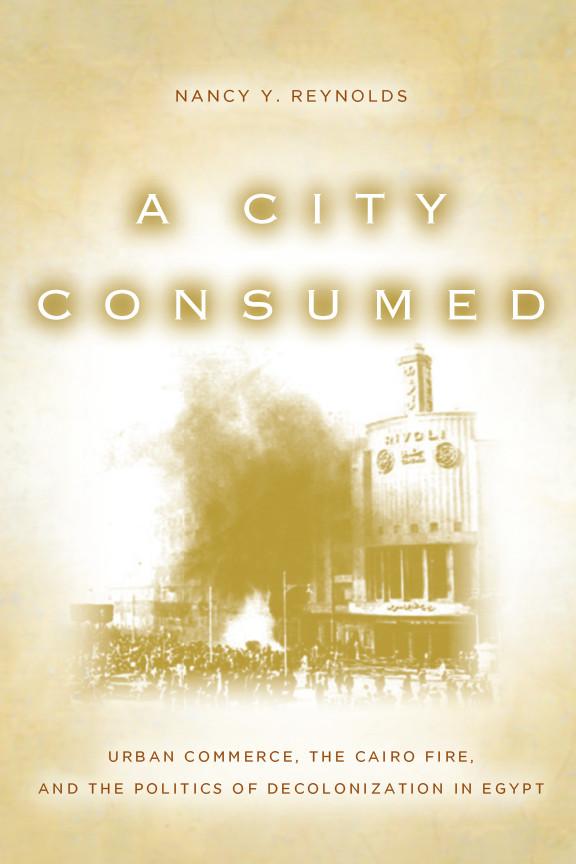
Though now remembered as an act of anti-colonial protest leading to the Egyptian military coup of 1952, the Cairo Fire that burned through downtown stores and businesses appeared to many at the time as an act of urban self-destruction and national suicide. The logic behind this latter view has now been largely lost. Offering a revised history, Nancy Reynolds looks to the decades leading up to the fire to show that the lines between foreign and native in city space and commercial merchandise were never so starkly drawn.
Consumer goods occupied an uneasy place on anti-colonial agendas for decades in Egypt before the great Cairo Fire. Nationalist leaders frequently railed against commerce as a form of colonial captivity, yet simultaneously expanded local production and consumption to anchor a newly independent economy. Close examination of struggles over dress and shopping reveals that nationhood coalesced informally from the conflicts and collaboration of consumers "from below" as well as more institutional and prescriptive mandates.
Pay easily by card, Klarna, Apple Pay or Google Pay. Not happy? You always have a 14-day money-back guarantee. Read more in our terms. If you have any questions, email us at hello@memmo.org.
Memmo makes studying easier – wherever you are in the world. We bring your course books and smart study tools together in one place: summaries, quizzes, podcasts and flashcards. Plus Ted, your study buddy who answers anything you wonder. Over 50,000 students already study here – built to help you learn faster and stress less.