
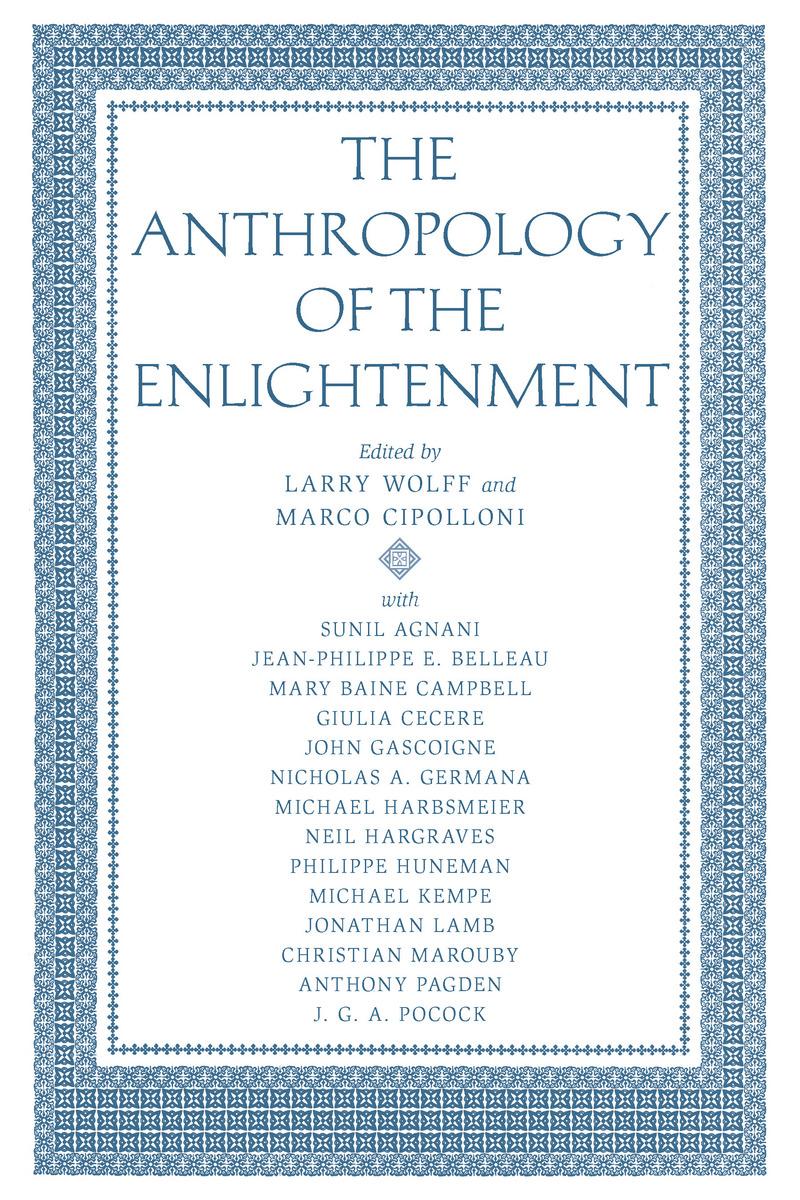
The modern enterprise of anthropology, with all of its important implications for cross-cultural perceptions, perspectives, and self-consciousness emerged from the eighteenth-century intellectual context of the Enlightenment. If the Renaissance discovered perspective in art, it was the Enlightenment that articulated and explored the problem of perspective in viewing history, culture, and society. If the Renaissance was the age of oceanic discovery—most dramatically the discovery of the New World of America—the critical reflections of the Enlightenment brought about an intellectual rediscovery of the New World and thus laid the foundations for modern anthropology. The contributions that constitute this book present the multiple anthropological facets of the Enlightenment, and suggest that the character of its intellectual engagements—acknowledging global diversity, interpreting human societies, and bridging cultural difference—must be understood as a whole to be fundamentally anthropological.
Pay easily by card, Klarna, Apple Pay or Google Pay. Not happy? You always have a 14-day money-back guarantee. Read more in our terms. If you have any questions, email us at hello@memmo.org.
Memmo makes studying easier – wherever you are in the world. We bring your course books and smart study tools together in one place: summaries, quizzes, podcasts and flashcards. Plus Ted, your study buddy who answers anything you wonder. Over 50,000 students already study here – built to help you learn faster and stress less.