
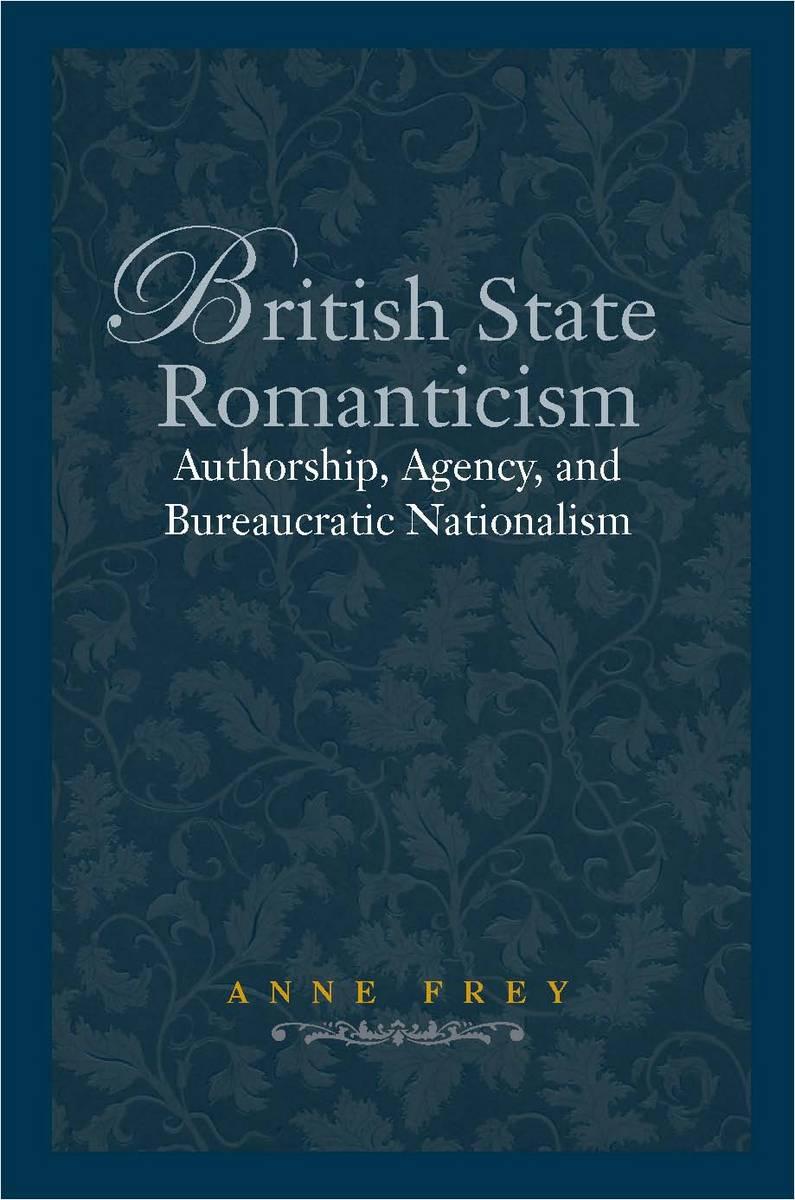
British State Romanticism contends that changing definitions of state power in the late Romantic period propelled authors to revisit the work of literature as well as the profession of authorship. Traditionally, critics have seen the Romantics as imaginative geniuses and viewed the supposedly less imaginative character of their late work as evidence of declining abilities. Frey argues, in contrast, that late Romanticism offers an alternative aesthetic model that adjusts authorship to work within an expanding and bureaucratizing state. She examines how Wordsworth, Coleridge, Austen, Scott, and De Quincey portray specific state and imperial agencies to debate what constituted government power, through what means government penetrated individual lives, and how non-governmental figures could assume government authority. Defining their work as part of an expanding state, these writers also reworked Romantic structures such as the imagination, organic form, and the literary sublime to operate through state agencies and to convey membership in a nation.
Pay easily by card, Klarna, Apple Pay or Google Pay. Not happy? You always have a 14-day money-back guarantee. Read more in our terms. If you have any questions, email us at hello@memmo.org.
Memmo makes studying easier – wherever you are in the world. We bring your course books and smart study tools together in one place: summaries, quizzes, podcasts and flashcards. Plus Ted, your study buddy who answers anything you wonder. Over 50,000 students already study here – built to help you learn faster and stress less.