
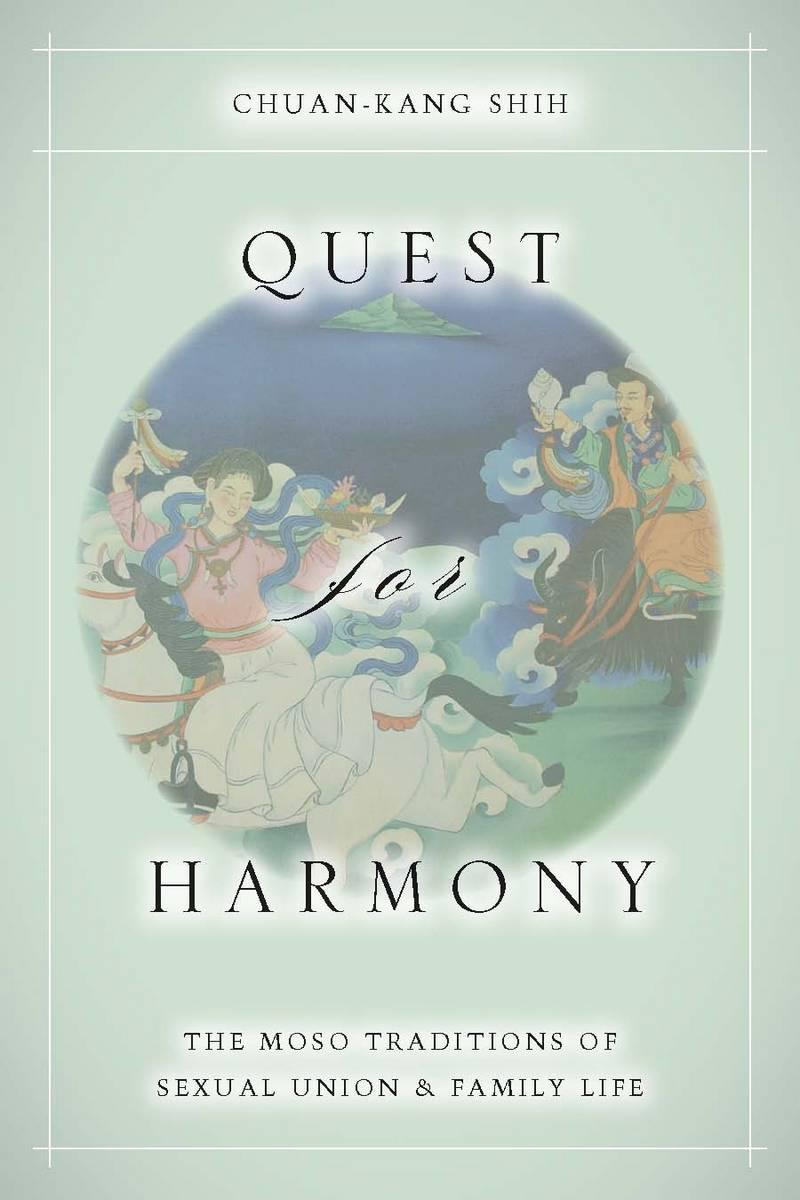
In this long-awaited ethnography, Chuan-kang Shih details the traditional social and cultural conditions of the Moso, a matrilineal group living on the border of Yunnan and Sichuan Provinces in southwest China. Among the Moso, a majority of the adult population practice a visiting system called tisese instead of marriage as the normal sexual and reproductive institution. Until recently, tisese was noncontractual, nonobligatory, and nonexclusive. Partners lived and worked in separate households. The only prerequisite for a tisese relationship was a mutual agreement between the man and the woman to allow sexual access to each other. In a comprehensive account, Quest for Harmony explores this unique practice specifically, and offers thorough documentation, fine-grained analysis, and an engaging discussion of the people, history, and structure of Moso society. Drawing on the author's extensive fieldwork, conducted from 1987 to 2006, this is the first ethnography of the Moso written in English.
Pay easily by card, Klarna, Apple Pay or Google Pay. Not happy? You always have a 14-day money-back guarantee. Read more in our terms. If you have any questions, email us at hello@memmo.org.
Memmo makes studying easier – wherever you are in the world. We bring your course books and smart study tools together in one place: summaries, quizzes, podcasts and flashcards. Plus Ted, your study buddy who answers anything you wonder. Over 50,000 students already study here – built to help you learn faster and stress less.