
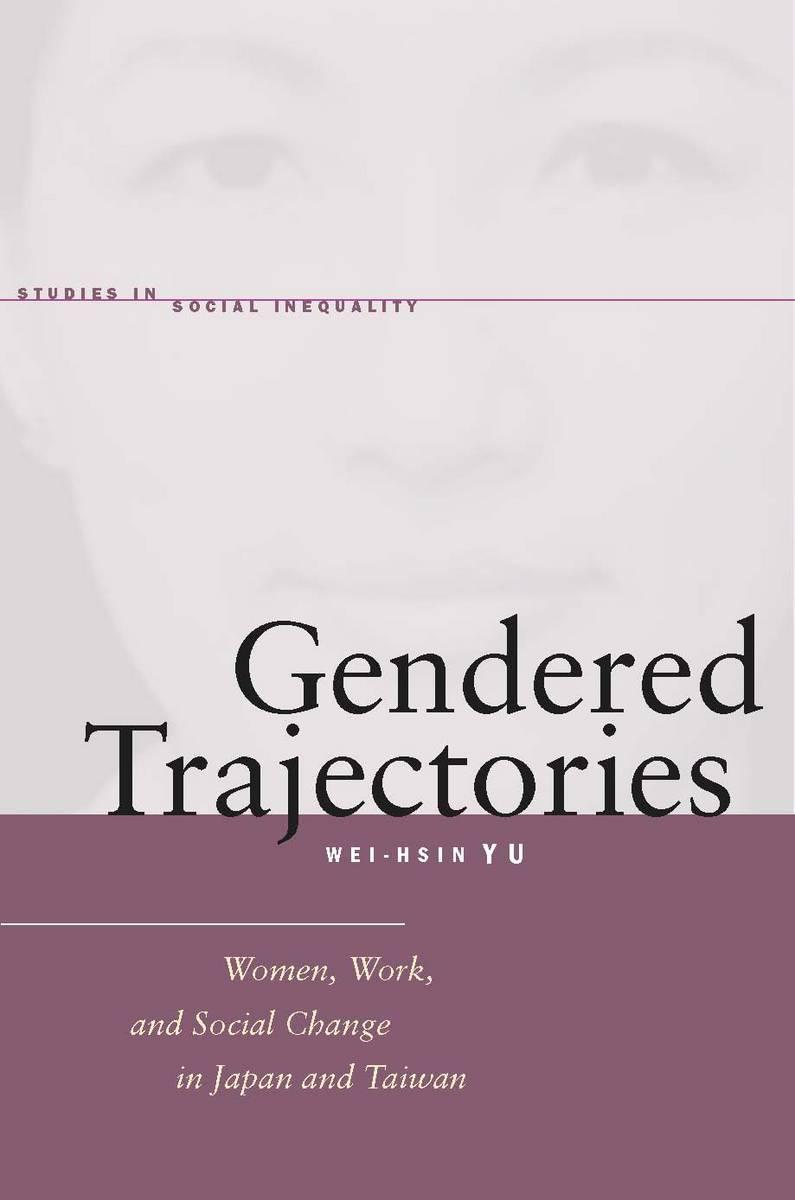
Gendered Trajectories explores why industrial societies vary in the pace at which they reduce gender inequality and compares changes in women's employment opportunities in Japan and Taiwan over the last half-century. Japan has undergone much less improvement in women's economic status than Taiwan, despite its more advanced economy and greater welfare provisions. The difference is particularly puzzling because the two countries share many institutional practices and values.
Drawing on historical trends, survey statistics, and personal interviews with people in both countries, Yu shows how country-specific organizational arrangements and industrial policies affect women's employment. In particular, the conditions faced by Japanese and Taiwanese women in the workplace have a profound effect on their labor force participation at critical points in their lives. Women's lifetime employment decisions in turn shape the divergent trajectories in gender equality.
Few studies documenting the development of women's economic lives are based on non-Western societies and even fewer adopt a comparative perspective. This perceptive work demonstrates and underscores the importance of understanding gender inequality as a long-term, dynamic social process.
Pay easily by card, Klarna, Apple Pay or Google Pay. Not happy? You always have a 14-day money-back guarantee. Read more in our terms. If you have any questions, email us at hello@memmo.org.
Memmo makes studying easier – wherever you are in the world. We bring your course books and smart study tools together in one place: summaries, quizzes, podcasts and flashcards. Plus Ted, your study buddy who answers anything you wonder. Over 50,000 students already study here – built to help you learn faster and stress less.