
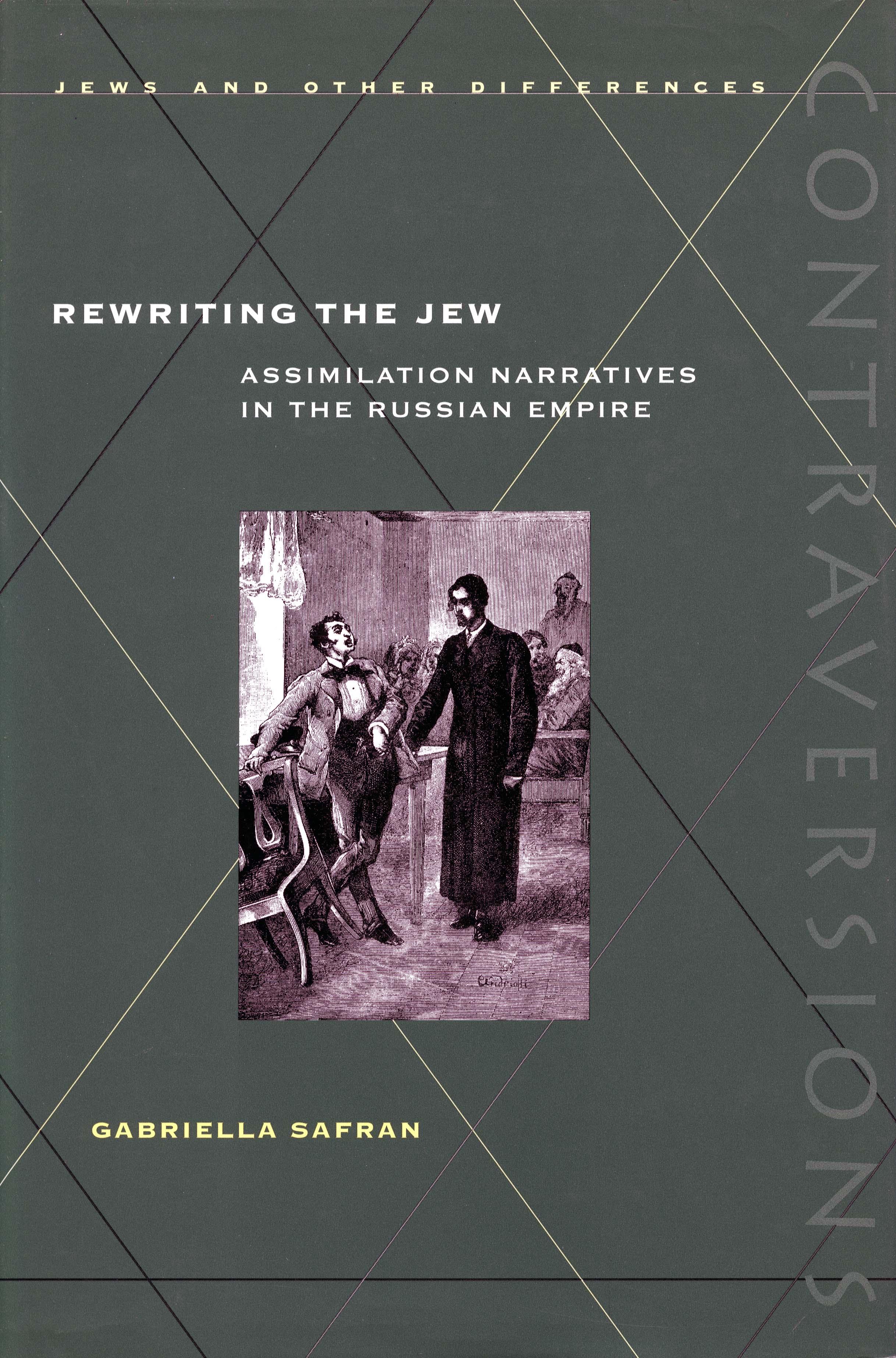
In the Russian Empire of the 1870s and 1880s, while intellectuals and politicians furiously debated the "Jewish Question," more and more acculturating Jews, who dressed, spoke, and behaved like non-Jews, appeared in real life and in literature. This book examines stories about Jewish assimilation by four authors: Grigory Bogrov, a Russian Jew; Eliza Orzeszkowa, a Polish Catholic; and Nikolai Leskov and Anton Chekhov, both Eastern Orthodox Russians. Safran introduces the English-language reader to works that were much discussed in their own time, and she situates Jewish and non-Jewish writers together in the context they shared.
For nineteenth-century writers and readers, successful fictional characters were "types," literary creations that both mirrored and influenced the trajectories of real lives. Stories about Jewish assimilators and converts often juxtaposed two contrasting types: the sincere reformer or true convert who has experienced a complete transformation, and the secret recidivist or false convert whose real loyalties will never change. As Safran shows, writers borrowed these types from many sources, including the novel of education produced by the Jewish enlightenment movement (the Haskalah), the political rhetoric of "Positivist" Polish nationalism, the Bible, Shakespeare, and Slavic folk beliefs.
Rewriting the Jew casts new light on the concept of type itself and on the question of whether literature can transfigure readers. The classic story of Jewish assimilation describes readers who redesign themselves after the model of fictional characters in secular texts. The writers studied here, though, examine attempts at Jewish self-transformation while wondering about the reformability of personality. In looking at their works, Safran relates the modern Eastern European Jewish experience to a fundamental question of aesthetics: Can art change us?
Pay easily by card, Klarna, Apple Pay or Google Pay. Not happy? You always have a 14-day money-back guarantee. Read more in our terms. If you have any questions, email us at hello@memmo.org.
Memmo makes studying easier – wherever you are in the world. We bring your course books and smart study tools together in one place: summaries, quizzes, podcasts and flashcards. Plus Ted, your study buddy who answers anything you wonder. Over 50,000 students already study here – built to help you learn faster and stress less.