
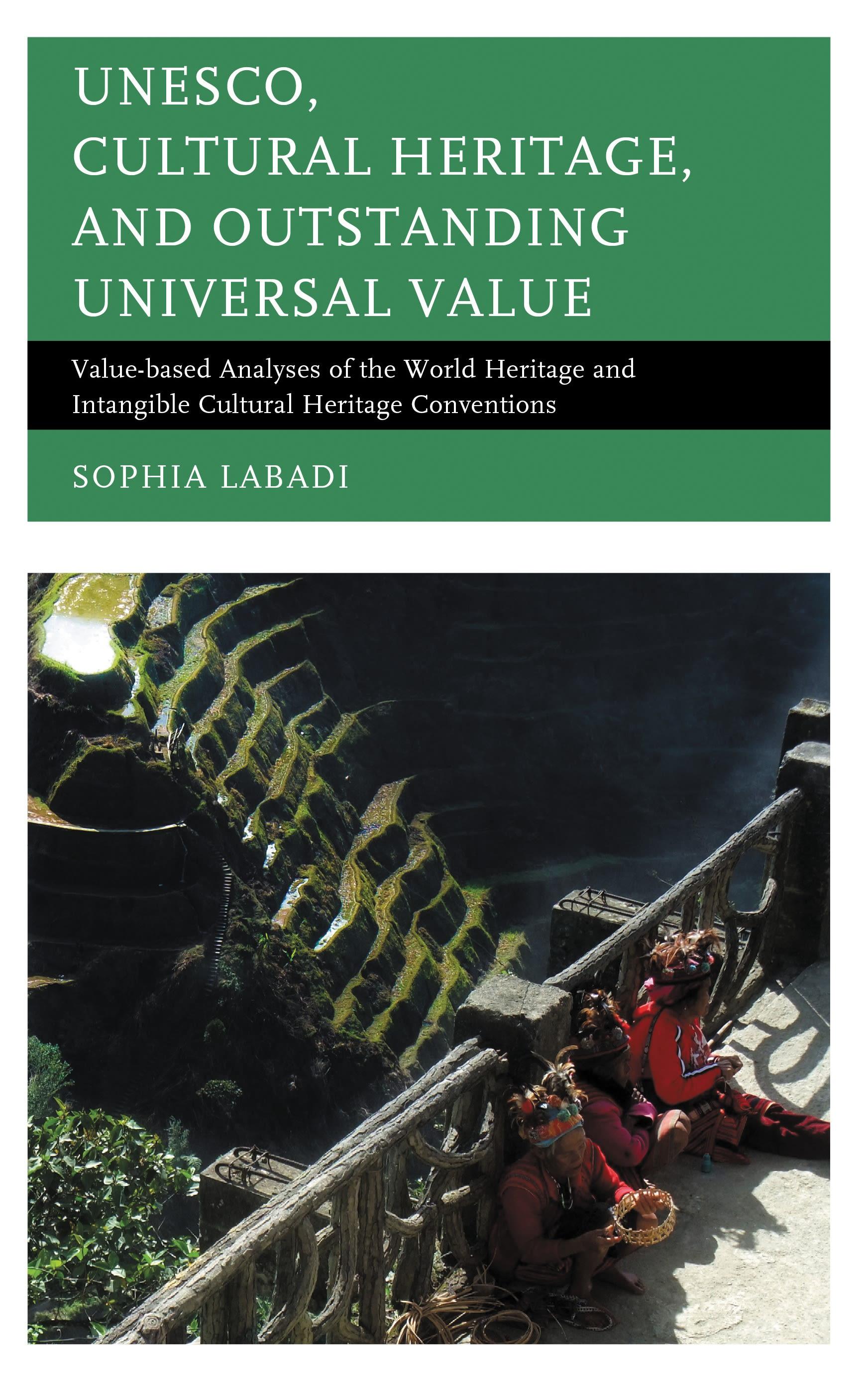
This book explores the international legal framework developed by UNESCO to identify and protect world heritage and its implementation at the national level. Drawing on close policy analysis of UNESCO’s major documents, extensive professional experience at UNESCO, as well as in-depth analyses of case studies from Asia, Europe, and Latin America, Sophia Labadi offers a nuanced discussion of the constitutive role of national understandings of a universalist framework. The discussion departs from considerations of the World Heritage Convention as Eurocentric and offers a more complex analysis of how official narratives relating to non-European and non-traditional heritage mark a subversion of a dominant and canonical European representation of heritage. It engages simultaneously with a diversity of discourses across the humanities and social sciences and with related theories pertaining not only to tangible and intangible heritage, conservation, and archaeology but also political science, social theory, tourism and development studies, economics, cultural, and gender studies. In doing so, it provides a critical review of many key concepts, including tourism, development, sustainability, intangible heritage, and authenticity.
Pages: 204
Category: Kultur-, Genus- & Postkoloniala studier
e-ISBN: 9780759122574
Shipping weight: 1.2 kg
Ships in: 1-2 days
Pay easily by card, Klarna, Apple Pay or Google Pay. Not happy? You always have a 14-day money-back guarantee. Read more in our terms. If you have any questions, email us at hello@memmo.org.
Memmo makes studying easier – wherever you are in the world. We bring your course books and smart study tools together in one place: summaries, quizzes, podcasts and flashcards. Plus Ted, your study buddy who answers anything you wonder. Over 50,000 students already study here – built to help you learn faster and stress less.