
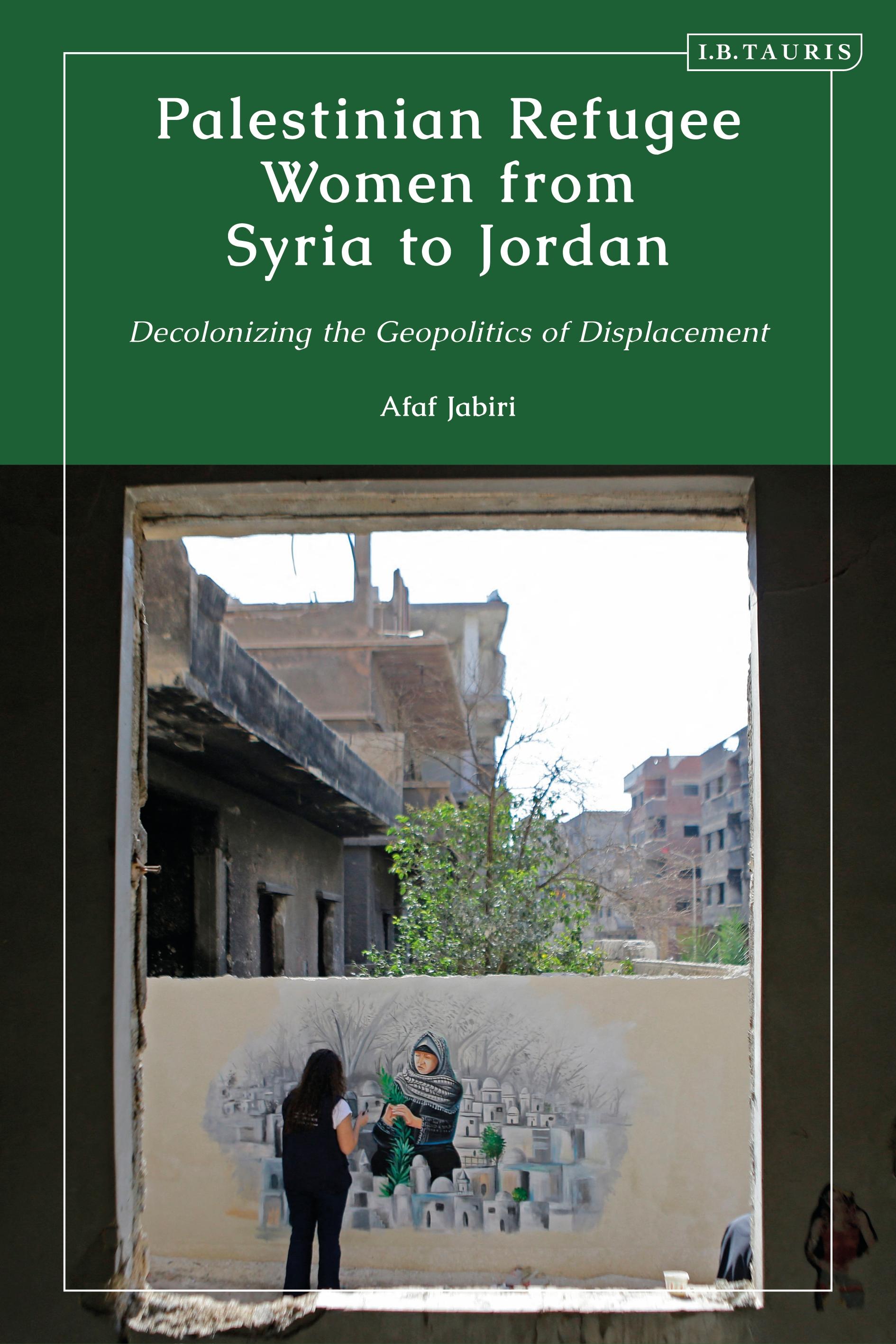
Won Honorable Mention in the Association for Middle East Women's Studies Book Awards 2025
Based on four years of field research in Palestinian camps in Jordan - including unique interviews with Palestinian refugee women, aid workers, and representatives of international organisations and NGOs in Jordan - the book reveals the extraordinary layers of discrimination suffered by Palestinian women from Syria displaced to Jordan.
The women's experiences show them caught between settler colonialism, militarism, nationalism, refugees' global governance and gender regimes that subjected them to multiple forms of structural gender-based violence. The book argues for a feminist analysis of settler colonialism's epistemic violence of anti-Palestinianism to expose the history and geopolitics of intersecting oppressive systems that work through and upon gendered bodies of Palestinian refugee women in humanitarian settings. The book also highlights how local women's groups and frontline workers attempt to fill service gaps. Using a rich theoretical lens to understand the experiences of women in refugee camps, this book attempts to decolonise issues around migration, displacement, refugees and women.
Previous work on the Syrian refugee crisis has overlooked the very particular experiences of Palestinian refugee women, which has weakened feminist analysis of gendered processes of humanitarianism, and feminist transnational and intersectional solidarity. This book offers a vital critique of how feminists' adoption of a universality-based analysis of the Syrian refugee crisis has contributed to the further marginalisation of Palestinian refugee women from Syria.
Based on four years of field research in Palestinian camps in Jordan - including unique interviews with Palestinian refugee women, aid workers, and representatives of international organisations and NGOs in Jordan - the book reveals the extraordinary layers of discrimination suffered by Palestinian women from Syria displaced to Jordan.
The women's experiences show them caught between settler colonialism, militarism, nationalism, refugees' global governance and gender regimes that subjected them to multiple forms of structural gender-based violence. The book argues for a feminist analysis of settler colonialism's epistemic violence of anti-Palestinianism to expose the history and geopolitics of intersecting oppressive systems that work through and upon gendered bodies of Palestinian refugee women in humanitarian settings. The book also highlights how local women's groups and frontline workers attempt to fill service gaps. Using a rich theoretical lens to understand the experiences of women in refugee camps, this book attempts to decolonise issues around migration, displacement, refugees and women.
Previous work on the Syrian refugee crisis has overlooked the very particular experiences of Palestinian refugee women, which has weakened feminist analysis of gendered processes of humanitarianism, and feminist transnational and intersectional solidarity. This book offers a vital critique of how feminists' adoption of a universality-based analysis of the Syrian refugee crisis has contributed to the further marginalisation of Palestinian refugee women from Syria.
Pages: 208
Category: Kultur-, Genus- & Postkoloniala studier
e-ISBN: 9780755644827
Shipping weight: 1.2 kg
Ships in: 1-2 days
Pay easily by card, Klarna, Apple Pay or Google Pay. Not happy? You always have a 14-day money-back guarantee. Read more in our terms. If you have any questions, email us at hello@memmo.org.
Memmo makes studying easier – wherever you are in the world. We bring your course books and smart study tools together in one place: summaries, quizzes, podcasts and flashcards. Plus Ted, your study buddy who answers anything you wonder. Over 50,000 students already study here – built to help you learn faster and stress less.