
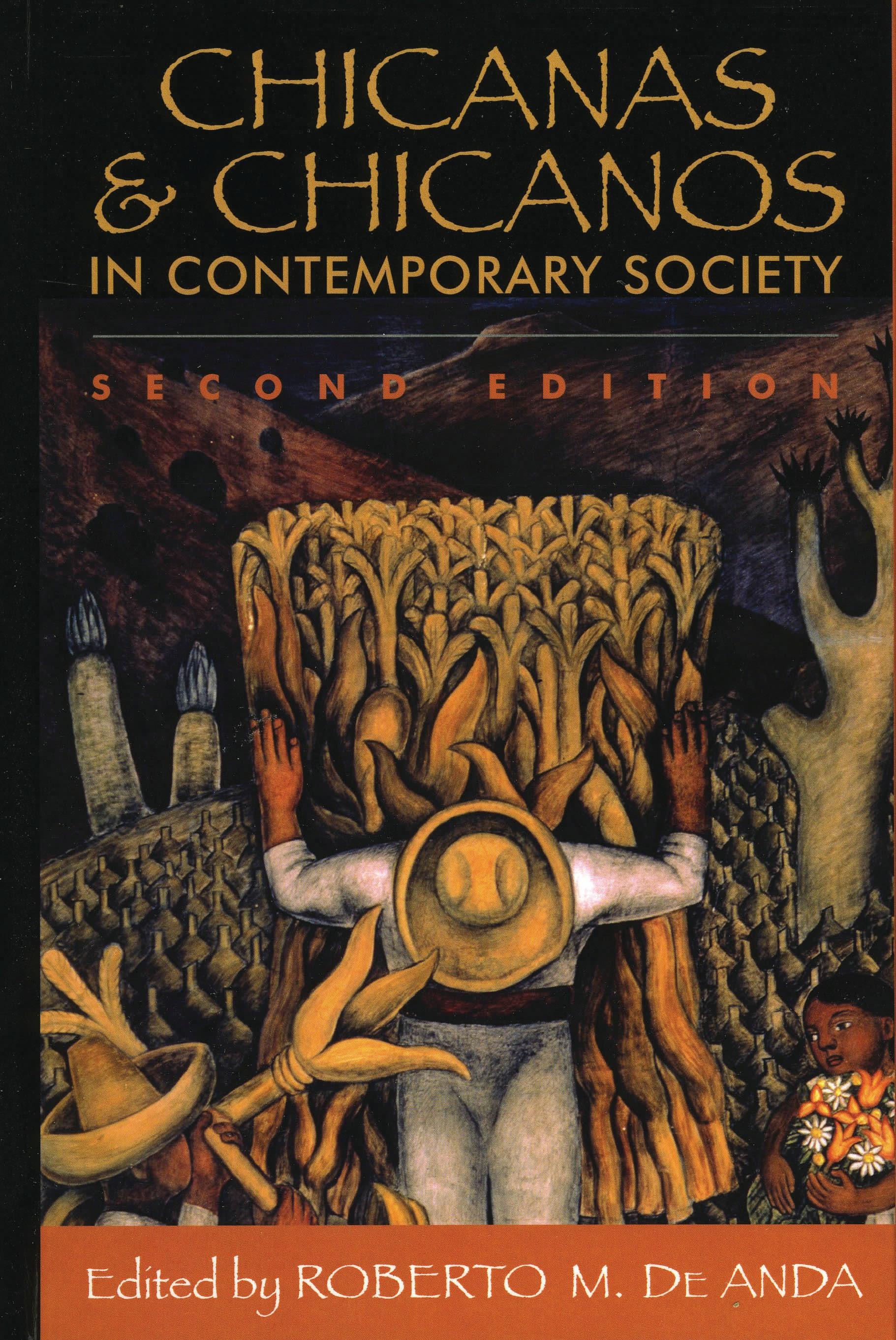
This book deals with a broad range of social issues facing Mexican-origin people in the United States. The studies presented in this volume are brought together by two main themes: (1) social inequalities-cultural, educational, and economic-endured by the Chicano/Mexicano community in the United States and (2) the community's efforts to eradicate the source of those inequalities.
The second edition of Chicanas and Chicanos in Contemporary Society takes into consideration the most recent demographic changes affecting the Chicano/Mexicano people. With one-third of persons of Mexican descent under the age of fifteen, many of the challenges center on the current well-being of children and their future prospects. Unlike any other book in the market, several chapters closely examine issues related to children and youth, with particular attention given to children's ethnic identity, schooling practices, and educational policies. Two additional features set this book apart from other books. First, it includes new chapters focused on Chicana/Mexicana mothers, including adolescent mothers, interactions with their children and their efforts to reform schools. Second, it has contributions that analyze relations between Mexican immigrants and their coethnics born in the United States.
The studies offered in this volume employ multiple theoretical perspectives and research methods. The studies invoke theories from social science disciplines such as sociology, anthropology, and psychology. Contributors use a variety of analytical strategies, including ethnographic methods and quantitative analysis.
The second edition of Chicanas and Chicanos in Contemporary Society takes into consideration the most recent demographic changes affecting the Chicano/Mexicano people. With one-third of persons of Mexican descent under the age of fifteen, many of the challenges center on the current well-being of children and their future prospects. Unlike any other book in the market, several chapters closely examine issues related to children and youth, with particular attention given to children's ethnic identity, schooling practices, and educational policies. Two additional features set this book apart from other books. First, it includes new chapters focused on Chicana/Mexicana mothers, including adolescent mothers, interactions with their children and their efforts to reform schools. Second, it has contributions that analyze relations between Mexican immigrants and their coethnics born in the United States.
The studies offered in this volume employ multiple theoretical perspectives and research methods. The studies invoke theories from social science disciplines such as sociology, anthropology, and psychology. Contributors use a variety of analytical strategies, including ethnographic methods and quantitative analysis.
Pages: 192
Category: Kultur-, Genus- & Postkoloniala studier
e-ISBN: 9780742573048
Shipping weight: 1.2 kg
Ships in: 1-2 days
Pay easily by card, Klarna, Apple Pay or Google Pay. Not happy? You always have a 14-day money-back guarantee. Read more in our terms. If you have any questions, email us at hello@memmo.org.
Memmo makes studying easier – wherever you are in the world. We bring your course books and smart study tools together in one place: summaries, quizzes, podcasts and flashcards. Plus Ted, your study buddy who answers anything you wonder. Over 50,000 students already study here – built to help you learn faster and stress less.