
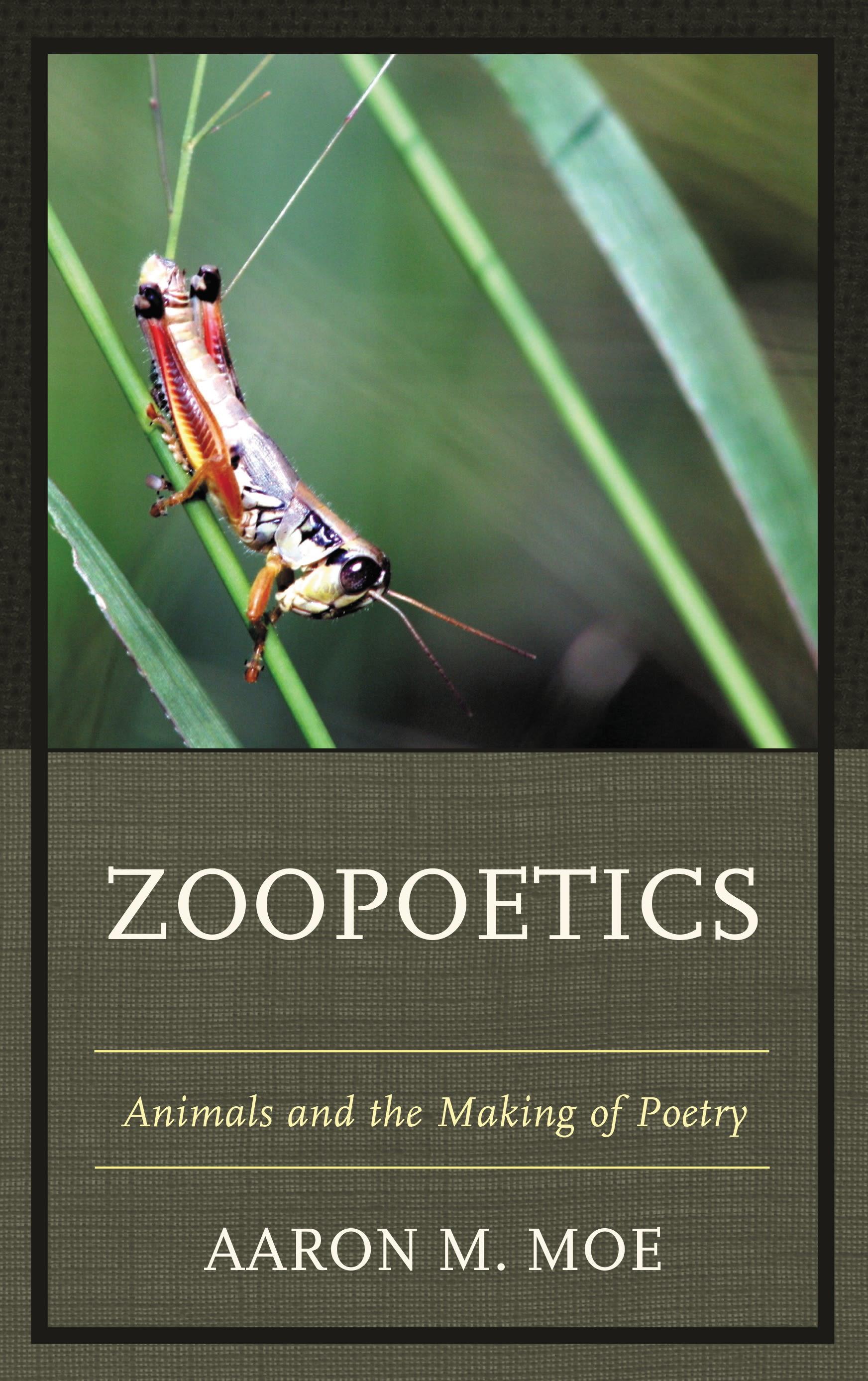
Zoopoetics assumes Aristotle was right. The general origin of poetry resides, in part, in the instinct to imitate. But it is an innovative imitation. An exploration of the oeuvres of Walt Whitman, E. E. Cummings, W. S. Merwin, and Brenda Hillman reveals the many places where an imitation of another species’ poiesis (Greek, makings) contributes to breakthroughs in poetic form. However, humans are not the only imitators in the animal kingdom. Other species, too, achieve breakthroughs in their makings through an attentiveness to the ways-of-being of other animals. For this reason, mimic octopi, elephants, beluga whales, and many other species join the exploration of what zoopoetics encompasses. Zoopoetics provides further traction for people interested in the possibilities when and where species meet.
Gestures are paramount to zoopoetics. Through the interplay of gestures, the human/animal/textual spheres merge making it possible to recognize how actual, biological animals impact the material makings of poetry. Moreover, as many species are makers, zoopoetics expands the poetic tradition to include nonhuman poiesis.
Gestures are paramount to zoopoetics. Through the interplay of gestures, the human/animal/textual spheres merge making it possible to recognize how actual, biological animals impact the material makings of poetry. Moreover, as many species are makers, zoopoetics expands the poetic tradition to include nonhuman poiesis.
Pay easily by card, Klarna, Apple Pay or Google Pay. Not happy? You always have a 14-day money-back guarantee. Read more in our terms. If you have any questions, email us at hello@memmo.org.
Memmo makes studying easier – wherever you are in the world. We bring your course books and smart study tools together in one place: summaries, quizzes, podcasts and flashcards. Plus Ted, your study buddy who answers anything you wonder. Over 50,000 students already study here – built to help you learn faster and stress less.