
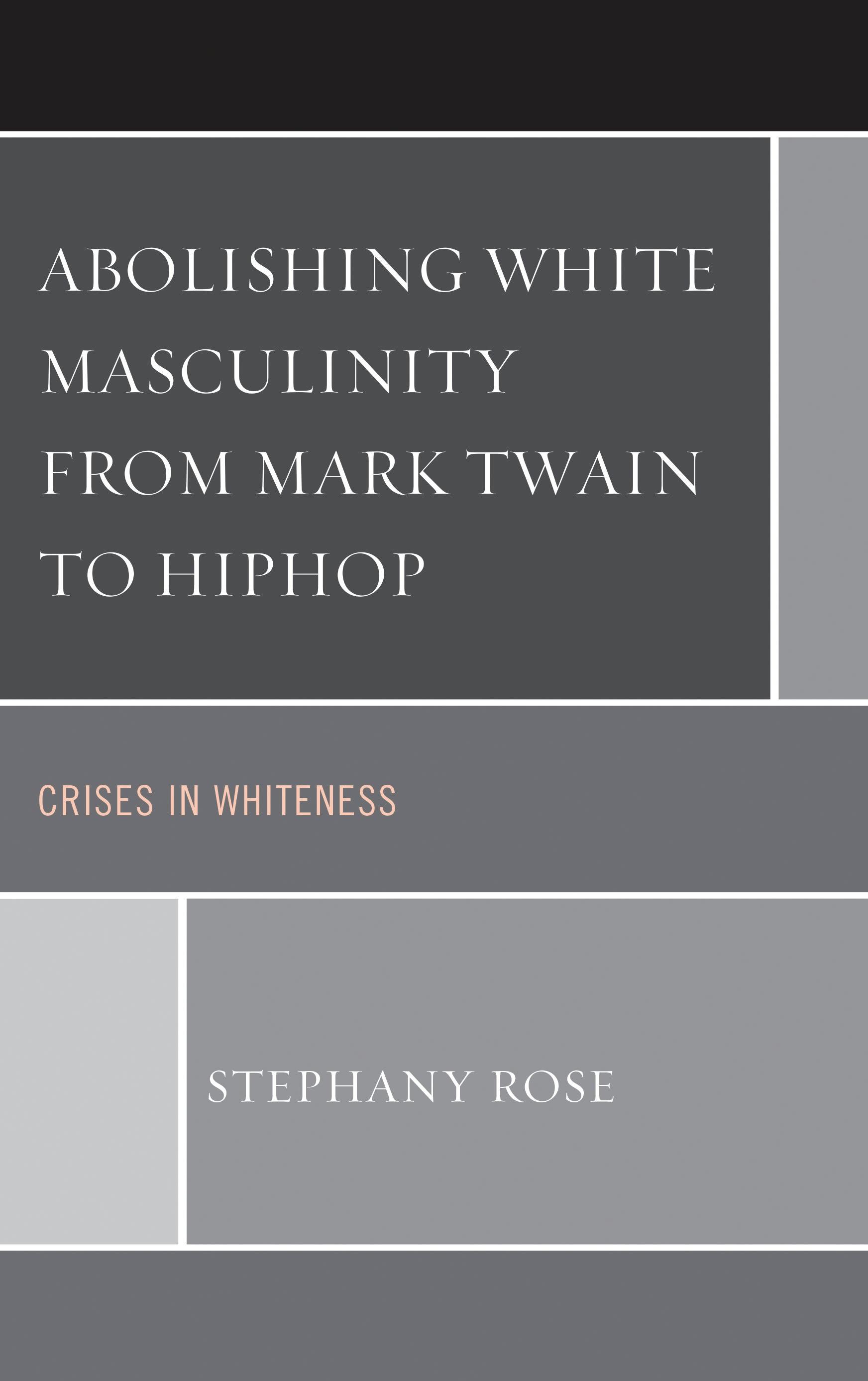
Abolishing White Masculinity from Mark Twain to Hiphop examines white American male literature for its social commentary on the construction of whiteness in the United States. Whiteness has always been a contested racial identity in the U.S., one in a state of construction and reconstruction throughout critical cultural and historical moments. This text examines how white American male writers have grappled with understanding themselves and their audiences as white beings.
Abolishing White Masculinity from Mark Twain to Hiphop specifically brings a critical whiteness approach to American literary criticism and strengthens the growing interdisciplinary field of critical whiteness studies in the humanities. Critical whiteness studies shifts the attention from solely examining people and perspectives of color in race discourse to addressing whiteness as an essential component of race ideology. The primary contribution of this perspective is in how whites construct and see whiteness, for the larger purpose of exploring the possibilities of how they may come to no longer construct and see themselves through whiteness. Understanding this is at the heart of contemporary discussions of post-raciality.
Abolishing White Masculinity from Mark Twain to Hiphop uses the following texts as canonical case studies: Puddn’head Wilson and Those Extraordinary Twins by Mark Twain, The Great Gatsby and The Beautiful and the Damned by F. Scott Fitzgerald, and Angry Black White Boy and The End of the Jews by Adam Mansbach. Each underscores the dialectic of formation, deformation, and reformation of whiteness at specific socio-historical moments based upon anxieties about race possessed by whites and highlighted by white fictionists. The selected writers ultimately serve dually as co-constructors of whiteness and social critics of their times through their literature.
Abolishing White Masculinity from Mark Twain to Hiphop specifically brings a critical whiteness approach to American literary criticism and strengthens the growing interdisciplinary field of critical whiteness studies in the humanities. Critical whiteness studies shifts the attention from solely examining people and perspectives of color in race discourse to addressing whiteness as an essential component of race ideology. The primary contribution of this perspective is in how whites construct and see whiteness, for the larger purpose of exploring the possibilities of how they may come to no longer construct and see themselves through whiteness. Understanding this is at the heart of contemporary discussions of post-raciality.
Abolishing White Masculinity from Mark Twain to Hiphop uses the following texts as canonical case studies: Puddn’head Wilson and Those Extraordinary Twins by Mark Twain, The Great Gatsby and The Beautiful and the Damned by F. Scott Fitzgerald, and Angry Black White Boy and The End of the Jews by Adam Mansbach. Each underscores the dialectic of formation, deformation, and reformation of whiteness at specific socio-historical moments based upon anxieties about race possessed by whites and highlighted by white fictionists. The selected writers ultimately serve dually as co-constructors of whiteness and social critics of their times through their literature.
Pay easily by card, Klarna, Apple Pay or Google Pay. Not happy? You always have a 14-day money-back guarantee. Read more in our terms. If you have any questions, email us at hello@memmo.org.
Memmo makes studying easier – wherever you are in the world. We bring your course books and smart study tools together in one place: summaries, quizzes, podcasts and flashcards. Plus Ted, your study buddy who answers anything you wonder. Over 50,000 students already study here – built to help you learn faster and stress less.