
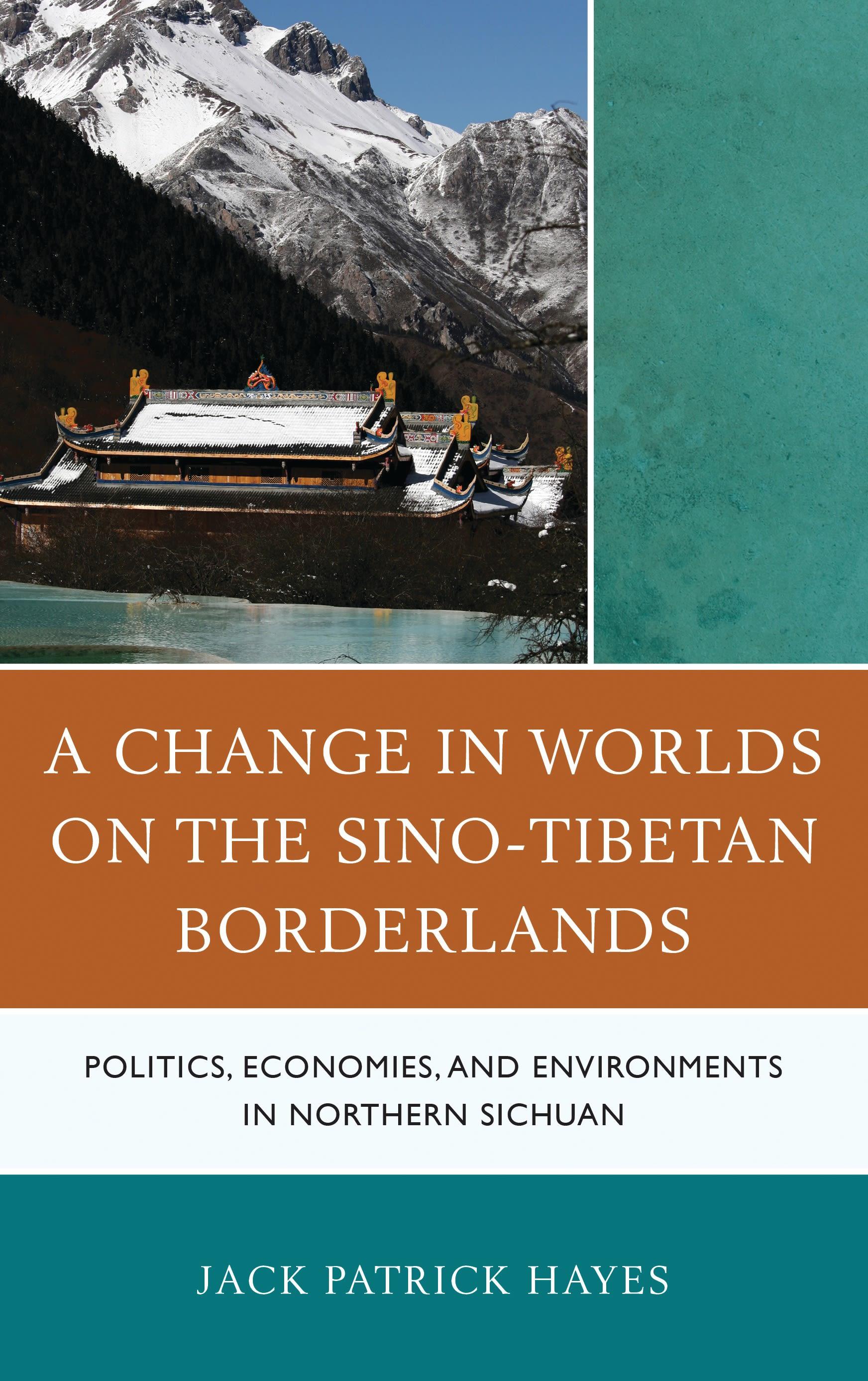
A Change in Worlds explores the environmental, economic, and political history of the Sino-Tibetan Songpan region of northern Sichuan from the late imperial Qing Dynasty to the early 21st century. A historically Tibetan region on the eastern edge of the Tibetan Plateau, with significant Han and Muslim Chinese populations, Songpan played important roles in the development of western and modern China’s ethnic relations policies, forestry sector, grasslands and environmental conservation, and recent developments in eco- and ethnic tourism as part of various Chinese states. However, in spite of close associations with various Tibetan and Chinese regimes, the region also has a rich history of local independence and resilient nomadic, semi-nomadic and agricultural populations and identities. The Sino-Tibetan diversity in Songpan, partly formed by unique ecological conditions, conditioned all attempts to incorporate the region into larger and more centralized state homogenizing structures.
This historical study analyzes the social force of markets and nature in the Songpan region in concert with the political and social conflicts and compromise at the heart of changing political regimes and the area’s ethnic groups. It presents new perspectives on the social transformation and economies of Tibetans and Han Chinese from the late Qing Dynasty to Mao era and contemporary western China. It not only allows for a new understanding of how the natural environment and landscapes fit into the imagination of the Sino-Tibetan borderlands, it also figures in the challenges of negotiating ethnic and market relations among societies. The mix of complicated relations over natural environment, resources, politics and markets was at the heart of the region’s social and political infrastructures, with far-reaching implications for both historical and contemporary China.
This historical study analyzes the social force of markets and nature in the Songpan region in concert with the political and social conflicts and compromise at the heart of changing political regimes and the area’s ethnic groups. It presents new perspectives on the social transformation and economies of Tibetans and Han Chinese from the late Qing Dynasty to Mao era and contemporary western China. It not only allows for a new understanding of how the natural environment and landscapes fit into the imagination of the Sino-Tibetan borderlands, it also figures in the challenges of negotiating ethnic and market relations among societies. The mix of complicated relations over natural environment, resources, politics and markets was at the heart of the region’s social and political infrastructures, with far-reaching implications for both historical and contemporary China.
Pages: 310
Category: Kultur-, Genus- & Postkoloniala studier
e-ISBN: 9780739173817
Shipping weight: 1.2 kg
Ships in: 1-2 days
Pay easily by card, Klarna, Apple Pay or Google Pay. Not happy? You always have a 14-day money-back guarantee. Read more in our terms. If you have any questions, email us at hello@memmo.org.
Memmo makes studying easier – wherever you are in the world. We bring your course books and smart study tools together in one place: summaries, quizzes, podcasts and flashcards. Plus Ted, your study buddy who answers anything you wonder. Over 50,000 students already study here – built to help you learn faster and stress less.