
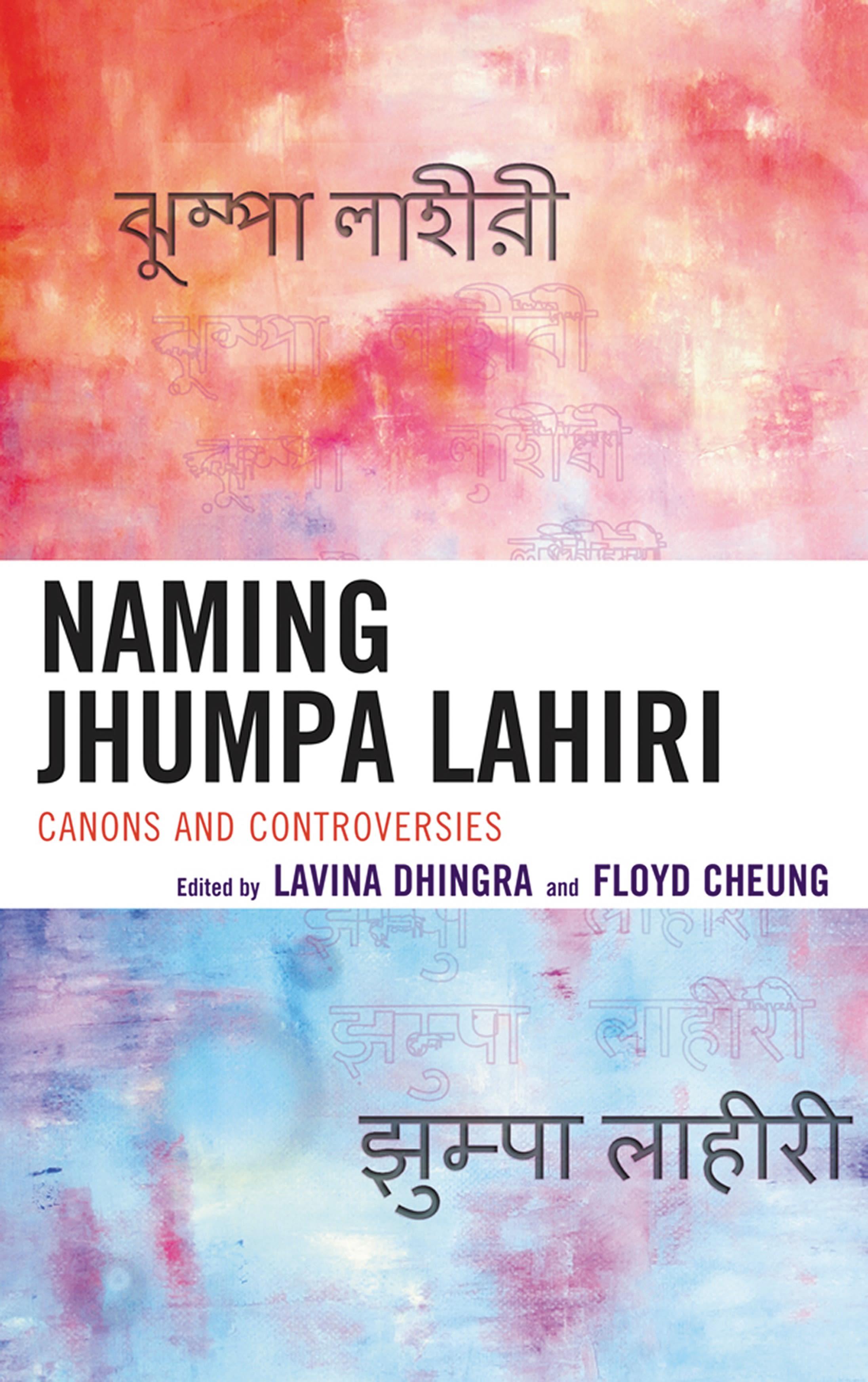
Jhumpa Lahiri is among the few contemporary writers being read widely by both mainstream and minority audiences, the general public and academic scholars, in the U.S. and globally. While her works focus on specific ethnic experiences of highly educated, upper middle-class professional Bengalis and their children living in New England since the 1970s, they simultaneously address universal themes that consistently keep them on the New York Times bestseller lists, and that have made the film adaptation of her novel, The Namesake (2006), into a transnational phenomenon. Lahiri is also one of the first South Asian American writers to be included in the Heath Anthology of American Literature.
Even though South Asian diasporic writers have won many prestigious international prizes, the meteoric success of Jhumpa Lahiri has raised new questions regarding her naming: Is she a Bengali American writer? An Asian American writer? An Indian writer? An American writer? A postcolonial writer? Does what we name her matter? Does this naming determine whether, and how, and by whom Lahiri’s texts are read and taught, and to which literary canons they belong? Why is Lahiri’s writing so successful among multiple audiences, whether in Bengal, Boston, or beyond?
Naming Jhumpa Lahiri: Canons and Controversies addresses these and other questions, and explains why naming matters, to whom, and how paying attention to these questions can deepen our appreciation for the politics surrounding Lahiri’s works and our understanding of the literary texts themselves. This collection marks a significant evolution of the field of Asian American studies as it does not merely include scholars of South Asian descent writing about a South Asian writer in an ethnically confined context, but rather allows for intertextualities and conversations among scholars of varied ethnicities and fields including postcolonial, popular culture, psychoanalytic, film, women’s, American, and world literature studies.
Even though South Asian diasporic writers have won many prestigious international prizes, the meteoric success of Jhumpa Lahiri has raised new questions regarding her naming: Is she a Bengali American writer? An Asian American writer? An Indian writer? An American writer? A postcolonial writer? Does what we name her matter? Does this naming determine whether, and how, and by whom Lahiri’s texts are read and taught, and to which literary canons they belong? Why is Lahiri’s writing so successful among multiple audiences, whether in Bengal, Boston, or beyond?
Naming Jhumpa Lahiri: Canons and Controversies addresses these and other questions, and explains why naming matters, to whom, and how paying attention to these questions can deepen our appreciation for the politics surrounding Lahiri’s works and our understanding of the literary texts themselves. This collection marks a significant evolution of the field of Asian American studies as it does not merely include scholars of South Asian descent writing about a South Asian writer in an ethnically confined context, but rather allows for intertextualities and conversations among scholars of varied ethnicities and fields including postcolonial, popular culture, psychoanalytic, film, women’s, American, and world literature studies.
Pages: 238
Category: Litteraturvetenskap & Teori
e-ISBN: 9780739169988
Shipping weight: 1.2 kg
Ships in: 1-2 days
Pay easily by card, Klarna, Apple Pay or Google Pay. Not happy? You always have a 14-day money-back guarantee. Read more in our terms. If you have any questions, email us at hello@memmo.org.
Memmo makes studying easier – wherever you are in the world. We bring your course books and smart study tools together in one place: summaries, quizzes, podcasts and flashcards. Plus Ted, your study buddy who answers anything you wonder. Over 50,000 students already study here – built to help you learn faster and stress less.