
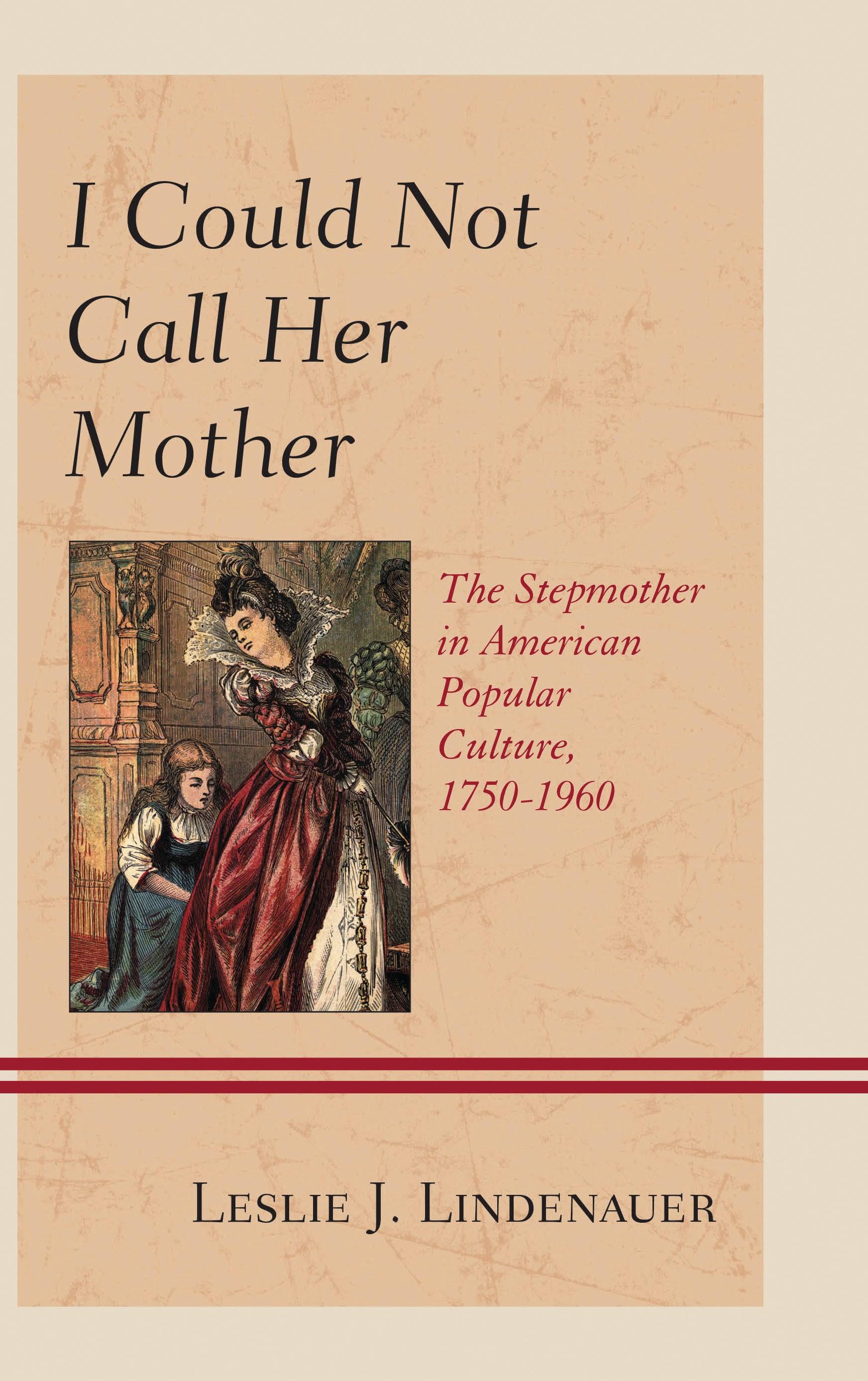
Stories of the stepmother, the substitute mother, or the “other mother” have infused popular culture for centuries and continue to do so today. She plays a substantial role in our collective imagination, whether we are a part of a step family or not. Despite the fact that the stepmother remains a prevalent figure, both in popular culture and reality, scholars have largely avoided addressing this fraught figure. I Could Not Call Her Mother explores representations of the stepmother in American popular culture from the colonial period to 1960. The archetypal stepmother appears from nineteenth-century romance novels and advice literature to 1930s pulp fiction and film noir. Leslie J. Lindenauer argues that when considered in her historic context, the stepmother serves as a bellwether for changing constructions of motherhood and family. She examines popular culture's role in shaping and reflecting an increasingly normative middle class definition of the ideal mother and family, which by the 1920s became the dominant construct.
Lindenauer adds to the rich and growing literature on the history of motherhood. It echoes and is informed by the scholarship that has defined ideal motherhood as a moving target, historically constructed. In so doing, it illuminates the relationship between ideal motherhood and ideal womanhood.
Lindenauer adds to the rich and growing literature on the history of motherhood. It echoes and is informed by the scholarship that has defined ideal motherhood as a moving target, historically constructed. In so doing, it illuminates the relationship between ideal motherhood and ideal womanhood.
Pay easily by card, Klarna, Apple Pay or Google Pay. Not happy? You always have a 14-day money-back guarantee. Read more in our terms. If you have any questions, email us at hello@memmo.org.
Memmo makes studying easier – wherever you are in the world. We bring your course books and smart study tools together in one place: summaries, quizzes, podcasts and flashcards. Plus Ted, your study buddy who answers anything you wonder. Over 50,000 students already study here – built to help you learn faster and stress less.