
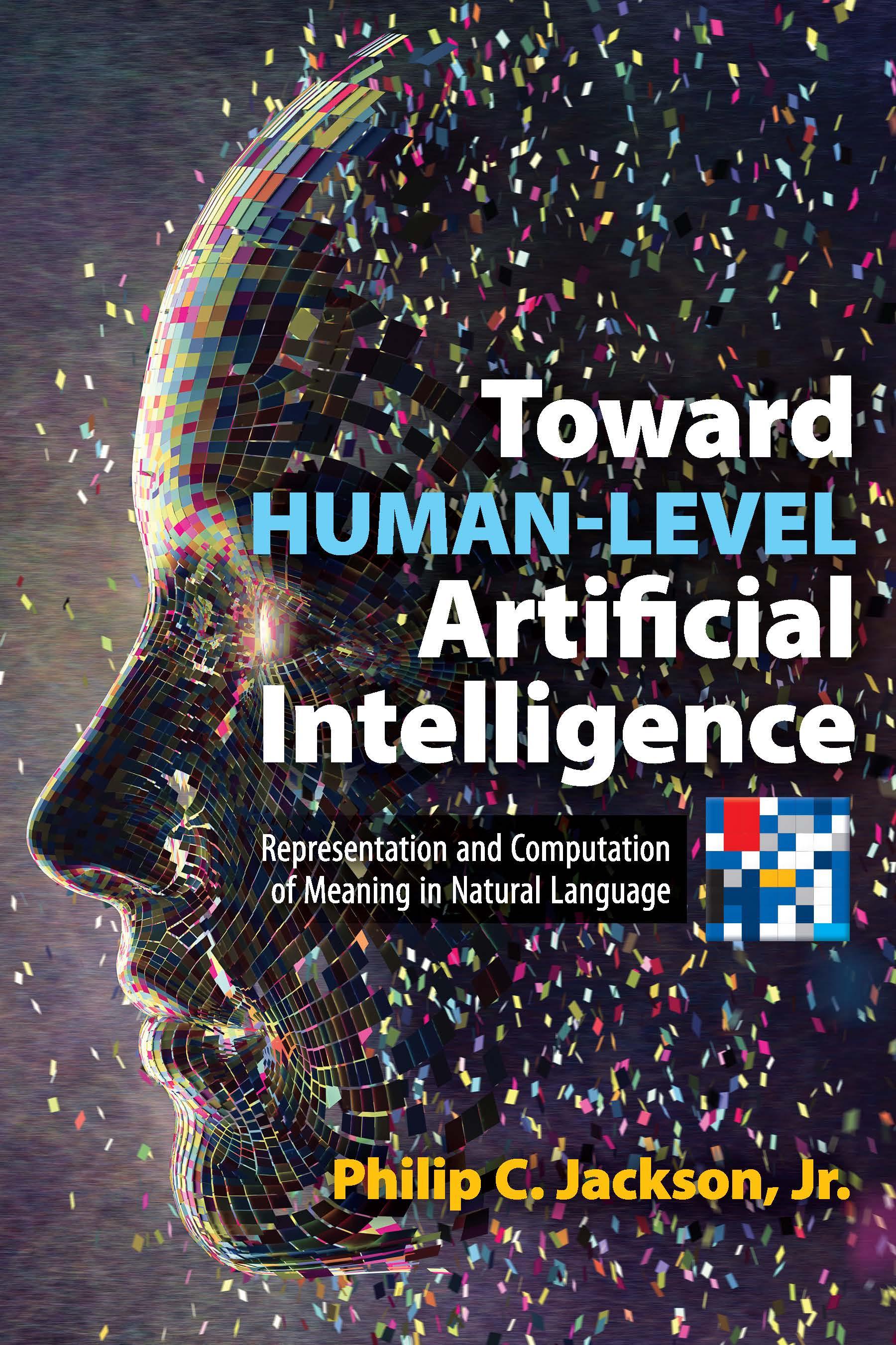
How can human-level artificial intelligence be achieved? What are the potential consequences? This book describes a research approach toward achieving human-level AI, combining a doctoral thesis and research papers by the author.
The research approach, called TalaMind, involves developing an AI system that uses a 'natural language of thought' based on the unconstrained syntax of a language such as English; designing the system as a collection of concepts that can create and modify concepts to behave intelligently in an environment; and using methods from cognitive linguistics for multiple levels of mental representation. Proposing a design-inspection alternative to the Turing Test, these pages discuss 'higher-level mentalities' of human intelligence, which include natural language understanding, higher-level forms of learning and reasoning, imagination, and consciousness. Dr. Jackson gives a comprehensive review of other research, addresses theoretical objections to the proposed approach and to achieving human-level AI in principle, and describes a prototype system that illustrates the potential of the approach.
This book discusses economic risks and benefits of AI, considers how to ensure that human-level AI and superintelligence will be beneficial for humanity, and gives reasons why human-level AI may be necessary for humanity's survival and prosperity.
The research approach, called TalaMind, involves developing an AI system that uses a 'natural language of thought' based on the unconstrained syntax of a language such as English; designing the system as a collection of concepts that can create and modify concepts to behave intelligently in an environment; and using methods from cognitive linguistics for multiple levels of mental representation. Proposing a design-inspection alternative to the Turing Test, these pages discuss 'higher-level mentalities' of human intelligence, which include natural language understanding, higher-level forms of learning and reasoning, imagination, and consciousness. Dr. Jackson gives a comprehensive review of other research, addresses theoretical objections to the proposed approach and to achieving human-level AI in principle, and describes a prototype system that illustrates the potential of the approach.
This book discusses economic risks and benefits of AI, considers how to ensure that human-level AI and superintelligence will be beneficial for humanity, and gives reasons why human-level AI may be necessary for humanity's survival and prosperity.
Pay easily by card, Klarna, Apple Pay or Google Pay. Not happy? You always have a 14-day money-back guarantee. Read more in our terms. If you have any questions, email us at hello@memmo.org.
Memmo makes studying easier – wherever you are in the world. We bring your course books and smart study tools together in one place: summaries, quizzes, podcasts and flashcards. Plus Ted, your study buddy who answers anything you wonder. Over 50,000 students already study here – built to help you learn faster and stress less.
You might also like
Buy the book0