
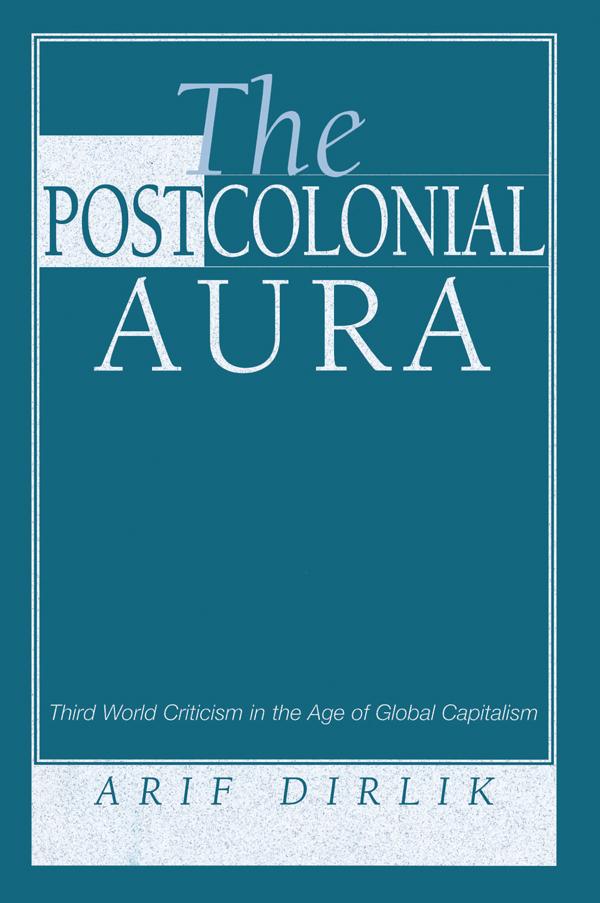
The essays in this volume range from questions of cultural self-representation in China to more general problems of reconceptualizing global relationships in response to contemporary changes. Although the new era of global capitalism calls for the remapping of global relations, such remapping must be informed both by a grasp of contemporary structures of economic, political, and cultural power and by memories of earlier radical visions of society. Without these two conditions, Arif Dirlik argues, the current preoccupation with Eurocentrism, ethnic diversity, and multiculturalism distract from issues of power that dominate global relations and that find expression in murderous ethnic conflicts. Dirlik offers multi-historicalism, which presupposes a historically grounded conception of cultural difference, seeks in different histories alternative visions of human society, and stresses divergent historical trajectories against a future colonized presently by an ideology of capital. Arguing that the operations of capital have brought the question of the local to the fore, he points to indigenism as a source of paradigms of social relations, and relationships to nature, to challenge the voracious developmentalism that undermines local welfare globally.
Pay easily by card, Klarna, Apple Pay or Google Pay. Not happy? You always have a 14-day money-back guarantee. Read more in our terms. If you have any questions, email us at hello@memmo.org.
Memmo makes studying easier – wherever you are in the world. We bring your course books and smart study tools together in one place: summaries, quizzes, podcasts and flashcards. Plus Ted, your study buddy who answers anything you wonder. Over 50,000 students already study here – built to help you learn faster and stress less.
You might also like
Buy the book0