
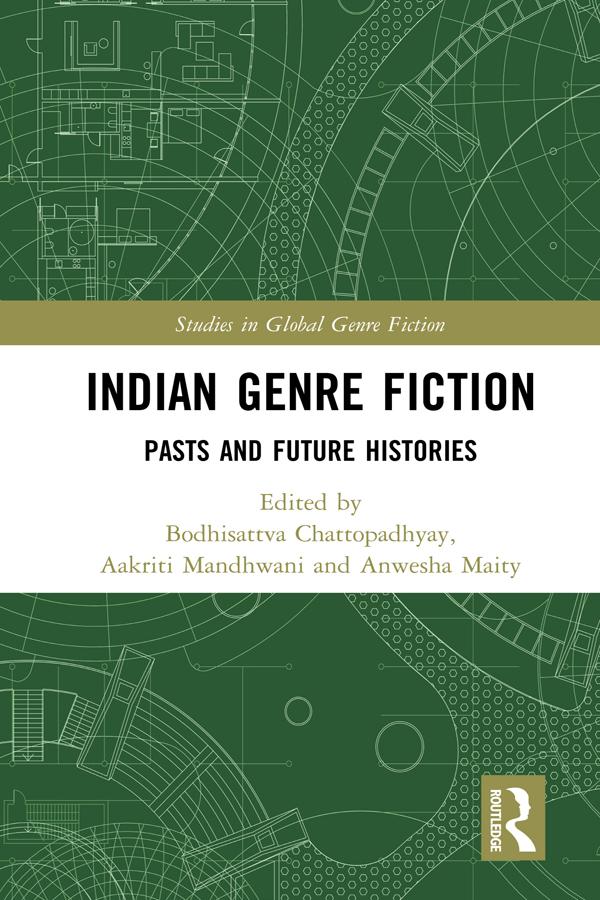
This volume maps the breadth and domain of genre literature in India across seven languages (Tamil, Urdu, Bangla, Hindi, Odia, Marathi and English) and nine genres for the first time. Over the last few decades, detective/crime fiction and especially science fiction/fantasy have slowly made their way into university curricula and consideration by literary critics in India and the West. However, there has been no substantial study of genre fiction in the Indian languages, least of all from a comparative perspective. This volume, with contributions from leading national and international scholars, addresses this lacuna in critical scholarship and provides an overview of diverse genre fictions.
Using methods from literary analysis, book history and Indian aesthetic theories, the volume throws light on the variety of contexts in which genre literature is read, activated and used, from political debates surrounding national and regional identities to caste and class conflicts. It shows that Indian genre fiction (including pulp fiction, comics and graphic novels) transmutes across languages, time periods, in translation and through publication processes. While the book focuses on contemporary postcolonial genre literature production, it also draws connections to individual, centuries-long literary traditions of genre literature in the Indian subcontinent. Further, it traces contested hierarchies within these languages as well as current trends in genre fiction criticism.
Lucid and comprehensive, this book will be of great interest to academics, students, practitioners, literary critics and historians in the fields of postcolonialism, genre studies, global genre fiction, media and popular culture, South Asian literature, Indian literature, detective fiction, science fiction, romance, crime fiction, horror, mythology, graphic novels, comparative literature and South Asian studies. It will also appeal to the informed general reader.
Pay easily by card, Klarna, Apple Pay or Google Pay. Not happy? You always have a 14-day money-back guarantee. Read more in our terms. If you have any questions, email us at hello@memmo.org.
Memmo makes studying easier – wherever you are in the world. We bring your course books and smart study tools together in one place: summaries, quizzes, podcasts and flashcards. Plus Ted, your study buddy who answers anything you wonder. Over 50,000 students already study here – built to help you learn faster and stress less.