
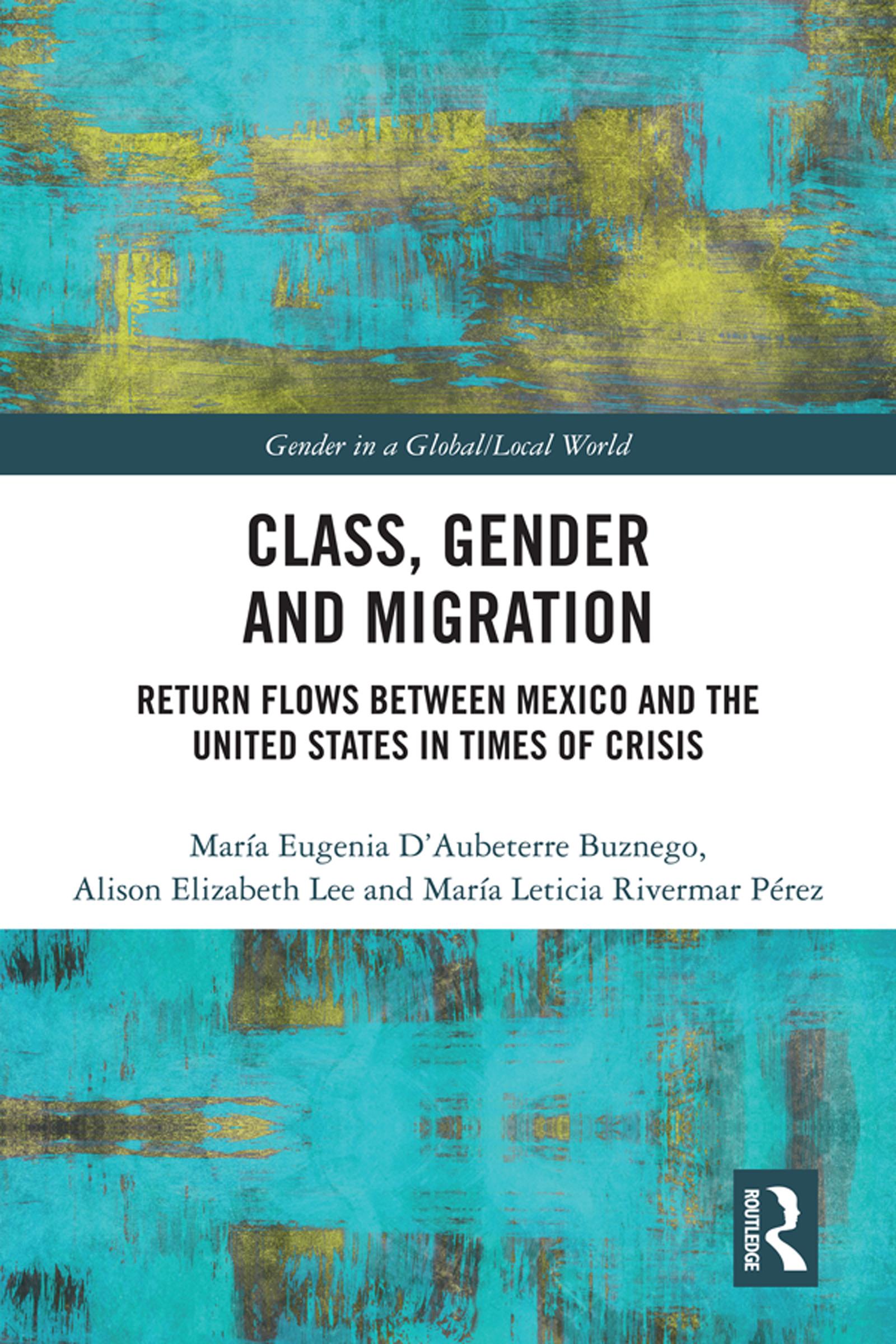
Using a gender-sensitive political economy approach, this book analyzes the emergence of new migration patterns between Central Mexico and the East Coast of the United States in the last decades of the twentieth century, and return migration during and after the global economic crisis of 2007.
Based on ethnographic research carried out over a decade, details of the lives of women and men from two rural communities reveal how neoliberal economic restructuring led to the deterioration of livelihoods starting in the 1980s. Similar restructuring processes in the United States opened up opportunities for Mexican workers to labor in US industries that relied heavily on undocumented workers to sustain their profits and grow. When the Great Recession hit, in the context of increasingly restrictive immigration policies, some immigrants were more likely to return to Mexico than others. This longitudinal study demonstrates how the interconnections among class and gender are key to understanding who stayed and who returned to Mexico during and after the global economic crisis. Through these case studies, the authors comment more widely on how neoliberalism has affected the livelihoods and aspirations of the working classes.
This book will be of key interest to scholars, students and practitioners in migration studies, gender studies/politics, and more broadly to international relations, anthropology, development studies, and human geography.
Pay easily by card, Klarna, Apple Pay or Google Pay. Not happy? You always have a 14-day money-back guarantee. Read more in our terms. If you have any questions, email us at hello@memmo.org.
Memmo makes studying easier – wherever you are in the world. We bring your course books and smart study tools together in one place: summaries, quizzes, podcasts and flashcards. Plus Ted, your study buddy who answers anything you wonder. Over 50,000 students already study here – built to help you learn faster and stress less.