
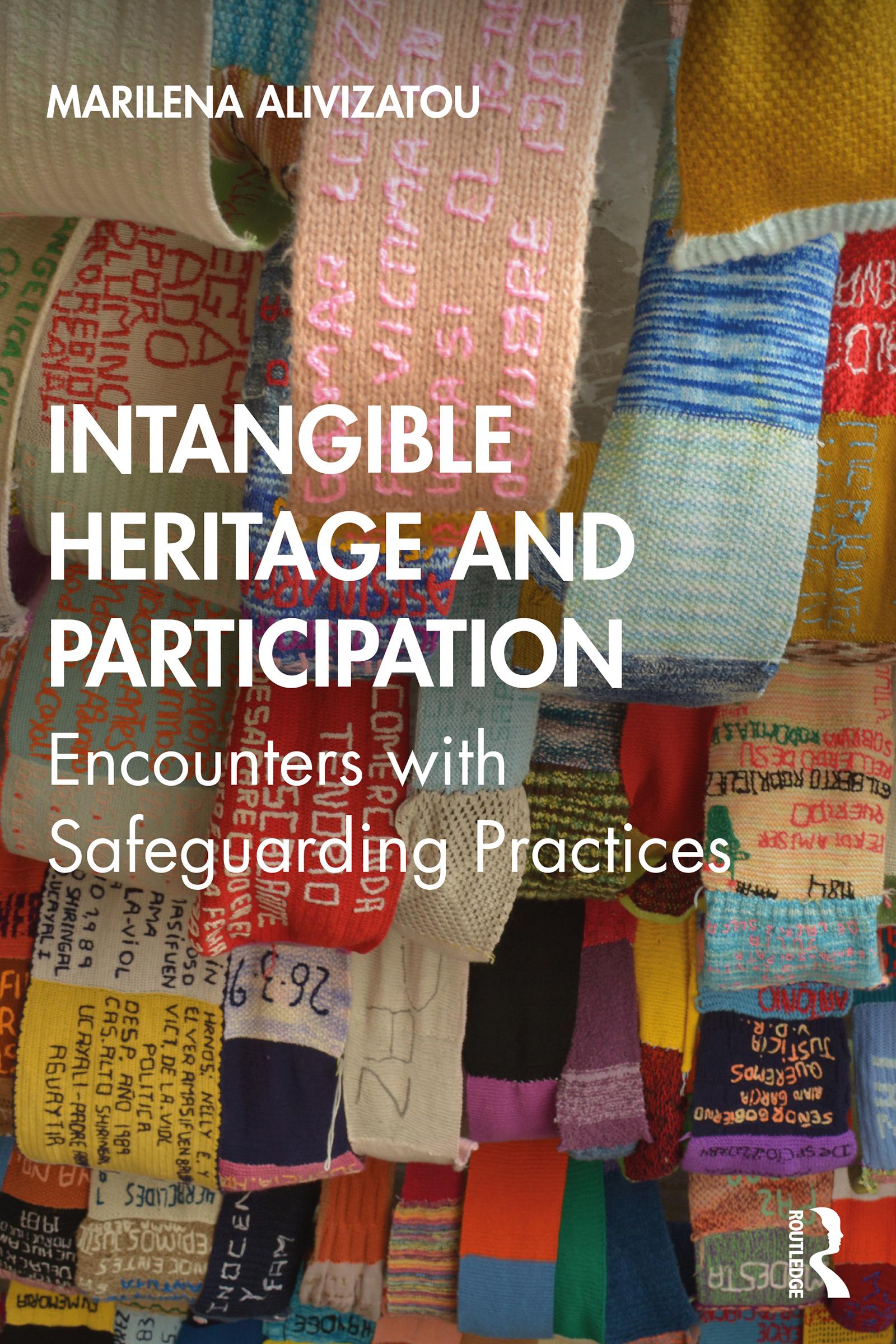
Intangible Heritage and Participation examines participation as an intellectual and operational frame in safeguarding intangible heritage.
Including case studies from the Netherlands, Belgium, Aotearoa New Zealand, Greece, Peru, Britain, Denmark, Sweden and Japan, the book provides an analysis of safeguarding as a museological framework and further investigates safeguarding practices in participatory research, memory-work and cultural transmission. Drawing on conversations about ‘the tyranny of participation’, the book looks into the complexities of participatory projects on the ground, from community research and collecting to the mapping of Indigenous values in environmental conservation and processes of active remembering of ‘difficult intangible heritage’ of forced migration, political violence and mental illness. Cautioning against the uncritical adoption of participation as a universal ethical discourse, Alivizatou argues that the ethics of cosmopolitanism should guide safeguarding practices at an international level.
Intangible Heritage and Participation offers an original approach to thinking about and working with intangible heritage and, as such, should be essential reading for academics, researchers and students in, among others, the fields of cultural heritage studies, museology, anthropology and cultural development. It should also be of interest to heritage and museum professionals and anyone else interested in cultural heritage theory and practice.
Pay easily by card, Klarna, Apple Pay or Google Pay. Not happy? You always have a 14-day money-back guarantee. Read more in our terms. If you have any questions, email us at hello@memmo.org.
Memmo makes studying easier – wherever you are in the world. We bring your course books and smart study tools together in one place: summaries, quizzes, podcasts and flashcards. Plus Ted, your study buddy who answers anything you wonder. Over 50,000 students already study here – built to help you learn faster and stress less.