
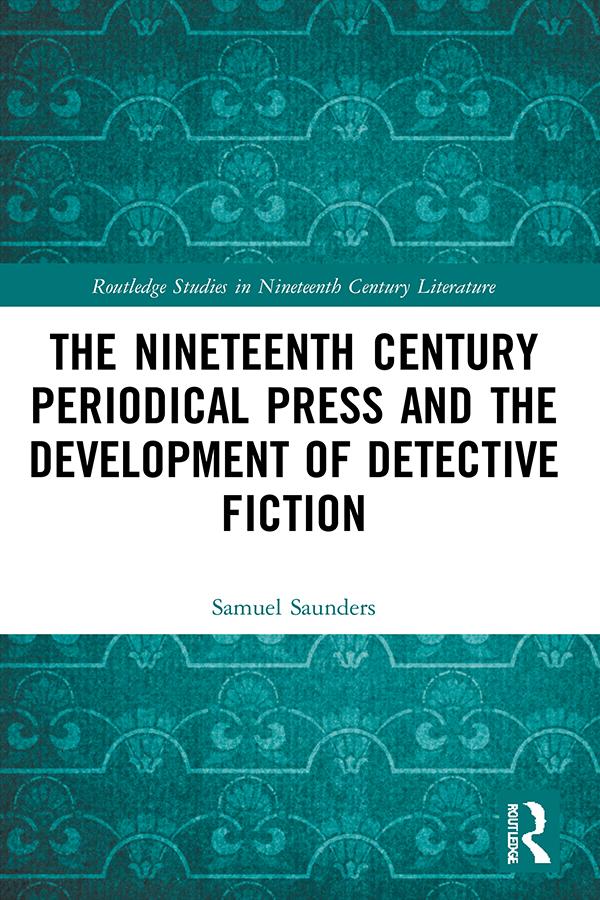
This book re-imagines nineteenth-century detective fiction as a literary genre that was connected to, and nurtured by, contemporary periodical journalism. Whilst ‘detective fiction’ is almost universally-accepted to have originated in the nineteenth century, a variety of widely-accepted scholarly narratives of the genre’s evolution neglect to connect it with the development of a free press.
The volume traces how police officers, detectives, criminals, and the criminal justice system were discussed in the pages of a variety of magazines and journals, and argues that this affected how the wider nineteenth-century society perceived organised law enforcement and detection. This, in turn, helped to shape detective fiction into the genre that we recognise today. The book also explores how periodicals and newspapers contained forgotten, non-canonical examples of ‘detective fiction’, and that these texts can help complicate the narrative of the genre’s evolution across the mid- to late nineteenth century.
Pay easily by card, Klarna, Apple Pay or Google Pay. Not happy? You always have a 14-day money-back guarantee. Read more in our terms. If you have any questions, email us at hello@memmo.org.
Memmo makes studying easier – wherever you are in the world. We bring your course books and smart study tools together in one place: summaries, quizzes, podcasts and flashcards. Plus Ted, your study buddy who answers anything you wonder. Over 50,000 students already study here – built to help you learn faster and stress less.