
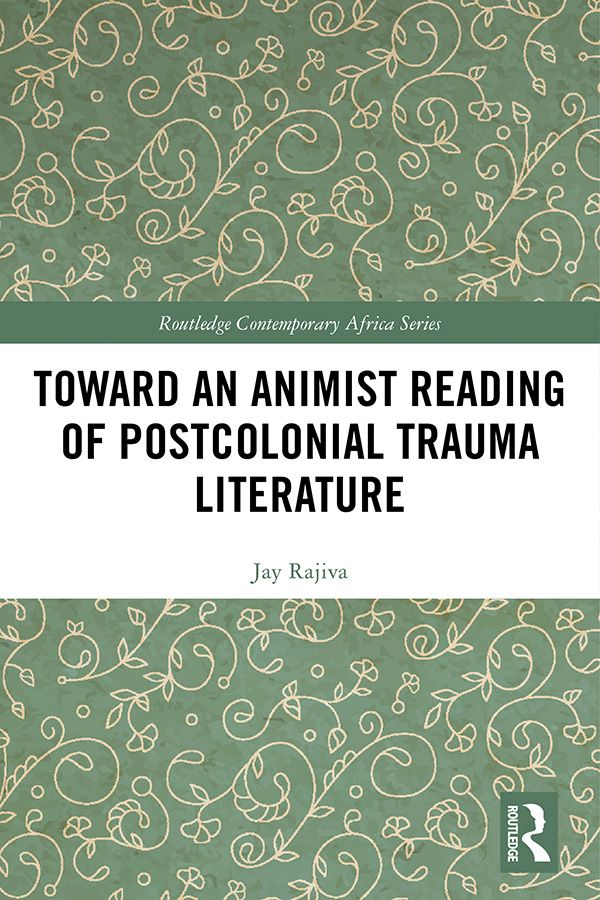
This book uses the conceptual framework of animism, the belief in the spiritual qualities of nonhuman matter, to analyze representations of trauma in postcolonial fiction from Nigeria and India.
Toward an Animist Reading of Postcolonial Trauma Literature initiates a conversation between contemporary trauma literatures of Nigeria and India on animism. As postcolonial nations move farther away from the event of decolonization in real time, the experience of trauma take place within and is generated by an increasingly precarious environment of resource scarcity, over-accelerated industrialization, and ecological crisis. These factors combine to create mixed environments marked by constantly changing interactions between human and nonhuman matter. Examining novels by authors such as Chinua Achebe, Jhumpa Lahiri, Nnedi Okorafor, and Arundhati Roy, the book considers how animist beliefs shape the aesthetic representation of trauma in postcolonial literature, paying special attention to complex metaphor and narrative structure. These literary texts challenge the conventional wisdom that working through trauma involves achieving physical and psychic integrity in a stable environment. Instead, a type of provisional but substantive healing emerges in an animist relationship between human trauma victims and nonhuman matter. In this context, animism becomes a pivotal way to reframe the process of working through trauma.
Offering a rich framework for analyzing trauma in postcolonial literature, this book will be of interest to scholars of postcolonial literature, Nigerian literature and South Asian literature.
Pay easily by card, Klarna, Apple Pay or Google Pay. Not happy? You always have a 14-day money-back guarantee. Read more in our terms. If you have any questions, email us at hello@memmo.org.
Memmo makes studying easier – wherever you are in the world. We bring your course books and smart study tools together in one place: summaries, quizzes, podcasts and flashcards. Plus Ted, your study buddy who answers anything you wonder. Over 50,000 students already study here – built to help you learn faster and stress less.