
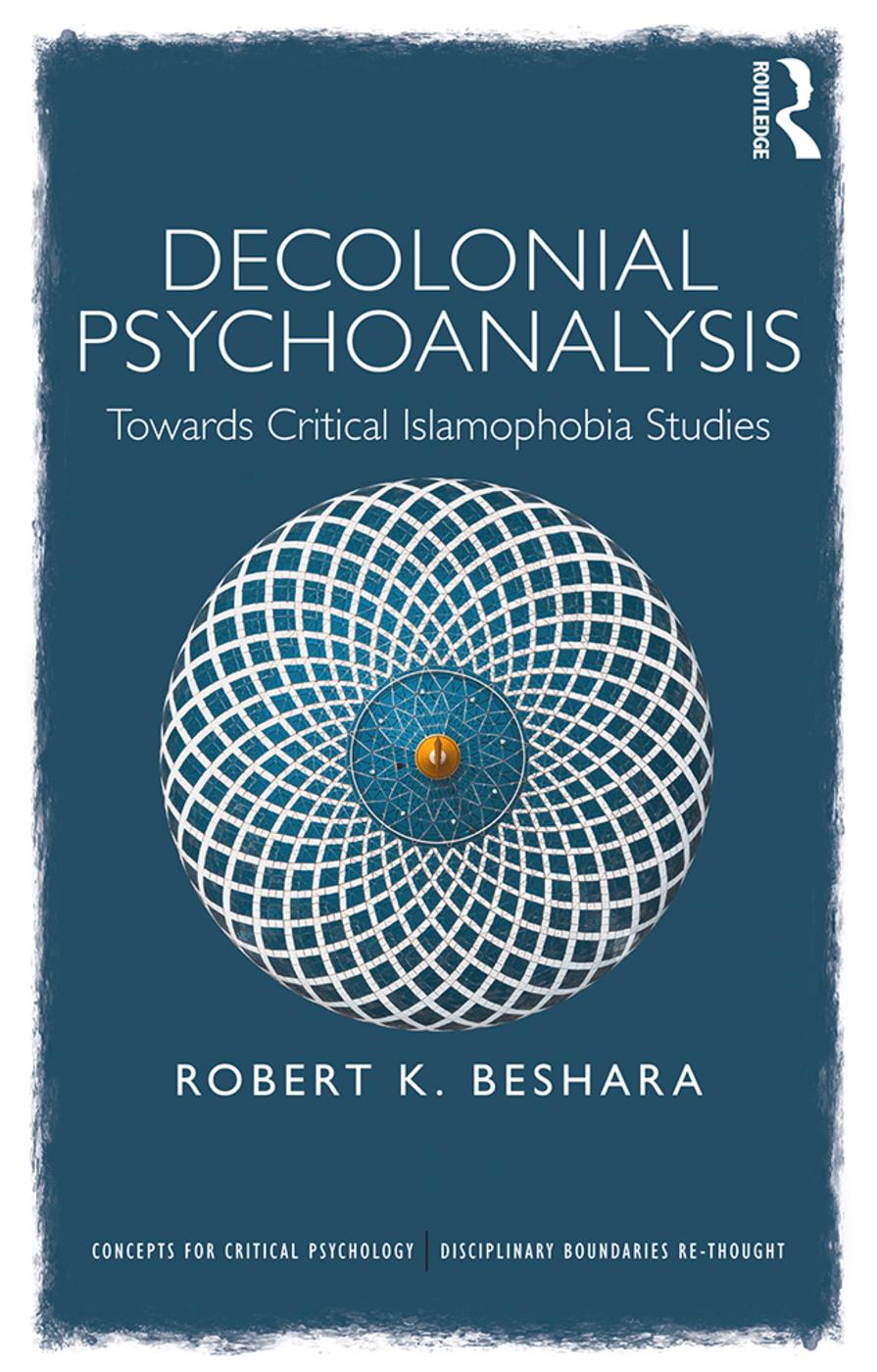
In this provocative and necessary book, Robert K. Beshara uses psychoanalytic discursive analysis to explore the possibility of a genuinely anti-colonial critical psychology. Drawing on postcolonial and decolonial approaches to Islamophobia, this book enhances understandings of Critical Border Thinking and Lacanian Discourse Analysis, alongside other theoretico-methodological approaches.
Using a critical decolonial psychology approach to conceptualize everyday Islamophobia, the author examines theoretical resources situated within the discursive turn, such as decoloniality/transmodernity, and carries out an archeology of (counter)terrorism, a genealogy of the conceptual Muslim, and a Žižekian ideology critique. Conceiving of Decolonial Psychoanalysis as one theoretical resource for Critical Islamophobia Studies (CIS), the author also applies Lacanian Discourse Analysis to extracts from interviews conducted with US Muslims to theorize their ethico-political subjectivity and considers a politics of resistance, adversarial aesthetics, and ethics of liberation.
Essential to any attempt to come to terms with the legacy of racism in psychology, and the only critical psychological study on Islamophobia in the United States, this is a fascinating read for anyone interested in a critical approach to Islamophobia.
Pay easily by card, Klarna, Apple Pay or Google Pay. Not happy? You always have a 14-day money-back guarantee. Read more in our terms. If you have any questions, email us at hello@memmo.org.
Memmo makes studying easier – wherever you are in the world. We bring your course books and smart study tools together in one place: summaries, quizzes, podcasts and flashcards. Plus Ted, your study buddy who answers anything you wonder. Over 50,000 students already study here – built to help you learn faster and stress less.