
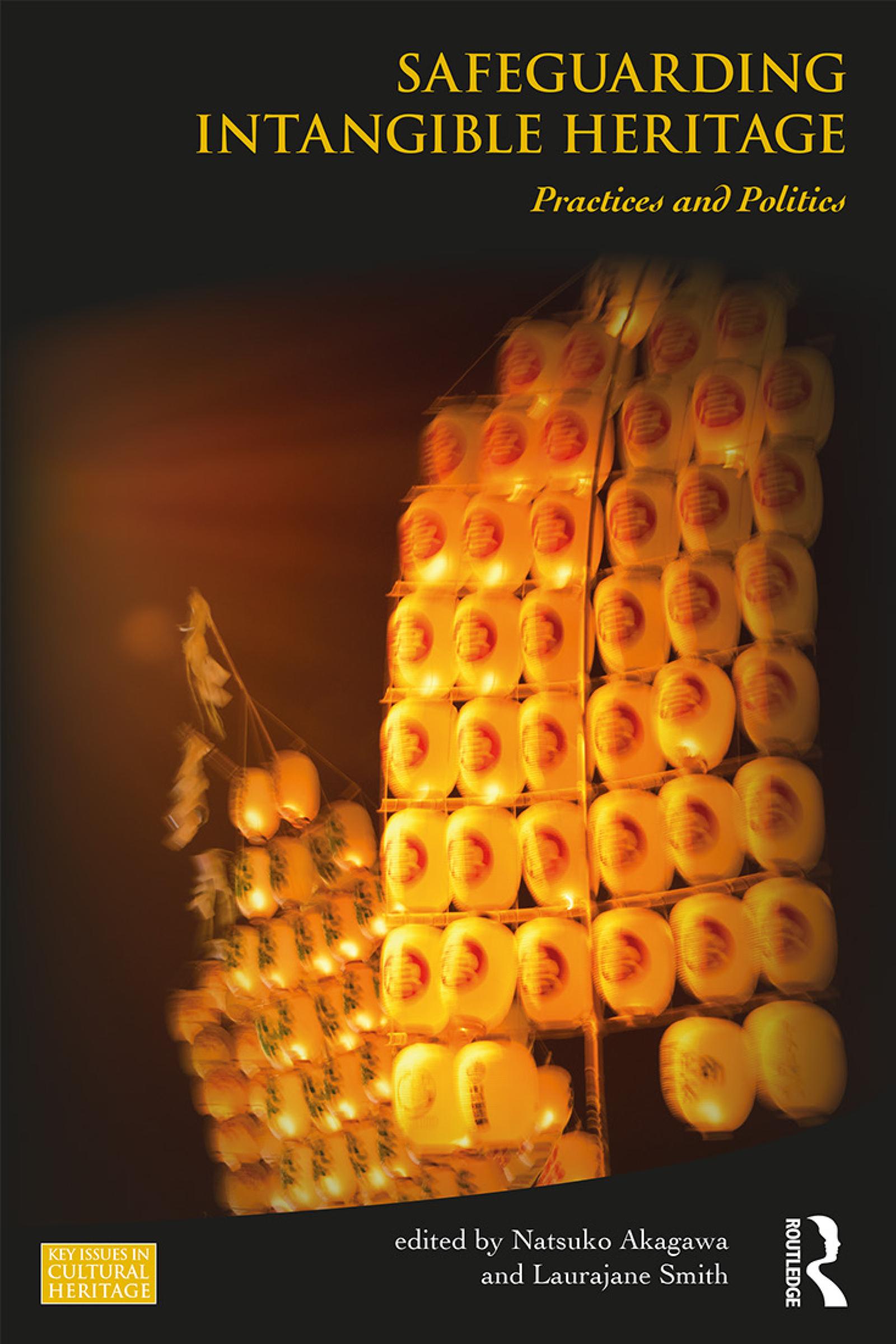
The UNESCO Convention for the Safeguarding of the Intangible Cultural Heritage came into force in 2006, framing the international and national practices and policies associated with intangible cultural heritage. This volume critically and reflexively examines these practices and policies, providing an accessible account of the different ways in which intangible cultural heritage has been defined and managed in both national and international contexts. As Safeguarding Intangible Heritage reveals, the concept and practices of safeguarding are complicated and often contested, and there is a need for international debate about the meaning, nature and value of heritage and what it means to ‘safeguard’ it.
Safeguarding Intangible Heritage presents a significant cross section of ideas and practices from some of the key academics and practitioners working in the area, whose areas of expertise span anthropology, law, heritage studies, linguistics, archaeology, museum studies, folklore, architecture, Indigenous studies and history. The chapters in this volume give an overarching analysis of international policy and practice and critically frame case studies that analyze practices from a range of countries, including Australia, Canada, China, Indonesia, Japan, Korea, Kyrgyzstan, New Zealand, Taiwan, the UK and Zimbabwe.
With a focus on conceptual and theoretical issues, this follow-up to Intangible Heritage, by the same editors, will be of great interest to students, scholars and professionals working in the fields of heritage and museum studies, heritage conservation, heritage tourism, global history, international relations, art and architectural history, and linguists.
Pay easily by card, Klarna, Apple Pay or Google Pay. Not happy? You always have a 14-day money-back guarantee. Read more in our terms. If you have any questions, email us at hello@memmo.org.
Memmo makes studying easier – wherever you are in the world. We bring your course books and smart study tools together in one place: summaries, quizzes, podcasts and flashcards. Plus Ted, your study buddy who answers anything you wonder. Over 50,000 students already study here – built to help you learn faster and stress less.