
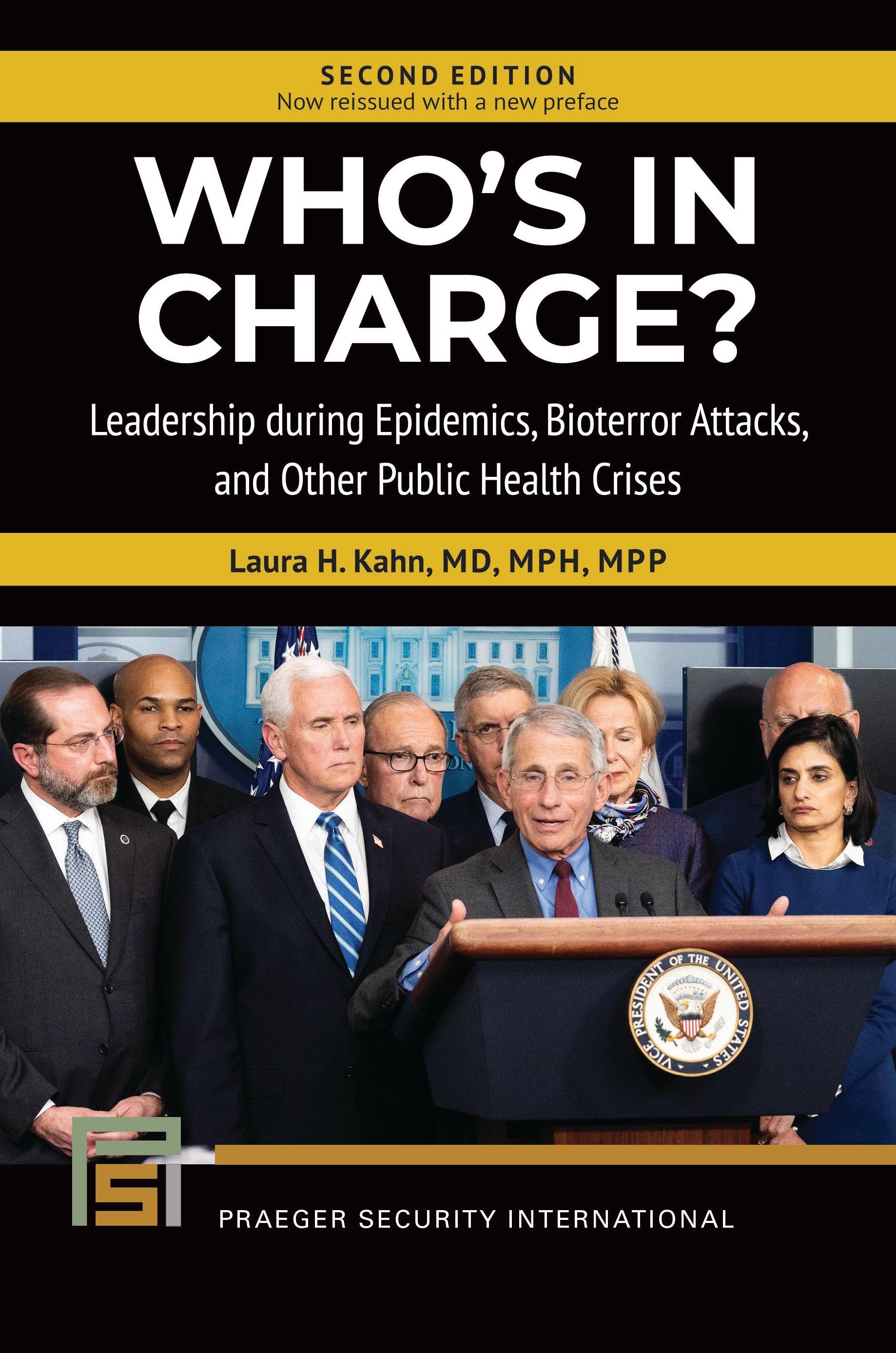
With a new preface assessing leadership responses to the coronavirus pandemic, this text explores leadership problems that can develop during such public health crises as the 2001 anthrax attacks, 2003 SARS epidemic, and Mad Cow Disease epidemic of the 1980s–1990s.
A threat to public health, such as a rampaging virus, is no time for a muddled chain of command and contradictory decision-making. Who's In Charge? Leadership during Epidemics, Bioterror Attacks, and Other Public Health Crises, re-issued with a new preface assessing leadership during the COVID-19 outbreak, explores the crucial relationships among political leaders, public health officials, and journalists to see why leadership confusion develops. As the problematic response to COVID-19 has once again shown, the reluctance of politicians to risk alarm can run counter to the public health need to prepare for worse cases.
Many leaders will seek high visibility during a public health crisis, but politicians are not medical experts, and the more they speak, the more they risk disseminating harmful information. How to achieve the right balance is the essence of this book. Beginning by looking at the overarching issues of leadership and public health administration, it then examines in depth five emergencies: the 2001 anthrax attacks, the 1993 cryptosporidium outbreaks, the 2003 SARS outbreak, the 2001 foot-and-mouth disease crisis, and the battle against Mad Cow Disease.
A threat to public health, such as a rampaging virus, is no time for a muddled chain of command and contradictory decision-making. Who's In Charge? Leadership during Epidemics, Bioterror Attacks, and Other Public Health Crises, re-issued with a new preface assessing leadership during the COVID-19 outbreak, explores the crucial relationships among political leaders, public health officials, and journalists to see why leadership confusion develops. As the problematic response to COVID-19 has once again shown, the reluctance of politicians to risk alarm can run counter to the public health need to prepare for worse cases.
Many leaders will seek high visibility during a public health crisis, but politicians are not medical experts, and the more they speak, the more they risk disseminating harmful information. How to achieve the right balance is the essence of this book. Beginning by looking at the overarching issues of leadership and public health administration, it then examines in depth five emergencies: the 2001 anthrax attacks, the 1993 cryptosporidium outbreaks, the 2003 SARS outbreak, the 2001 foot-and-mouth disease crisis, and the battle against Mad Cow Disease.
Płać wygodnie kartą, Klarną, Apple Pay lub Google Pay. Nie jesteś zadowolony? Zawsze masz 14-dniową gwarancję zwrotu pieniędzy. Więcej przeczytasz w naszych warunkach. Masz pytania? Napisz do nas na hello@memmo.org.
Memmo ułatwia naukę – gdziekolwiek jesteś na świecie. U nas znajdziesz podręczniki i sprytne narzędzia do nauki w jednym miejscu: streszczenia, quizy, podcasty i fiszki. A do tego Ted, Twój kumpel do nauki, który odpowie na wszystko, co Cię nurtuje. Ponad 50 000 studentów już tu się uczy – stworzone, byś uczył się szybciej i mniej stresował.