
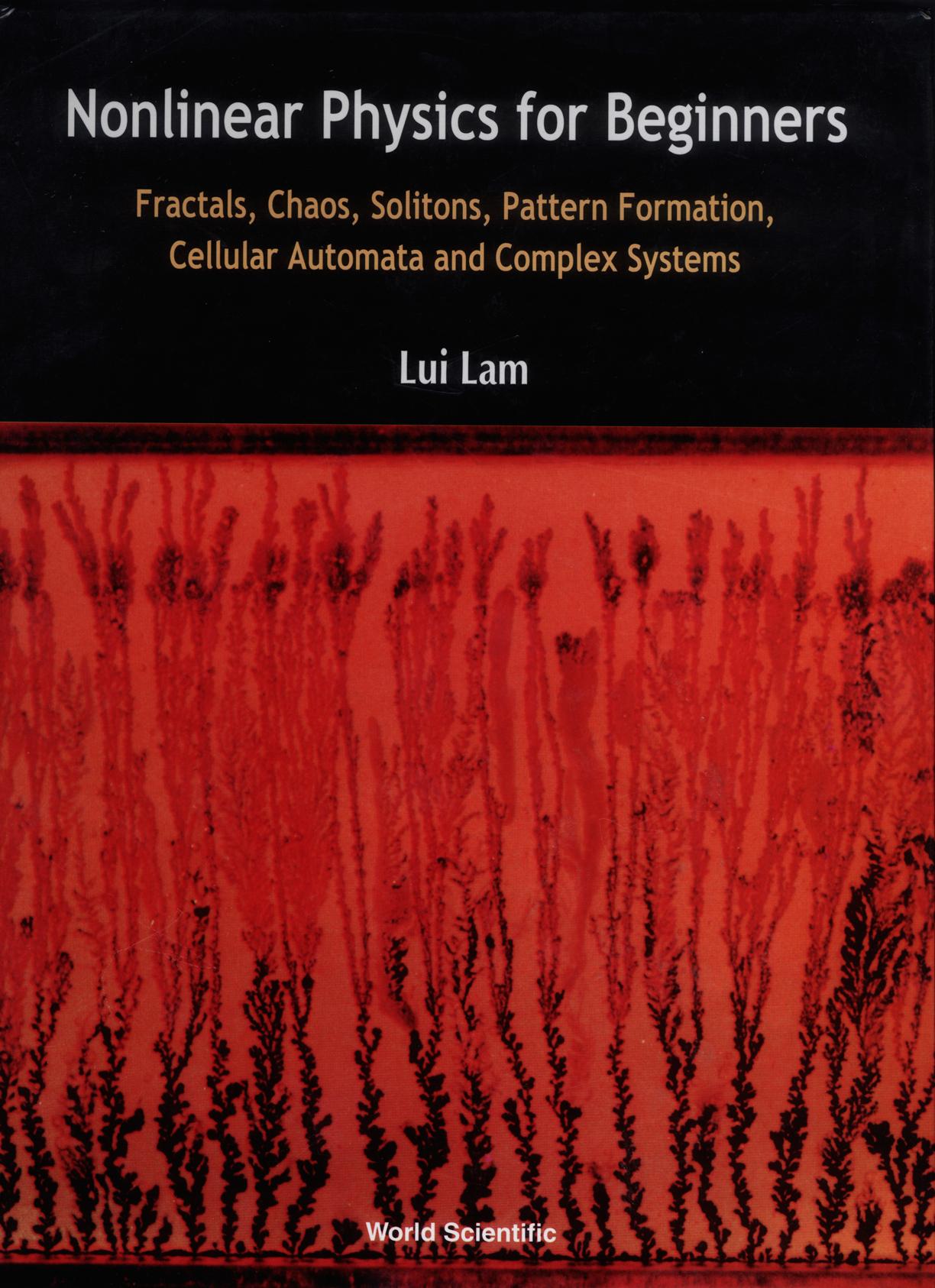
Almost all real systems are nonlinear. For a nonlinear system the superposition principle breaks down: The system's response is not proportional to the stimulus it receives; the whole is more than the sum of its parts. The three parts of this book contains the basics of nonlinear science, with applications in physics. Part I contains an overview of fractals, chaos, solitons, pattern formation, cellular automata and complex systems. In Part II, 14 reviews and essays by pioneers, as well as 10 research articles are reprinted. Part III collects 17 students projects, with computer algorithms for simulation models included.
The book can be used for self-study, as a textbook for a one-semester course, or as supplement to other courses in linear or nonlinear systems. The reader should have some knowledge in introductory college physics. No mathematics beyond calculus and no computer literacy are assumed.
Płać wygodnie kartą, Klarną, Apple Pay lub Google Pay. Nie jesteś zadowolony? Zawsze masz 14-dniową gwarancję zwrotu pieniędzy. Więcej przeczytasz w naszych warunkach. Masz pytania? Napisz do nas na hello@memmo.org.
Memmo ułatwia naukę – gdziekolwiek jesteś na świecie. U nas znajdziesz podręczniki i sprytne narzędzia do nauki w jednym miejscu: streszczenia, quizy, podcasty i fiszki. A do tego Ted, Twój kumpel do nauki, który odpowie na wszystko, co Cię nurtuje. Ponad 50 000 studentów już tu się uczy – stworzone, byś uczył się szybciej i mniej stresował.