
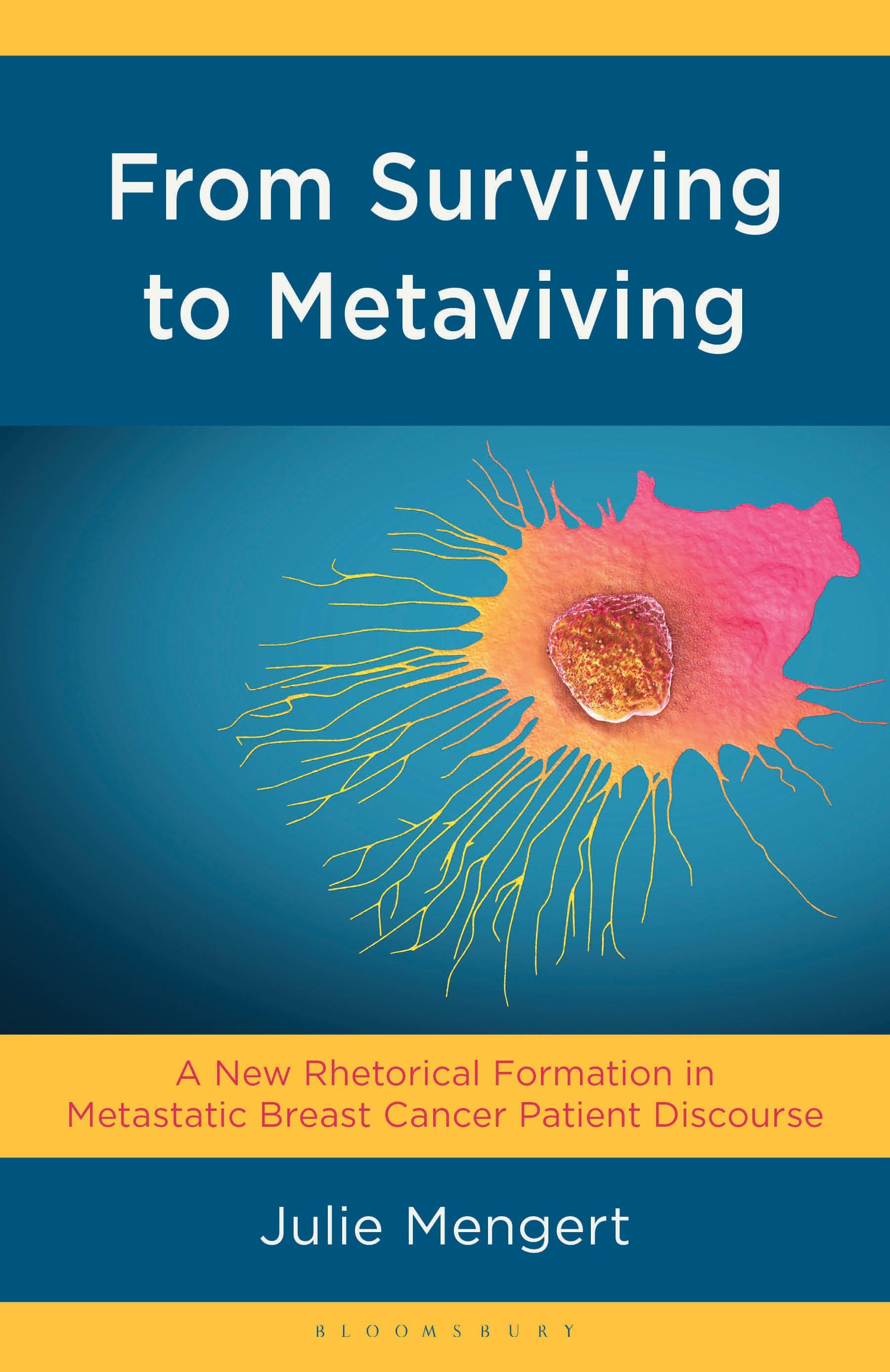
As treatments have advanced, metastatic breast cancer has become a disease that some women can live with for years, which has changed the language that women use to discuss living with this form of breast cancer as discussed in this book.
Using the framework of Celeste Condit's rhetorical formations, which includes uses of metaphors, topics, and values, among other rhetorical features, the author examines how language has shifted from one of war and survivor rhetoric to that of metavivor rhetoric, which includes metaphors of water and prison, among others. Another hallmark of this emerging rhetorical formation is existing in a state of liminality where the cancer neither progresses nor retreats, leading to women experiencing time differently. By examining how women discuss living with cancer in an online breast cancer support group, the author analyzes the language shifts taking place and argues that women have moved from the dominant war/survivor rhetorical formation to one grounded in metavivor rhetoric.
Within this evolution comes an understanding of what it means to live with a chronic, yet ultimately, terminal, illness and an acknowledgment of the impact that their lives' perceived time has on these language choices.
Using the framework of Celeste Condit's rhetorical formations, which includes uses of metaphors, topics, and values, among other rhetorical features, the author examines how language has shifted from one of war and survivor rhetoric to that of metavivor rhetoric, which includes metaphors of water and prison, among others. Another hallmark of this emerging rhetorical formation is existing in a state of liminality where the cancer neither progresses nor retreats, leading to women experiencing time differently. By examining how women discuss living with cancer in an online breast cancer support group, the author analyzes the language shifts taking place and argues that women have moved from the dominant war/survivor rhetorical formation to one grounded in metavivor rhetoric.
Within this evolution comes an understanding of what it means to live with a chronic, yet ultimately, terminal, illness and an acknowledgment of the impact that their lives' perceived time has on these language choices.
Płać wygodnie kartą, Klarną, Apple Pay lub Google Pay. Nie jesteś zadowolony? Zawsze masz 14-dniową gwarancję zwrotu pieniędzy. Więcej przeczytasz w naszych warunkach. Masz pytania? Napisz do nas na hello@memmo.org.
Memmo ułatwia naukę – gdziekolwiek jesteś na świecie. U nas znajdziesz podręczniki i sprytne narzędzia do nauki w jednym miejscu: streszczenia, quizy, podcasty i fiszki. A do tego Ted, Twój kumpel do nauki, który odpowie na wszystko, co Cię nurtuje. Ponad 50 000 studentów już tu się uczy – stworzone, byś uczył się szybciej i mniej stresował.