
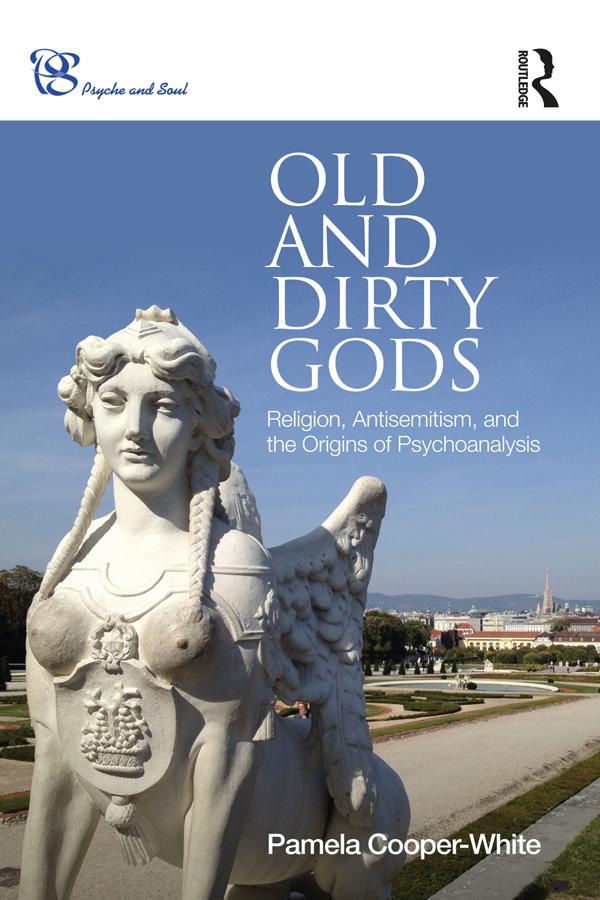
Freud’s collection of antiquities—his "old and dirty gods"—stood as silent witnesses to the early analysts’ paradoxical fascination and hostility toward religion. Pamela Cooper-White argues that antisemitism, reaching back centuries before the Holocaust, and the acute perspective from the margins that it engendered among the first analysts, stands at the very origins of psychoanalytic theory and practice.
The core insight of psychoanalytic thought— that there is always more beneath the surface appearances of reality, and that this "more" is among other things affective, memory-laden and psychological—cannot fail to have had something to do with the experiences of the first Jewish analysts in their position of marginality and oppression in Habsburg-Catholic Vienna of the 20th century. The book concludes with some parallels between the decades leading to the Holocaust and the current political situation in the U.S. and Europe, and their implications for psychoanalytic practice today.
Covering Pfister, Reik, Rank, and Spielrein as well as Freud, Cooper-White sets out how the first analysts’ position as Europe’s religious and racial "Other" shaped the development of psychoanalysis, and how these tensions continue to affect psychoanalysis today. Old and Dirty Gods will be of great interest to psychoanalysts as well as religious studies scholars.
Płać wygodnie kartą, Klarną, Apple Pay lub Google Pay. Nie jesteś zadowolony? Zawsze masz 14-dniową gwarancję zwrotu pieniędzy. Więcej przeczytasz w naszych warunkach. Masz pytania? Napisz do nas na hello@memmo.org.
Memmo ułatwia naukę – gdziekolwiek jesteś na świecie. U nas znajdziesz podręczniki i sprytne narzędzia do nauki w jednym miejscu: streszczenia, quizy, podcasty i fiszki. A do tego Ted, Twój kumpel do nauki, który odpowie na wszystko, co Cię nurtuje. Ponad 50 000 studentów już tu się uczy – stworzone, byś uczył się szybciej i mniej stresował.