
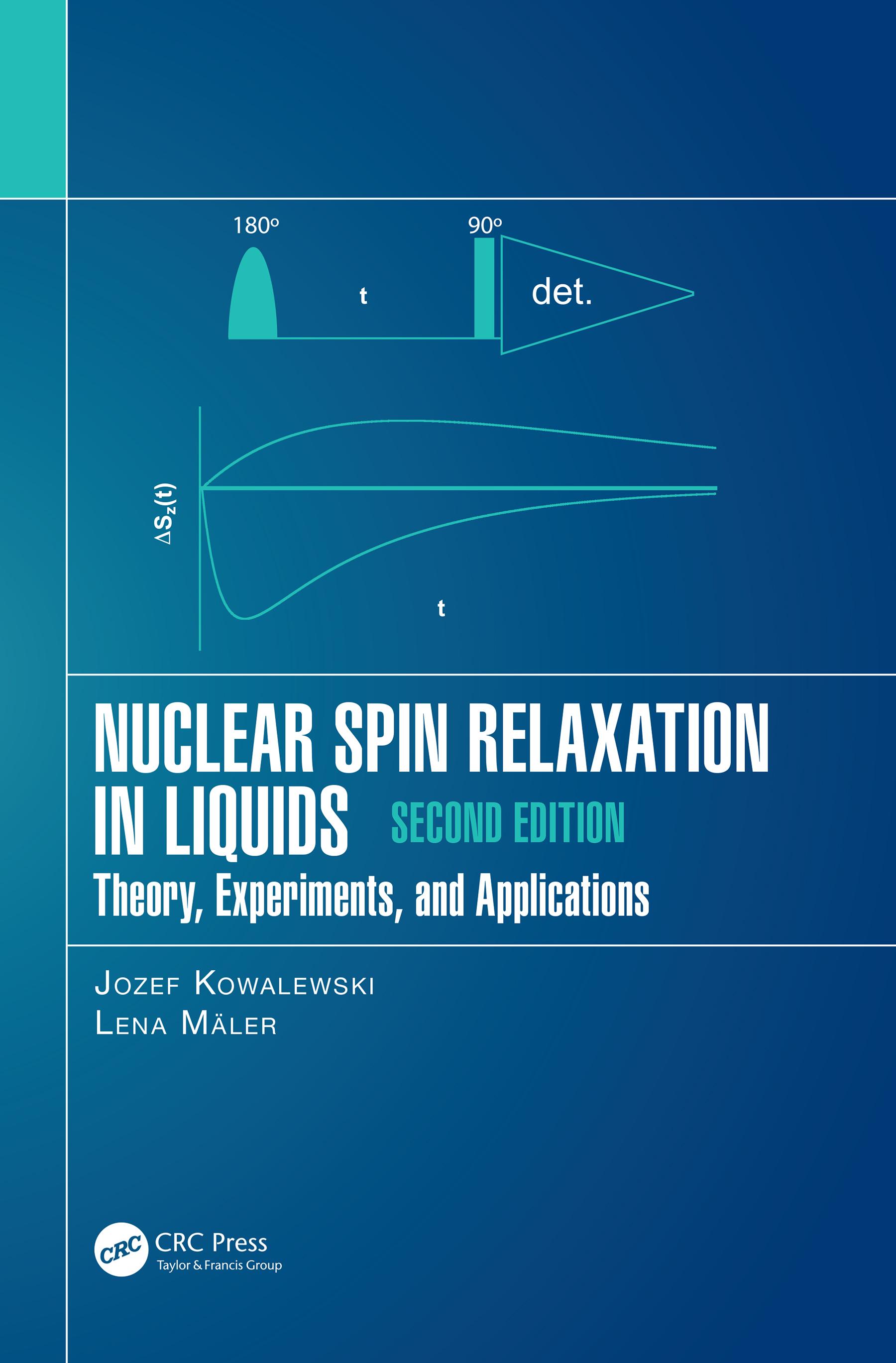
Nuclear magnetic resonance (NMR) is widely used across many fields of science because of the rich data it produces, and some of the most valuable data come from studies of nuclear spin relaxation in solution. The first edition of this book, published more than a decade ago, provided an accessible and cohesive treatment of the field. The present second edition is a significant update, covering important new developments in recent years.
Collecting relaxation theory, experimental techniques, and illustrative applications into a single volume, this book clarifies the nature of the phenomenon, shows how to study it and explains why such studies are worthwhile. Coverage ranges from basic to rigorous theory and from simple to sophisticated experimental methods. Topics include cross-relaxation, multispin phenomena, relaxation studies of molecular dynamics and structure and special topics such as relaxation in systems with quadrupolar nuclei, in paramagnetic systems and in long-living spin states.
Avoiding overly demanding mathematics, the authors explain spin relaxation in a manner that anyone with a familiarity with NMR can follow. The focus is on illustrating and explaining the physical nature of relaxation phenomena. Nuclear Spin Relaxation in Liquids: Theory, Experiments and Applications, 2nd edition, provides useful supplementary reading for graduate students and is a valuable reference for NMR spectroscopists, whether in chemistry, physics or biochemistry.
Płać wygodnie kartą, Klarną, Apple Pay lub Google Pay. Nie jesteś zadowolony? Zawsze masz 14-dniową gwarancję zwrotu pieniędzy. Więcej przeczytasz w naszych warunkach. Masz pytania? Napisz do nas na hello@memmo.org.
Memmo ułatwia naukę – gdziekolwiek jesteś na świecie. U nas znajdziesz podręczniki i sprytne narzędzia do nauki w jednym miejscu: streszczenia, quizy, podcasty i fiszki. A do tego Ted, Twój kumpel do nauki, który odpowie na wszystko, co Cię nurtuje. Ponad 50 000 studentów już tu się uczy – stworzone, byś uczył się szybciej i mniej stresował.