
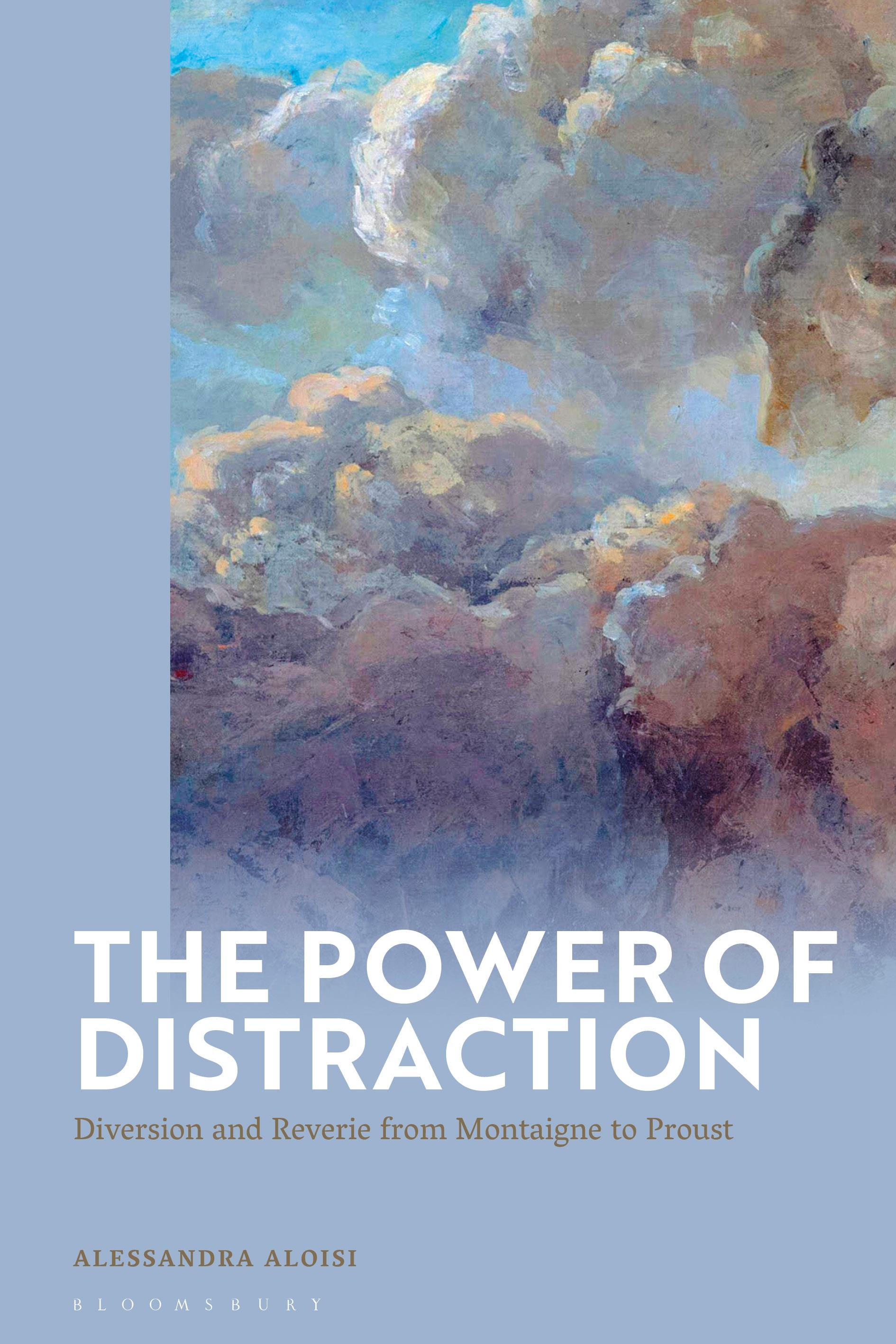
From Pascal to contemporary anxieties about attention, we have constantly been urged to avoid distraction if we want to live and work better. But Alessandra Aloisi argues that we are missing the point.Drawing on a broad range ofEuropean philosophy and literature, this book considers distraction not as an expression of human imperfection, but as a creative, subversive, and aesthetic capability.
In contrast to the traditional accounts, from Saint Augustine to Robert Burton, which either associated distraction with sin or considered it as a symptom of melancholy, Aloisi argues that it is often precisely when we stop thinking about something that inspiration finds us. Why else are artists described as having their heads in the clouds? This book demonstrates the serendipity of distraction through close readings of cultural and visual sources ranging from the mathematician Poincaré to the Netflix show, Black Mirror.
With inspiration from La Bruyère, Rousseau, Leopardi, Stendhal, Baudelaire, and others, Aloisi further examines the political value of distraction. After all, in an age of ubiquitous technology and 24/7 availability fighting for our attention, distraction provides what Bergson called a 'slight revolt' from the codes and behaviors that society dictates.
Combining philosophy, literature, art, and politics, The Power of Distraction encourages us to think differently about our attention and considers just how productive daydreams can be.
In contrast to the traditional accounts, from Saint Augustine to Robert Burton, which either associated distraction with sin or considered it as a symptom of melancholy, Aloisi argues that it is often precisely when we stop thinking about something that inspiration finds us. Why else are artists described as having their heads in the clouds? This book demonstrates the serendipity of distraction through close readings of cultural and visual sources ranging from the mathematician Poincaré to the Netflix show, Black Mirror.
With inspiration from La Bruyère, Rousseau, Leopardi, Stendhal, Baudelaire, and others, Aloisi further examines the political value of distraction. After all, in an age of ubiquitous technology and 24/7 availability fighting for our attention, distraction provides what Bergson called a 'slight revolt' from the codes and behaviors that society dictates.
Combining philosophy, literature, art, and politics, The Power of Distraction encourages us to think differently about our attention and considers just how productive daydreams can be.
Płać wygodnie kartą, Klarną, Apple Pay lub Google Pay. Nie jesteś zadowolony? Zawsze masz 14-dniową gwarancję zwrotu pieniędzy. Więcej przeczytasz w naszych warunkach. Masz pytania? Napisz do nas na hello@memmo.org.
Memmo ułatwia naukę – gdziekolwiek jesteś na świecie. U nas znajdziesz podręczniki i sprytne narzędzia do nauki w jednym miejscu: streszczenia, quizy, podcasty i fiszki. A do tego Ted, Twój kumpel do nauki, który odpowie na wszystko, co Cię nurtuje. Ponad 50 000 studentów już tu się uczy – stworzone, byś uczył się szybciej i mniej stresował.