
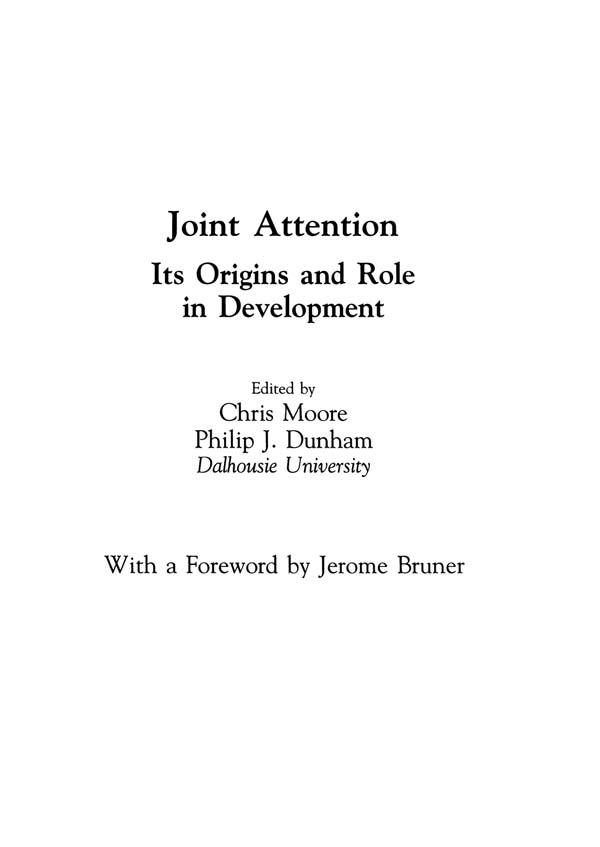
It is perhaps no exaggeration to suggest that all of what is intrinsically human experience is grounded in its shared nature. Joint attention to objects and events in the world provides the initial means whereby infants can start to share experiences with others and negotiate shared meanings. It provides a context for the development of both knowledge about the world and about others as experiencers. It plays a central role in the development of the young child's understanding of both the social and nonsocial worlds and in the development of the communicative interplay between child and adult. The first devoted to this important topic, this volume explores how joint attention first arises, its developmental course, its role in communication and social understanding, and the ways in which disruptions in joint attention may be implicated in a variety of forms of abnormal development including autism.
Płać wygodnie kartą, Klarną, Apple Pay lub Google Pay. Nie jesteś zadowolony? Zawsze masz 14-dniową gwarancję zwrotu pieniędzy. Więcej przeczytasz w naszych warunkach. Masz pytania? Napisz do nas na hello@memmo.org.
Memmo ułatwia naukę – gdziekolwiek jesteś na świecie. U nas znajdziesz podręczniki i sprytne narzędzia do nauki w jednym miejscu: streszczenia, quizy, podcasty i fiszki. A do tego Ted, Twój kumpel do nauki, który odpowie na wszystko, co Cię nurtuje. Ponad 50 000 studentów już tu się uczy – stworzone, byś uczył się szybciej i mniej stresował.