
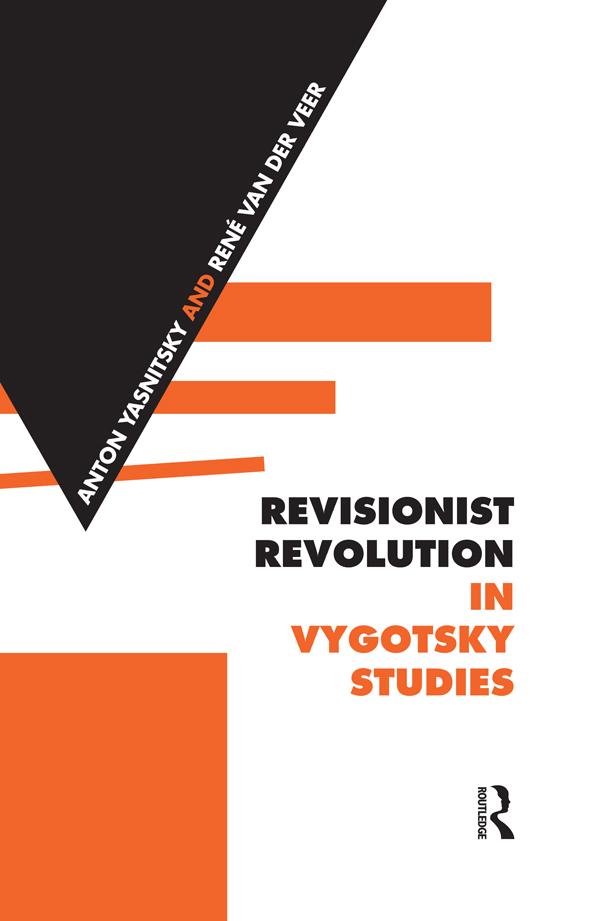
Revisionist Revolution in Vygotsky Studies brings together recent critical investigations which examine historical and textual inaccuracies associated with received understandings of Vygotsky’s work. By deconstructing the Vygotskian narrative, the authors debunk the 'cult of Vygotsky', allowing for a new, exciting interpretation of the logic and direction of his theory. The chapters cover a number of important themes, including:
- The chronology of Vygotsky’s ideas and theory development, and the main core of his theoretical writings
- Relationships between Vygotskians and their Western colleagues
- The international reception of Vygotskian psychology and problems of translation
- The future development of Vygotskian science
Using Vygotsky’s published and unpublished writings the authors present a detailed historical understanding of Vygotsky’s thought, and the circumstances in which he worked. It includes coverage of the organization of academic psychology in the Soviet Union, the network of scholars associated with Vygotsky in the interwar period, and the assumed publication ban on Vygotsky’s writings.
This volume is the first to provide an overview of revisionist studies of Vygotsky’s work, and is the product of close international collaboration between revisionist scholars. It will be an essential contribution to Vygotskian scholarship, and of great interest to researchers in the history of psychology, history of science, Soviet/Russian history, philosophical psychology and philosophy of science.
Płać wygodnie kartą, Klarną, Apple Pay lub Google Pay. Nie jesteś zadowolony? Zawsze masz 14-dniową gwarancję zwrotu pieniędzy. Więcej przeczytasz w naszych warunkach. Masz pytania? Napisz do nas na hello@memmo.org.
Memmo ułatwia naukę – gdziekolwiek jesteś na świecie. U nas znajdziesz podręczniki i sprytne narzędzia do nauki w jednym miejscu: streszczenia, quizy, podcasty i fiszki. A do tego Ted, Twój kumpel do nauki, który odpowie na wszystko, co Cię nurtuje. Ponad 50 000 studentów już tu się uczy – stworzone, byś uczył się szybciej i mniej stresował.